
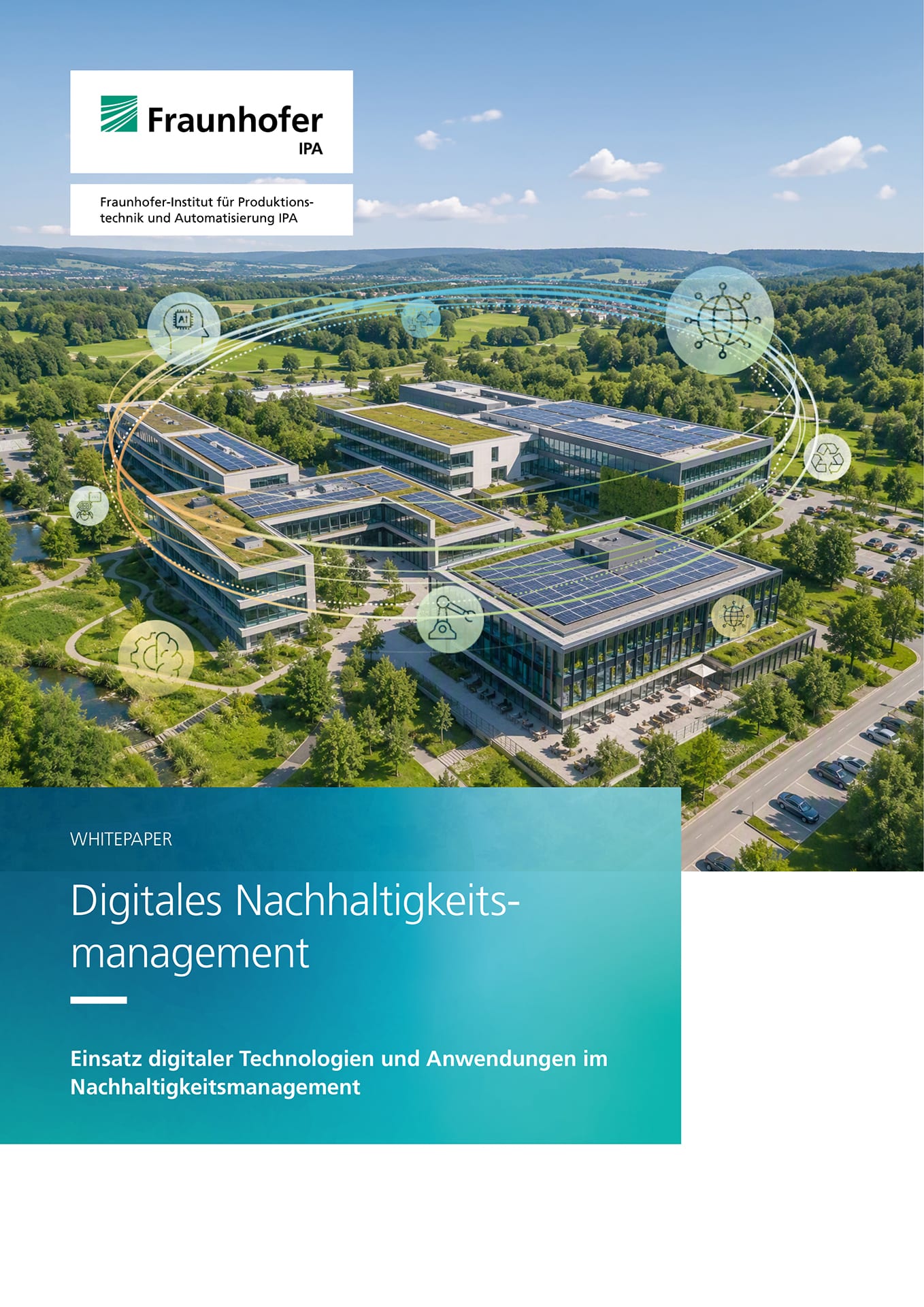
A whitepaper titled "Digitales Nachhaltigkeitsmanagement" lists seven groups of digital technologies that companies can use for sustainability data management: digital twins, digital product passports, sustainability platforms, artificial intelligence, blockchain, the Internet of Things and data analytics. Its author is David Koch, who leads the business segment for CO2-neutral and resource-efficient production at the Fraunhofer Institute for Production Technology and Automation.
Reporting duties are multiplying the data
Companies now collect more information on energy consumption, emissions, supply chains and resource use than before. Two pressures drive this. One is regulation, including the Corporate Sustainability Reporting Directive (CSRD), the EU Taxonomy and the German Supply Chain Due Diligence Act. The other is expectation: customers, investors and business partners want transparency about the environmental and social effects of economic activity.
Companies evaluate this material and prepare it for reports. Many reach their limits in the process. The whitepaper starts from the position that analogue methods can barely keep up with the volume. Gathering the figures by hand, from separate systems and in differing formats, becomes harder as each new reporting obligation adds to the list.
What the whitepaper covers
Koch's paper gives an overview of the main technologies and applications for digital sustainability management. The technologies named are digital twins, digital product passports, sustainability platforms, artificial intelligence, blockchain, the Internet of Things and data-analytical methods.
The argument is that these tools let a company pull data from different sources into one place, analyse it and use it for strategic decisions. The paper calls this an integrated approach to sustainability management. Its central claim is that a structured data foundation serves more than the reporting department. The same data can support process optimisation, automation and the creation of new business models.
The full title of the paper is "Digitales Nachhaltigkeitsmanagement. Einsatz digitaler Technologien und Anwendungen in Nachhaltigkeitsmanagement". It is available as a free download.
EcoHub as a worked example
The paper points to the research project EcoHub as an illustration of what this digitalisation can look like. Partners from industry and science developed a digital platform in the project. It supports companies in collecting, structuring and analysing sustainability data.
The EcoHub platform combines information from different sources and ensures its quality. It also makes it easier to produce sustainability reports. A further function lets companies exchange product and sustainability data along supply chains.
Koch draws a broader point from the project. "EcoHub shows that the rather tiresome reporting obligation also holds a large opportunity," he says. In his view, anyone who takes the trouble to bring scattered individual pieces of information together centrally creates a reliable data basis for sustainability reports. That same basis also supports more efficient processes and better-founded business decisions. Companies that invest in digital sustainability management gain a strategic advantage and improve their competitiveness and future viability, he argues.
Analysis: what this means and what remains open
The paper's most useful idea is a reframing. Sustainability reporting is usually treated as a compliance cost that sits beside production. Koch treats it as a data-integration problem, and that matters for manufacturers and automation specialists. Plants already generate energy, material and process data through sensors and control systems. A reporting duty that forces this data into one structure also creates the groundwork that automation and process optimisation need. The reporting obligation and the engineering benefit draw on the same pipeline.
The supply-chain function of EcoHub deserves attention for a specific reason. Reporting rules such as the German due diligence law and the CSRD reach beyond a company's own sites. A firm can only report on its suppliers if suppliers can hand over data in a usable form. A platform that exchanges product and sustainability data along the chain addresses that gap directly. A single company's internal dashboard cannot.
Several things remain unproven on the evidence available. The paper is an overview of technologies. The material describes EcoHub's functions but gives no figures on cost, time saved, error rates or the number of companies using it. The claim that investment yields a strategic advantage and better competitiveness is therefore an argument, not a measured result. Blockchain, AI and digital twins are listed together, yet they differ widely in maturity and in the effort needed to deploy them. The paper does not rank them for a company starting out, at least in the details made public.
There is also a question of adoption. A shared platform is only as good as the data entered into it, and the quality assurance that EcoHub promises depends on suppliers taking part. Smaller firms that already struggle with reporting may lack the resources to connect. How EcoHub or similar platforms will be maintained and offered after the research phase is not stated.
For readers in robotics and automation, the practical takeaway is narrow but real. Companies preparing for reporting duties will be assembling the kind of unified, quality-checked production data that many automation projects lack. Whether that overlap translates into measurable gains is the question the next round of case studies will need to answer with numbers.


