
Robotics and physical AI companies have raised nearly $48 billion so far in 2026, yet most production facilities cannot supply the data those machines need to work autonomously on a manufacturing floor. The gap sits between what plants record and what a robot would need to learn from it.
Michael Kenworthy, chief technology officer at VulcanForms, lays out the problem and three preparation steps for manufacturers planning to deploy physical AI. His central point is that the volume of data matters less than whether it links process decisions to measured quality outcomes.
Why welding shows the problem
Welding is a clear example. For a robot to improve its technique without supervision, it must understand how welding angle, travel speed, workpiece position and other parameters change the finished weld. Experienced technicians build that understanding over years of hands-on work. Much of it is never recorded in a form that a robotics partner can use to train an autonomous system.
Other manufacturing processes share the pattern. Technicians make adjustments based on experience, and those adjustments are not consistently documented. Without records that connect process decisions to production outcomes, robotic systems may struggle to adapt when conditions change.
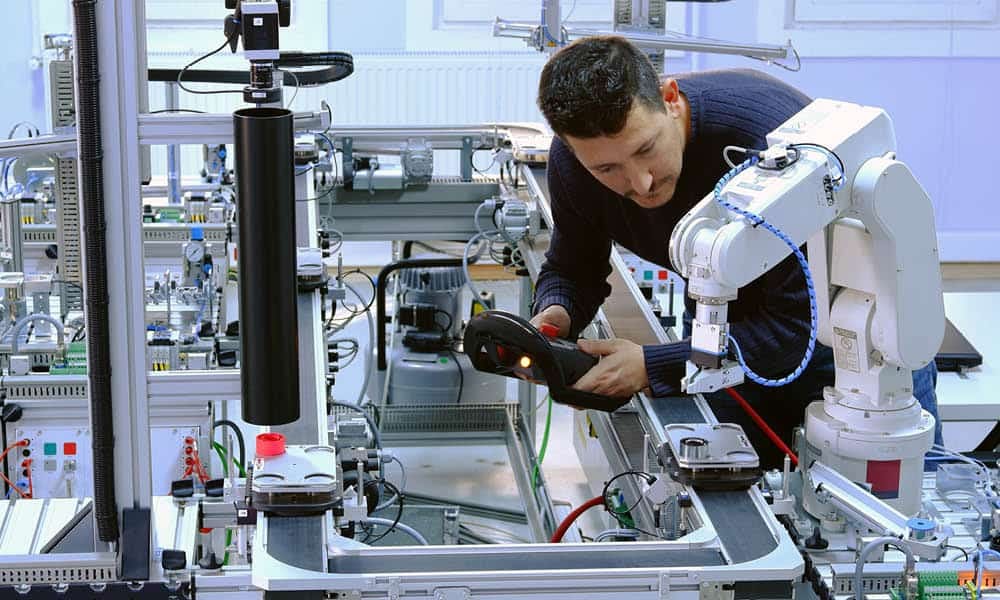
Data exists, but in separate systems
Manufacturers already collect a great deal of operational data. Much of it was never structured for autonomous learning, and some is collected and never reviewed. Related information is often held in separate systems. A machine may log operating parameters while a quality management system stores inspection results, which makes it hard to tie a process decision to the quality of a finished part.
Manufacturing leaders see the silos as an obstacle. In the Manufacturing Leadership Council's 2026 Smart Factories and Digital Production Survey, 37% of surveyed manufacturers named a lack of data interoperability as a major roadblock to their smart factory strategies. The figure was 22% in 2025. Kenworthy argues that interoperability alone will not give robots what they need. Production records must also be tied to measurable quality outcomes.
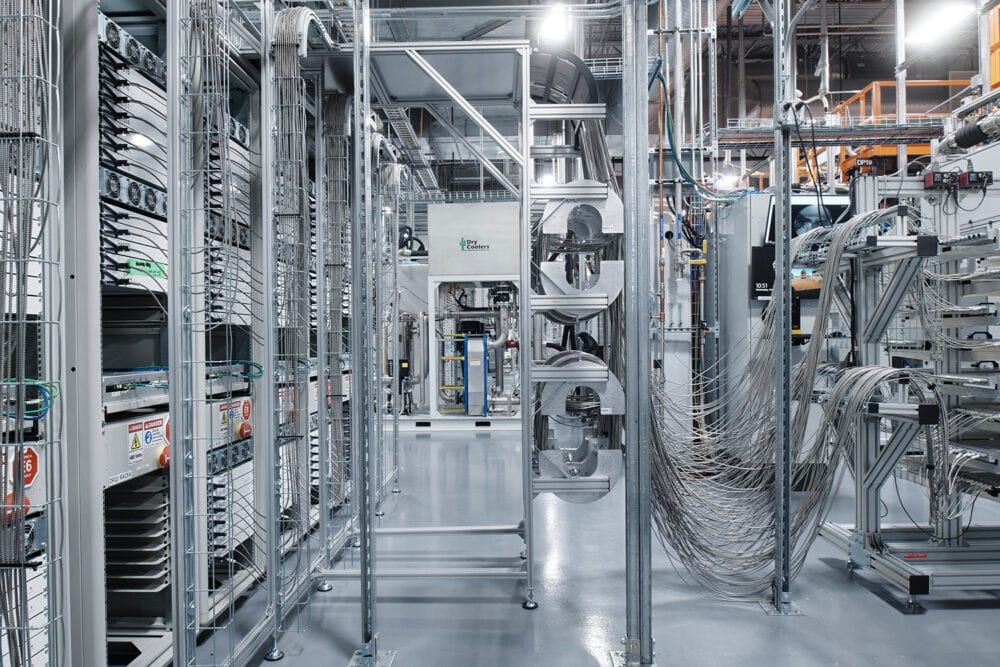
Three steps before deployment
The first step is to capture data that reflects real production conditions. Manufacturers should identify the conditions their robots must recognize and record how process parameters interact with quality outcomes, including planned and unplanned changes in materials or equipment performance. In metal additive manufacturing, powder or wire characteristics, processing temperatures and environmental conditions can influence a part's final properties and its characteristic defects. Linking those variables to inspection results shows which conditions lead to defects. That information can then be used to train systems and to build more realistic simulations for testing their responses.
The second step is to connect data across the whole production process through a digital thread that joins production conditions, inspection results and finished-part quality. Kenworthy notes that AI-based image recognition is becoming standard for assessing quality inside metal additive manufacturing printers, while downstream equipment such as heat-treatment furnaces can be much harder to integrate. That leaves gaps in a component's production history and obscures how later processing affects its final properties. He recommends starting with the data needed for one specific robotic application, working with technology partners to set consistent part identifiers, and linking process records to inspection results. This avoids overhauling all infrastructure at once.
The third step is to build feedback loops around quality and repeatability. Manufacturers and their robotics partners should decide which process adjustments can be made automatically and how the system will judge whether a change improved the outcome. Medical device manufacturing shows the constraint: regulations often require validated production processes, and changes may require additional testing and revalidation, which limits how freely AI can alter parameters. Operating limits should be defined before autonomous adjustments are authorized, along with criteria for when an unexpected result needs engineering review. In Kenworthy's words, a system that can change operating parameters but cannot evaluate the resulting quality is not ready to decide on its own.
What this means for the field
The argument shifts attention from robot capability to factory readiness. Much of the discussion around physical AI centers on models and hardware, and the funding total shows where investor attention is going. This account points to a constraint that funding does not directly address: a plant's records may not support learning, however capable the robot is. The survey figure, rising from 22% to 37% in a year, suggests manufacturers are recognizing the problem, though it measures interoperability concerns and not readiness for physical AI specifically.
The advice also differs from a common instinct to add sensors. Kenworthy suggests that linking existing process records to inspection results may deliver more than collecting more machine data. That is a practical, lower-cost starting point, and it fits a narrow first application better than a plant-wide program. The medical device example shows that the limit is sometimes regulatory and not technical, so the same autonomy will not be equally available across industries.
Several points remain unproven. The source offers no deployment results, no measured gains in efficiency or quality, and no cost figures for building a digital thread. The welding and additive examples are illustrative, and the source does not show that the three steps produce reliable autonomous adjustment. The author is a technology executive at an advanced manufacturing company, so the framing reflects that vantage point. Whether physical AI systems can learn from the kind of linked records described here, and how much historical data is enough, will have to be shown in factory trials.