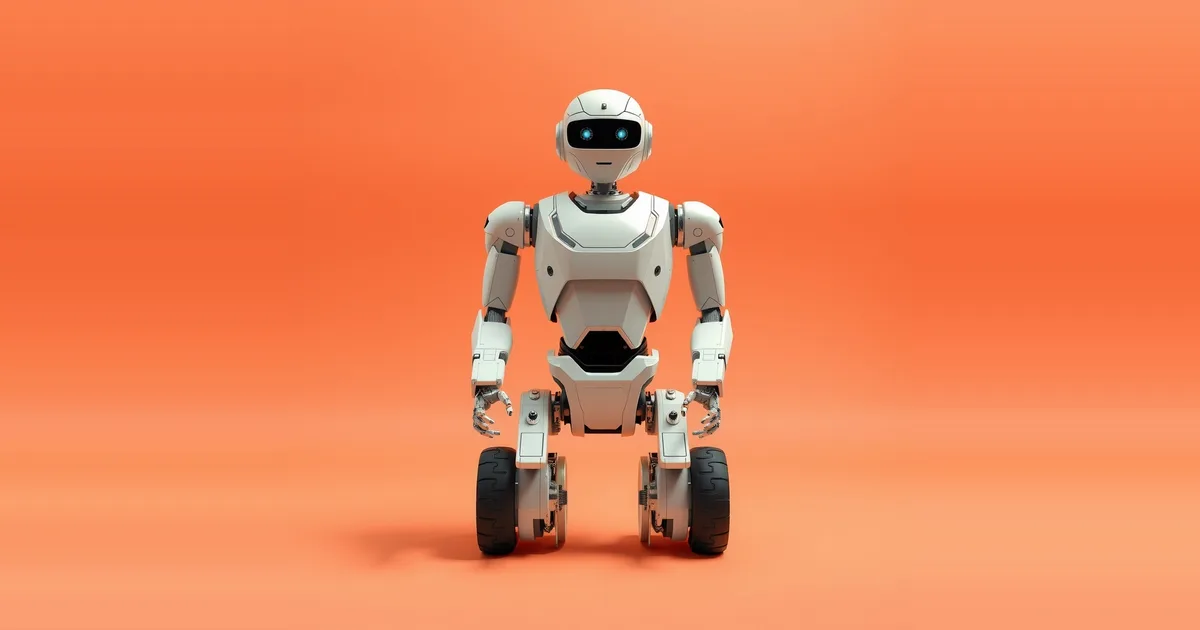
A free 32-page engineering report on robot motion control lists six topics, running from the design of humanoid motion systems to the manufacture of gearboxes at scale. The document is titled Engineering Focus on Motion Control. It is offered as a download to readers who complete a registration form.
The report treats motion control as the base layer of every robotic system. It names industrial robotic arms, autonomous mobile robots (AMRs) and humanoids as the platforms where precision, efficiency and reliability of movement decide whether development and deployment succeed.
What the report covers
The report is organised around six subjects. The first is the design of motion control systems for humanoid robots. The second is progress in open-source motion planning software. The third is the use of motion-capture data to train robots.
The remaining three are more hardware-oriented. One covers how to select a motion control architecture. Another covers manufacturing gearboxes for humanoids at scale. The last covers how to choose brushless DC motors for robotic arms and for mobile robots.
The list spans software, data, components and manufacturing. That range matches the framing of the document itself, which treats motion control as a stack of motors, actuators, gearboxes, sensors and software rather than a single component category.
The report describes itself as containing technical insights, industry analysis and practical engineering guidance. The source gives no author names, no section page counts and no data tables, so the depth of any individual topic is not stated.
The engineering trade-offs
Developers working on motion control have to balance several requirements at once. The report lists torque, speed, accuracy, weight, power consumption and cost. These requirements pull against each other. A design that raises torque, for example, tends to affect weight and power draw, and each choice carries a cost consequence.
The report says advances in motors, actuators, gearboxes, sensors and software are helping engineers address these challenges. It also says those advances are opening up new capabilities. It does not name specific products, performance figures or measured improvements, so the claim remains general.
The mention of both arms and mobile robots in the motor selection topic is notable. Brushless DC motors are named as the subject for both platform types, which suggests the selection criteria overlap even though the machines do different work. The source does not elaborate on how the criteria differ.
Input from motion control providers
The report also carries insights from motion control technology providers. The subjects named are force sensing, dexterous manipulation, compact actuators and custom gearboxes. These cover the parts of a robot that touch the physical world: how hard it grips, how finely it moves its hands, how small its joints can be, and how power is transmitted.
One further topic is the advantages and disadvantages of building versus buying motion control systems. This is a decision that robot makers face when they choose between developing their own actuators and drive electronics or sourcing them from a supplier. The source does not say which way the provider contributors lean, and it does not name any of the companies involved.
The intended audience is stated plainly. The report is aimed at teams designing a new robotic platform, teams optimising an existing system, and teams evaluating components for a coming project. It says the report can help them make more informed engineering decisions in a motion control market it describes as rapidly evolving.
Why this matters, and what remains unproven
The topic list is itself informative. Gearbox manufacturing for humanoids at scale appears next to motion planning software and motion-capture training data. That grouping indicates that the humanoid segment is being discussed as a production problem as well as a research one. Making a gearbox once is a different task from making many of them to a consistent standard, and the report gives that second task its own topic.
The inclusion of open-source motion planning and motion-capture training data also points to a split in where capability comes from. Some of it is bought as hardware from suppliers, and some of it is built from shared software and recorded human movement. The build-versus-buy discussion sits at the point where those two sources meet.
There are limits to what can be concluded. The source is a description of a download, not the contents of the report. It provides no benchmark numbers, no component comparisons, no cost data and no named suppliers. Claims that advances are unlocking new capabilities cannot be tested from the description alone, and readers should treat them as the report's own framing.
It is also unclear how the report handles trade-offs in practice. The list of competing requirements is standard for the field, and the value of the document will depend on whether it quantifies them, for instance by showing how torque targets change actuator weight, or how a given architecture affects cost. The source does not indicate whether it does.
For engineers, the practical use is likely to be as a map of decisions rather than a set of answers. The six topics mark choices that most teams building arms, AMRs or humanoids will face: architecture, motor type, gearbox sourcing, planning software and training data. A free 32-page document can frame those choices. It cannot replace testing against a team's own torque, speed and cost targets.
What would settle the open questions is detail the description withholds. Named provider contributions on force sensing and compact actuators, and concrete guidance on build-versus-buy economics, would show whether the report offers more than an overview. Until readers have the document in hand, robot motion control coverage of this kind is best read as a statement of which problems the field considers central, not as evidence of how well they have been solved.