
NVIDIA's board voted unanimously to bring back Jensen Huang as president and CEO, 11 days after he resigned amid allegations of personal misconduct and concerns about possible national security risks involving China. The Jensen Huang reinstated decision takes effect immediately, and Huang also rejoins the board.
The company announced the vote today. It said the board was satisfied with Huang's candor and his ability to lead, and that it consulted senior U.S. government officials before concluding his return poses no national security risk.
A reversal of the board's own position
Harvey Jones, NVIDIA's board chair, said in a statement: "The Board believes Jensen is the right person to lead NVIDIA, and that his reinstatement is in the best interests of our stockholders, employees, partners and customers."
The vote contradicts what Jones said on the company's earnings call on Nov. 17. He told listeners then that the board had unanimously accepted Huang's resignation and did not intend to reinstate him. Six days later, the board unanimously voted the other way. Huang co-founded NVIDIA in 1993 and had held the CEO position since then.
Colette Kress, who served as interim CEO after the resignation, stays on as chief financial officer. Jones remains board chair.
Huang said he was honored to return and described the company as leading "at the beginning of a new industrial revolution." He said he takes the responsibility "with the greatest humility and renewed commitment," thanked the board, employees, shareholders and his family, and added, "I can't wait to get back to work."
Pressure from the White House, staff and investors
The reversal followed pressure from several directions. President Donald Trump said publicly on Nov. 16 that he would not object to Huang's reinstatement. On Sunday, Nov. 22, he urged the board to bring Huang back.
A "Stand With Jensen" petition gathered more than 200,000 signatures. Signers included current and former NVIDIA employees, investors and technology figures such as Elon Musk and Epic Games CEO Tim Sweeney.
NVIDIA also faced financial uncertainty after the resignation. Its market value fell sharply, and questions arose about who could succeed an executive who had run the company for more than three decades.
The company has not said what finally persuaded the board. It did not name the government officials it consulted or describe what they told it. It also did not say whether the public campaign affected the outcome.
The investigation is still open
Huang's return does not close the inquiries tied to his departure. An independent board committee will keep investigating reports that Huang was targeted by a foreign intelligence effort. The committee has retained independent counsel, and Huang has committed to cooperating fully.
NVIDIA also recently created a National Security and Export Control Committee made up entirely of independent directors. It will oversee trade compliance and national security risks, supported by legal counsel and national security specialists. The company gave no timeline for finishing its internal investigation.
What it means for robotics
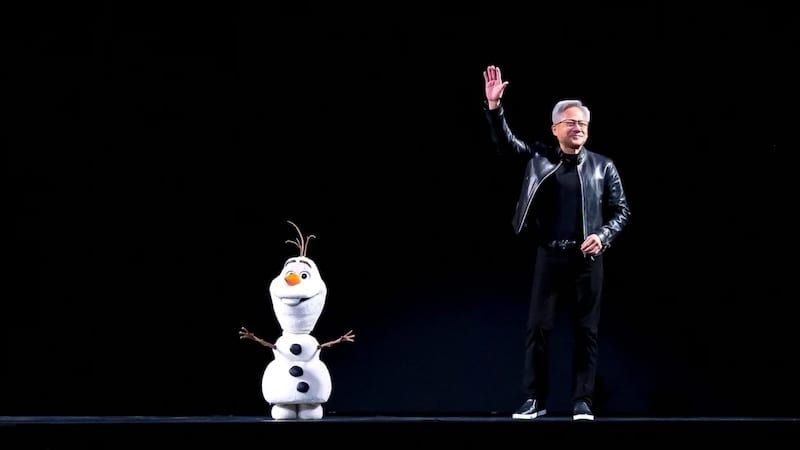
Huang has spent years presenting robotics and physical AI as major long-term opportunities for NVIDIA. Robots appear regularly in his keynote presentations. Under his leadership the company built out a robotics portfolio that includes Isaac Sim, Isaac Lab, the GR00T foundation models, Isaac ROS and the Jetson computing platforms. NVIDIA has also invested in and partnered with robotics developers, including humanoid companies, as it tries to make its technology the base layer for robot training, simulation and deployment.
The facts in the announcement support a few conclusions about what this means for the field. First, the robotics effort is tied closely to one executive. The company's stack is broad and has its own engineering teams, but the public case for physical AI has come largely from Huang. An 11-day gap was short, and nothing in the announcement points to any change in robotics products or partnerships during it. Still, a founder-led strategy is exposed when the founder is out, and the board's own first decision was to accept that exit.
Second, the board's handling raises a governance question that the announcement does not answer. The board said on Nov. 17 that it would not bring Huang back and reversed course six days later. It cited its consultation with government officials, but it has not disclosed what those officials said. Robotics developers who build on NVIDIA hardware and software are therefore relying on a conclusion they cannot inspect. The same is true of the company's stated finding that his return poses no national security risk.
Third, the open investigation is the main unresolved item. The independent committee has no completion date, and its subject is reported foreign intelligence targeting of the CEO. The new export control committee suggests the board expects trade compliance to remain a central issue. For robot makers that depend on NVIDIA's Jetson modules and simulation tools, export rules and national security reviews are a practical supply and compliance matter, not only a governance one.
What remains unproven is whether the reinstatement settles anything beyond the leadership question. The allegations of personal misconduct that accompanied the resignation are not addressed in the announcement. Nor is it clear how much the petition, the president's statements or the market reaction weighed against the government consultation. Until the committee reports, the Jensen Huang reinstated outcome is a decision about who runs the company, not a resolution of the questions that prompted his resignation.