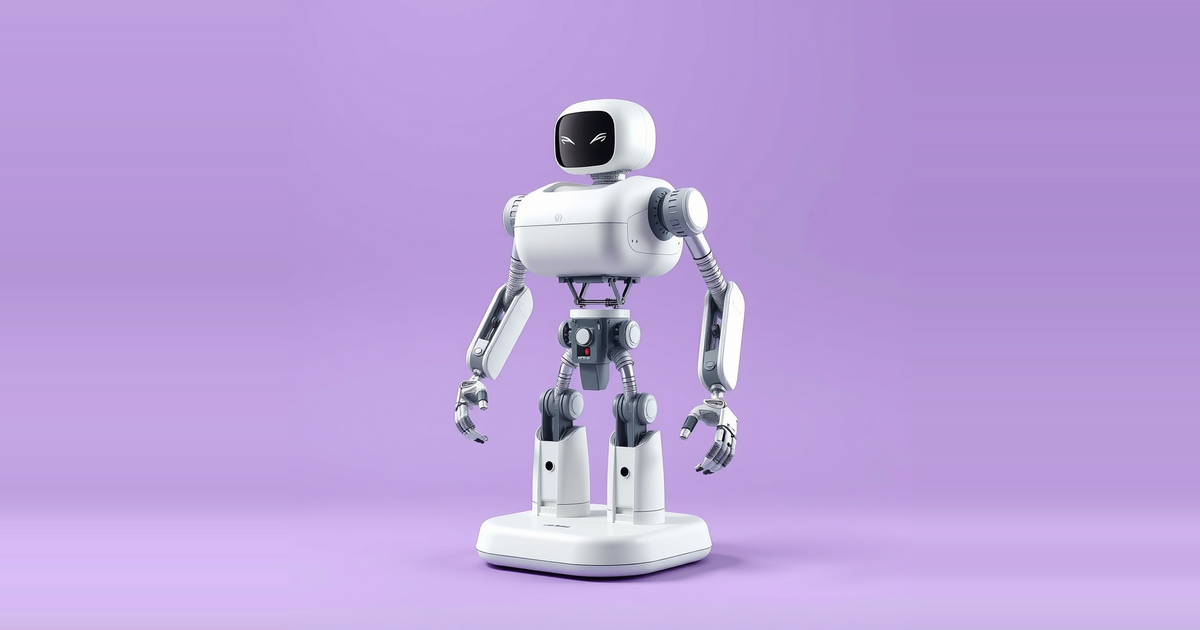
Barbara Mazzolai and her collaborators published a manifesto in Nature Machine Intelligence in July that defines a new research area they call sustainability robotics. Mazzolai is associate director for robotics at the Italian Institute of Technology in Genoa. The paper sets out a way of designing robots so that their effect on nature is considered from the first sketch rather than after deployment.
"We need to reduce the footprint of our technology," she says. "It's really about thinking in a different way to open new possibilities for robotics and for society." In her framing, sustainability is a core component of the design, not an add-on.
Three pillars and a life cycle
Sustainability robotics rests on three pillars. First, robots should have minimal impact on the environment. Second, they should be available to people across the world and from all socioeconomic backgrounds. Third, they should be symbiotic, providing benefits to both humans and nature.
The most concrete design change Mazzolai describes is building a life cycle into the robot. At the end of its useful life, a machine would be reused, recycled, or even biodegraded. She points to plastics and car batteries as technologies developed with little thought for what happens when they are discarded. Her aim is for robotics not to repeat that pattern.
She says she is confident that all the ingredients needed to make this real are already in place. She also expects the idea to attract younger researchers. "There are younger people who want to really work in this field because this is the future, their future," she says. Facing ongoing environmental damage, she adds, "they want to develop something that can help."
A career spent borrowing from nature
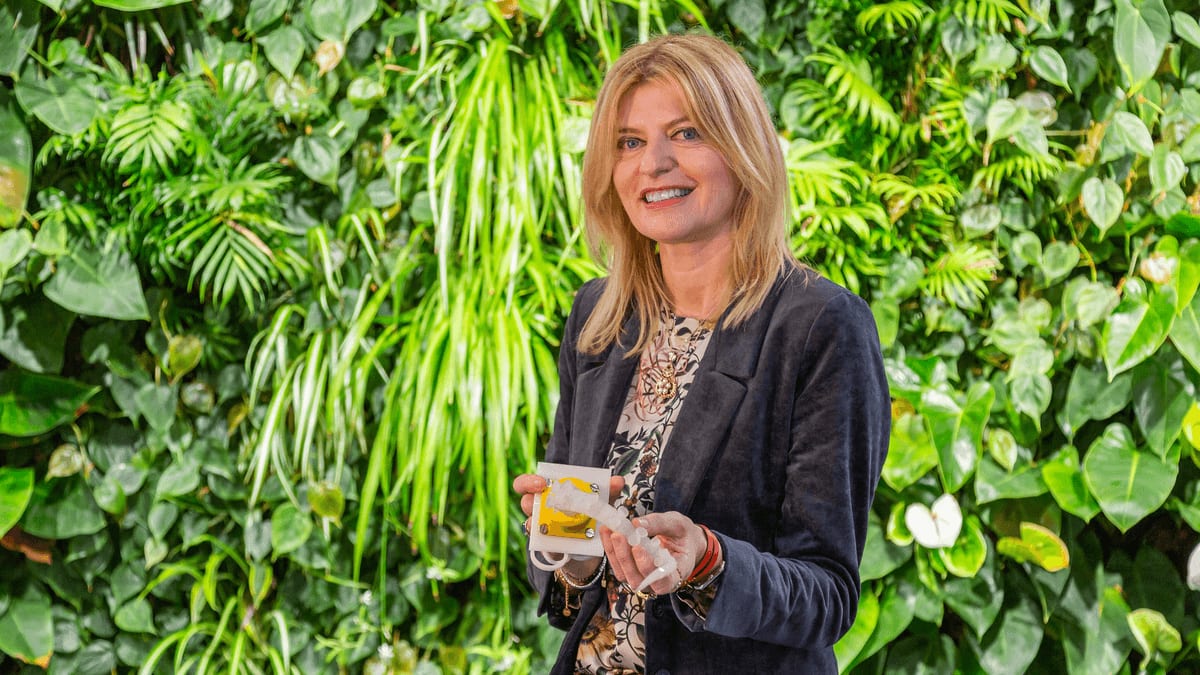
Mazzolai started as a biologist. She grew up on Italy's Tuscan coast near Livorno, where her father, a public-health inspector and professional mycologist, took the family into forests to learn about fungi and plants. She enrolled in biology at the University of Pisa in 1987 and earned her master's degree in 1995.
Her first research position was at the Italian National Research Council's Institute of Biophysics. There she studied how heavy metals such as mercury cycle through living and nonliving parts of the environment, collecting samples of water, soil, vegetables, and human material. She also completed a master's degree in environmental management at the Scuola Superiore Sant'Anna in Pisa in 1998.
In 1999 she took a job at Sant'Anna as a research assistant under bioroboticist Paolo Dario. The university was recruiting biologists to help design environmental monitoring devices. She first worked on sensors and then on robots meant to monitor air, water, and soil. She became an assistant professor in 2004 and, with colleagues, helped design a soft robot inspired by the octopus. She says it was proposed as a paradigm for soft robotics: machines that are soft yet can apply strong force to their surroundings, as the animal does.
She began a Ph.D. in microsystems engineering at Tor Vergata University of Rome in 2007. In 2009 she became a team leader at the Italian Institute of Technology's Center for Micro-BioRobotics, completed her doctorate two years later, and was promoted to director of the center. She notes that few robots carry physical or chemical sensors that let them understand the environment they move through, as opposed to sensors that locate the robot itself.
The plant-root robot
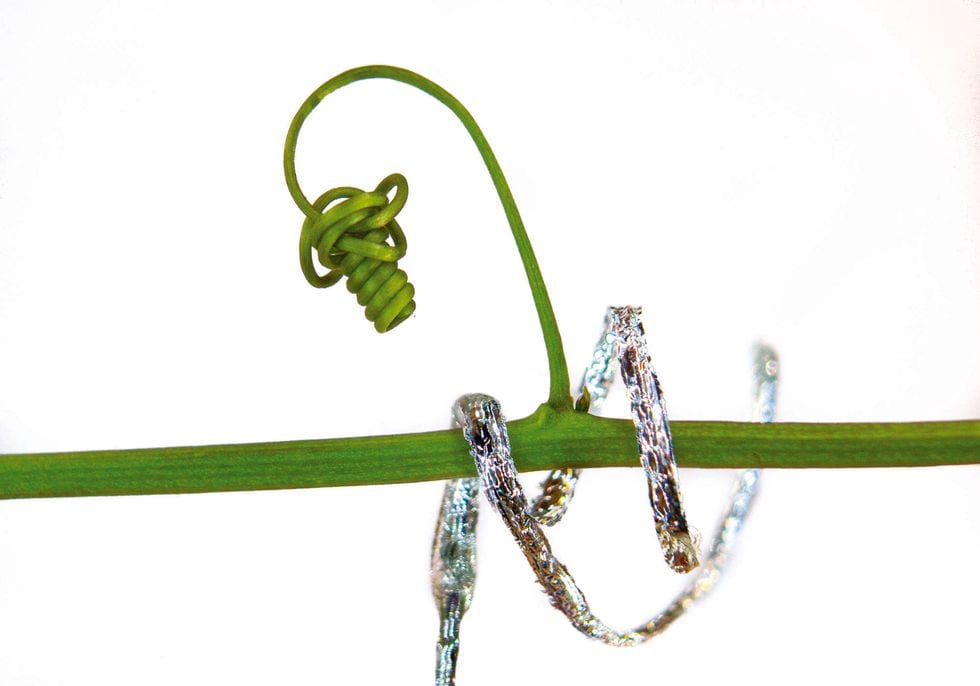
Around 2011 Mazzolai turned to plants as models. Roots interested her because they explore soil so efficiently, and she saw possible uses in environmental modeling and precision agriculture. Colleagues were initially skeptical of copying organisms that seem static. She counters that plants grow for their entire lives through indeterminate growth, adapting their form and behavior and repairing, sensing, and communicating.
A root grows only at its fine tip while the thicker base stays still. That cuts friction and the energy needed to push through soil, compared with a conventional drill that drives the whole structure from above. Her team reproduced the principle with a miniaturized 3D printer at the robot's tip. It feeds thermoplastic filament through a heated nozzle and builds a snakelike body behind it. The tip also holds sensors to avoid obstacles and detect nearby nutrients or water.
Mazzolai says this work needs "two separate brains," one biologist and one engineer. The goal is to study the organism, extract the principles behind its behavior, and then engineer them. "It's not a copy of natural organisms," she says.
What the manifesto does and does not settle
The source material describes a research agenda, not a product, and the analysis below is our own reading of it. The main value of the manifesto is that it names a set of design criteria. Robotics already has strong subfields built around bioinspiration and soft materials, and Mazzolai has helped build both. Sustainability robotics asks a different question: what the robot leaves behind, and who can obtain it.
The comparison she draws with plastics and car batteries is a sound argument for acting early. Those technologies became widespread before their end-of-life costs were addressed. Robotics is still relatively small in volume, so end-of-life design choices made now could shape practice before large production runs lock in materials and supply chains.
Her own root-inspired robot offers a partial illustration. It cuts the energy needed to move through soil by growing from the tip, which speaks to the first pillar. It builds its body from thermoplastic filament, which raises the question of what happens to that material afterward. The source does not say how the robot handles this, so the question stays open.
Several things remain unproven. The source gives no quantitative targets for footprint, no timelines, and no examples of a complete robot that is reused, recycled, or biodegraded across its life. Mazzolai's confidence that the necessary ingredients exist is a statement of belief, not a demonstrated result. The accessibility pillar is also the hardest to measure, since it depends on cost and distribution as much as engineering.
The next test for sustainability robotics is whether it produces shared metrics and working examples. Without them, the term risks staying a label. With them, it could give designers a checklist as clear as the performance benchmarks they already use.