
China's Office of the Working Mechanism for Foreign Investment Security Review has prohibited SoftBank Group's $5.375 billion ABB Robotics acquisition within China, ABB has confirmed. The ruling comes more than a year after ABB announced it had signed an agreement to sell its robotics division to the Japanese technology group.
What the regulator decided
The review office barred the transaction in China. Authorities cited concerns that robotics data could be moved overseas and used to train AI models. ABB has not been quoted explaining how it would respond to those specific concerns.
ABB said it and SoftBank are in close dialogue and are working constructively on the transaction. That statement does not say whether the companies will seek changes to the deal, appeal the decision, or pursue a different structure. It also does not say whether the sale can close elsewhere without Chinese approval.
The business at the center of the deal has about 7,000 employees. Its U.S. headquarters and factory are in Auburn Hills, Michigan. ABB itself is a Zurich-based industrial automation provider, and SoftBank is based in Japan. Neither company is Chinese, which makes the jurisdiction of the ruling a question worth examining.
Why China has a say in a Swiss-Japanese deal
The answer is revenue and production. China accounts for a major portion of ABB's business. ABB Robotics booked $928,000 in orders from China across fiscal 2025, up from $662,000 in 2024. In the third quarter of 2026, its business in China alone grew 32%.
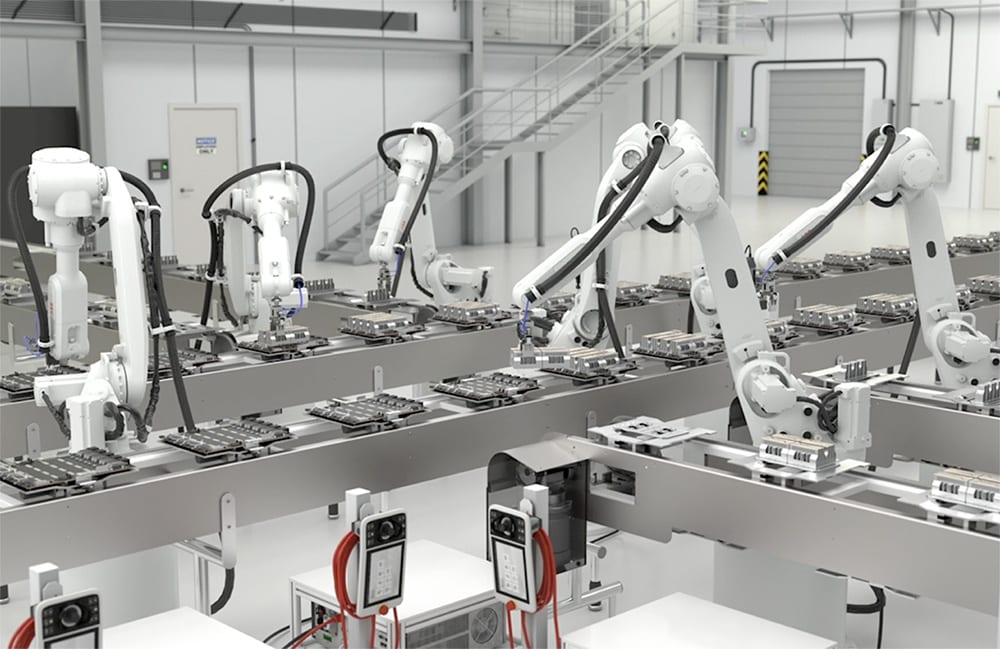
ABB also builds robots in Shanghai. About 90% of the machines it sells to Chinese customers are manufactured locally, and the operation employs thousands of people in the country. A company with that footprint is subject to Chinese review when its ownership changes, even if the buyer and seller are both foreign.
The stated objection also reflects the nature of the asset. Robots in factories generate operating data, and the regulator's concern is that such data could leave China and feed AI model training elsewhere. ABB's installed machines in China sit at the point where that data would originate.
A pattern of security-driven deal blocking
The ruling is not China's first of this kind. In April, the country prevented Meta from acquiring Manus for $2 billion. Manus is an AI startup that was founded in China and later relocated to Singapore. In both cases, regulators cited national security concerns over a foreign buyer taking control of a business with Chinese roots or operations.
The United States is also tightening its posture toward foreign robotics. Last week, President Donald Trump said the secretary of commerce had submitted a Section 232 report on the national security effects of imports of robotics and industrial machinery, along with related parts and components.
The Section 232 statement named advanced robots as providing direct support to the U.S. military. It listed autonomous robots, humanoid and quadruped robots, and autonomous ground vehicles. What the report will mean for the industry is not yet clear, but it could lead to tariffs on foreign-made robots.
The U.S. Federal Communications Commission has already banned new foreign-made advanced robotic devices, including mobile robots such as humanoids and quadrupeds. The agency said these machines could create supply chain vulnerabilities and pose a cybersecurity risk to American critical infrastructure.
What this means for the field
The ABB Robotics acquisition shows that robot ownership is now reviewed as a data question as well as a competition question. The stated Chinese concern is not market share. It is where the information generated by deployed machines ends up and whether it trains AI systems abroad. That framing treats fleet data as a strategic asset, and it applies to any robotics company with large installed bases across several countries.
The comparison with U.S. action is instructive. Washington is acting on imports and device authorization, through the Section 232 process and the FCC ban. Beijing acted on ownership by blocking a sale. These are different tools, but both rest on national security arguments, and both land on companies whose supply chains cross borders. ABB is exposed on both sides, with a large Shanghai operation and a U.S. factory in Michigan.
The Manus decision matters here as a precedent. It shows the ABB ruling is not a one-off response to a single buyer, and it suggests that large cross-border deals involving AI or data-rich assets face a higher bar in China. Two blocks in a single year are a small sample, but they point in the same direction.
Several points remain unproven. It is not known whether the deal can close if the China prohibition stands, or whether the parties can restructure it. The source gives no detail on what data flows regulators believe would occur, so the strength of the data-transfer concern cannot be judged. ABB's local manufacturing of roughly 90% of its China-bound machines suggests much of that business already operates separately, but that does not establish how data is handled between regions.
On the U.S. side, the Section 232 report has been submitted, and its outcome is open. Tariffs are a possibility, not a decision. Until the ABB talks and the U.S. process resolve, robotics companies with cross-border operations have to plan for review risk from more than one government at once.