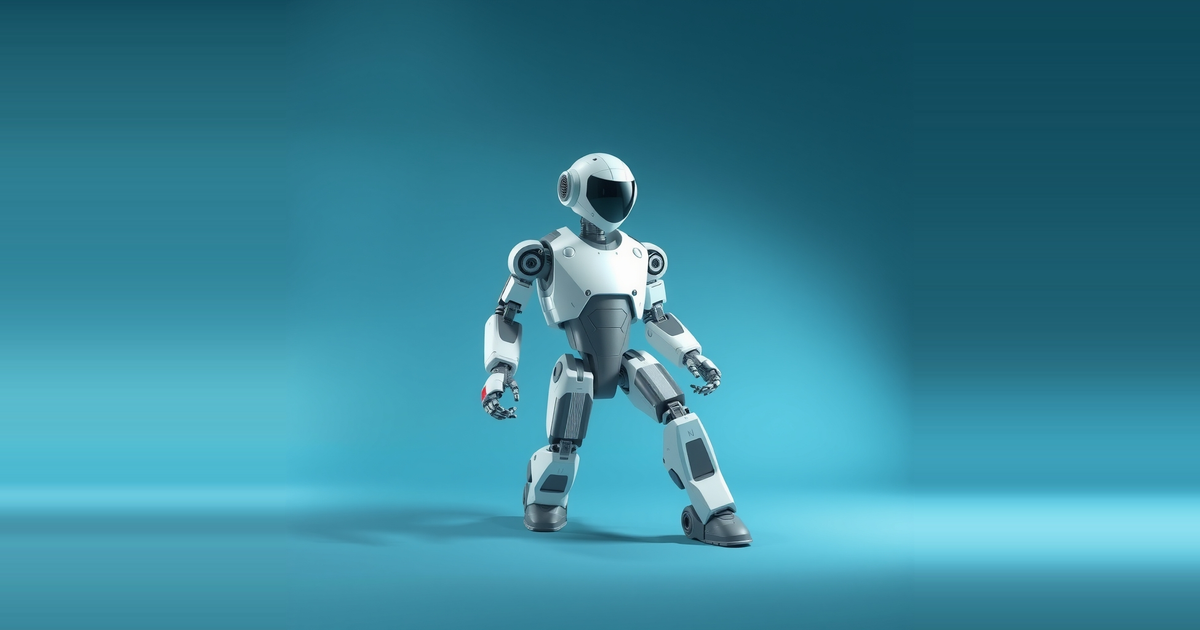
Robots at the World Humanoid Robot Games in Beijing had to insert intake and exhaust valves into the correct openings of an engine cylinder head. The task was part of an industrial assembly and material supply contest, and it drew far less attention than the kickboxing and football matches held at the same event in late August.
The World Humanoid Robot Games ran alongside the World Robot Conference in the Chinese capital. Together the two events concentrated much of the robotics industry's attention at the end of the month.
Spectacle on the field, work in the side events
The conference was primarily a showcase of Chinese products. About 300 companies exhibited more than 2,000 products, including robots for parcel sorting, manufacturing, surgery and domestic work.
The games were more varied than most coverage suggested. Robots kick-boxed, played table tennis, performed gymnastic routines and played football. One humanoid ran at a speed compared to Usain Bolt's, then ran into a wall. Those moments circulated widely.
Alongside them sat contests built around industrial manufacturing, logistics, household services and emergency response. In the assembly and material supply event, robots moved containers onto shelves and identified and sorted components in different packaging, as well as handling the engine valves. Other events covered packaging and warehouse intake.
Eight dexterous-hand challenges included screw fastening, unpacking boxes, connecting cables and picking up beans with tweezers. Some competitions required autonomous robots, while others tested teleoperation. These events measured the precision, perception and adaptability humanoids need before they can do useful work in factories and warehouses.
Unitree's debut and the expectations problem
Unitree supplied much of the spectacle at the conference with a fast humanoid it calls Superman, and with a stock-market debut. Its shares closed 460% above the IPO price on the first day. By August 28 they had fallen almost 30%. CEO Wang Xingxing predicted that robotics is approaching a "ChatGPT moment."
Expectations are also the subject of recent human-robot interaction research. A Drexel-led study of 50 adult men measured brain activity, hormones, self-reported attitudes and behaviour to assess trust in humanoids. Participants formed stronger initial connections with an expressive Pepper robot than with a stationary version that gave no nonverbal cues.
When the expressive robot made errors, participants' brains responded as they would to a person breaking a social norm, not to a machine having a technical fault. Oxytocin levels rose as the engaging robot made mistakes. The researchers concluded that in human-robot interaction the hormone may act as a warning signal, not a sign of connection. The work was published in Science Robotics.
Supply chains and orders
Two separate reports in August pointed to the same tension in the US robotics industry. One claimed that US founders, investors and startups are travelling to an electronics market in Shenzhen to buy servomotors, sensors, controllers and gimbals. It also claimed that Unitree and Zhiyuan robots are bought intact, stripped into parts and carried back to the United States in suitcases.
Later in the month, reports said a US Department of Energy lab is investigating whether Chinese LiDAR sensors pose a security risk if widely used on vehicles in the United States. The research is reportedly funded by one or more companies in the electric and autonomous vehicle industries.
Order data from the Association for Advancing Automation shows demand holding up. North American companies ordered 8,940 robots worth US$622 million in the second quarter of 2026. That is a 4.3% increase in units and a 21.3% increase in revenue. Automotive remains the largest segment, but its share continues to fall as robots spread into other industries.
Research at the edges
Engineers at Princeton unveiled a motorless, origami-inspired robot that can roll, crawl and change shape using magnetic control and multistable geometry. Project lead Glaucio Paulino said the geometry is the real actuator, with mathematical principles encoding multiple stable configurations directly into the structure.
Researchers at Germany's Karlsruhe Institute of Technology developed an automated recycling system. It combines CAD data, physical observations and a predictive algorithm to anticipate defects in products. It then adapts its disassembly strategy while protecting valuable components.
What the Beijing events do and do not show
The strongest signal from Beijing is the structure of the competition, not the winners. By including assembly, warehouse intake, cable connection and tweezer tasks, the organisers set tests that resemble factory and logistics work. A sprint or a kickboxing bout shows hardware performance. A valve inserted into a cylinder head shows whether perception and manipulation work together.
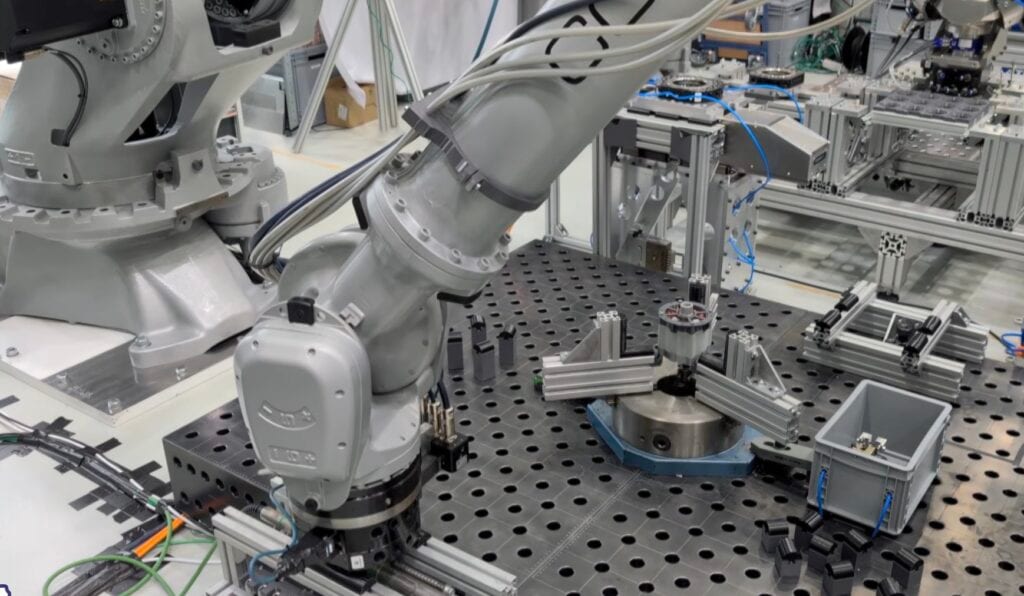
The source material does not report scores, success rates or cycle times for those events. That leaves the central question open: how close any humanoid is to reliable industrial work. Some contests allowed teleoperation, so a result in those events says little about autonomy. Comparison with existing automation is also missing. Industrial arms already handle fixed tasks at scale, and the A3 order figures show that market growing in revenue.
The Drexel result bears on this gap. If people read an expressive humanoid's mistakes as social failures, then a robot that looks capable but errs will cost more trust than a plain machine that errs. This finding comes from a single study of 50 men and one robot model, so it should not be generalised. It is still a reason for deployers to set expectations before a pilot begins.
Unitree's share price shows the same pattern in finance. A 460% first-day gain followed by a near 30% fall within weeks reflects sentiment about the category more than any measured change in what the robots can do.
The supply-chain reports add a structural risk. If US builders depend on Chinese servomotors, sensors and controllers, and a national lab is studying Chinese LiDAR as a security question, component access could become a policy issue. Both reports carry caveats: one is a claim about informal purchasing, and the other describes research that is still under way. Neither establishes a restriction.
The humanoid sector now has a public arena and a stock market, but it still lacks published, comparable results for useful work. Those numbers would settle the question.