
A single ship needs hundreds of kilometers of linear welds, and Persona AI intends to hand a share of that work to a two-legged robot. The company is pursuing humanoid shipyard welding as its first commercial task, and it has named two partners in South Korea: HD Hyundai, the world's largest shipbuilder, and the steel producer POSCO.
Why welding, and why now
Persona was founded by Nicolaus Radford and Jerry Pratt. Radford led the Valkyrie program at NASA's Johnson Space Center and founded Nauticus Robotics. Pratt led IHMC's team in the DARPA Robotics Challenge and then spent a couple of years as CTO of Figure.
When the company first described its plans in 2024, it had not settled on an application. Radford says it considered warehousing, automotive and even the home. Those are the same markets most humanoid developers are chasing, and none of them has reached useful scale.
Persona changed course toward skilled trades and tool use. Most humanoid companies aim at baseline unskilled labor. Persona targets more expensive skilled work, where the cost of a missing human is higher. Radford calls this a last-mover advantage: the company watched what others were doing and chose a different route.
What the robot actually has to do
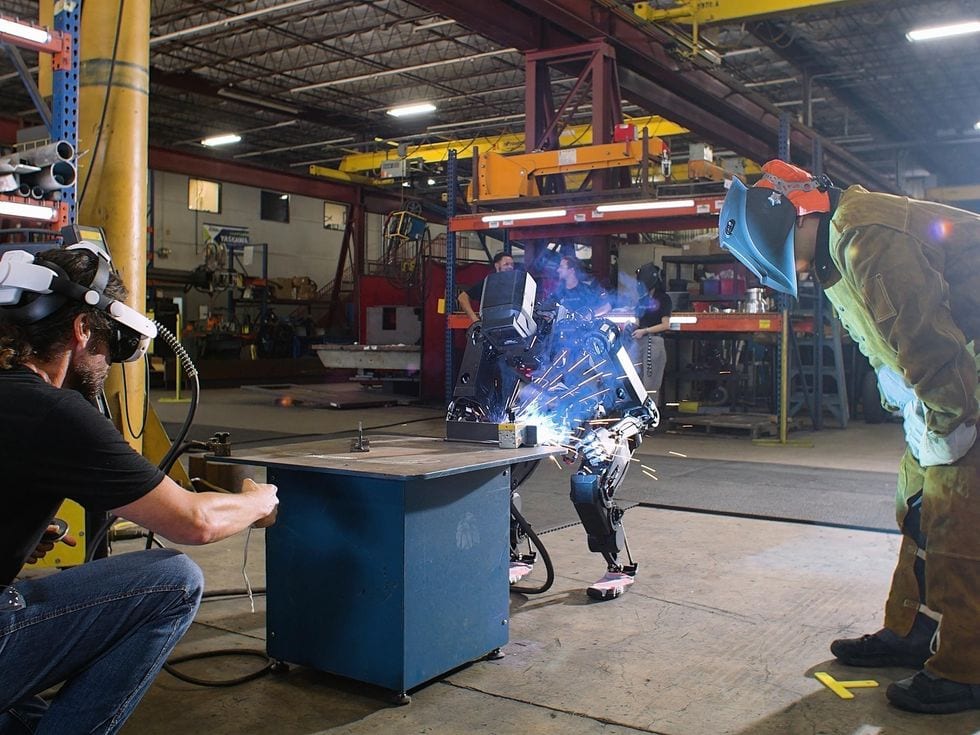
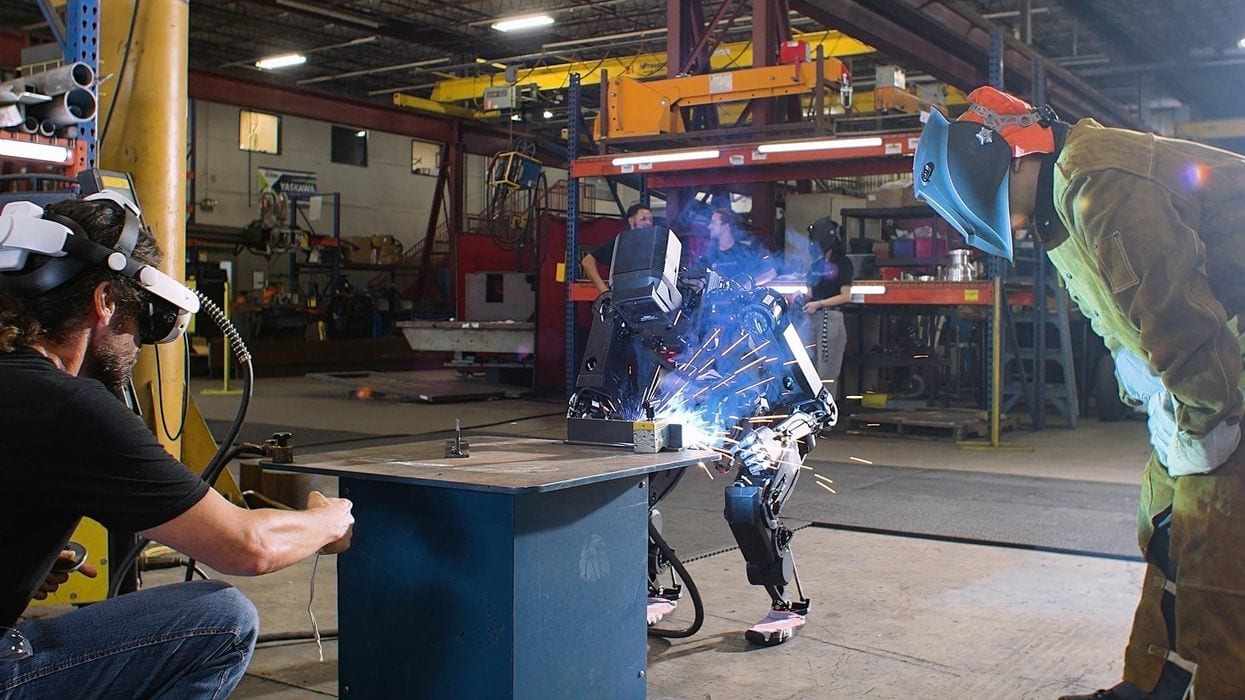
The first task is handheld welding, joining one piece of metal to another. Pratt acknowledges that tool use is hard, and that using the same tools humans use makes it harder. The company is limiting the initial scope to long, linear welds that are relatively uncomplicated. Radford says this is not the hardest style of weld, but shipbuilding demands a very large number of them.
The task suits a machine for specific reasons. A weld can only proceed as fast as the metal melts, so top speed is about a centimeter per second. A good weld depends on repeated motions at millimeter scale, which robots perform consistently over long periods. Humans tire or lose focus. Pratt expects the robot to match human performance on these simple welds soon, and possibly exceed it later.
Welding also has history in robotics. It was the job of one of the first industrial robots ever sold.
Why the robot needs legs
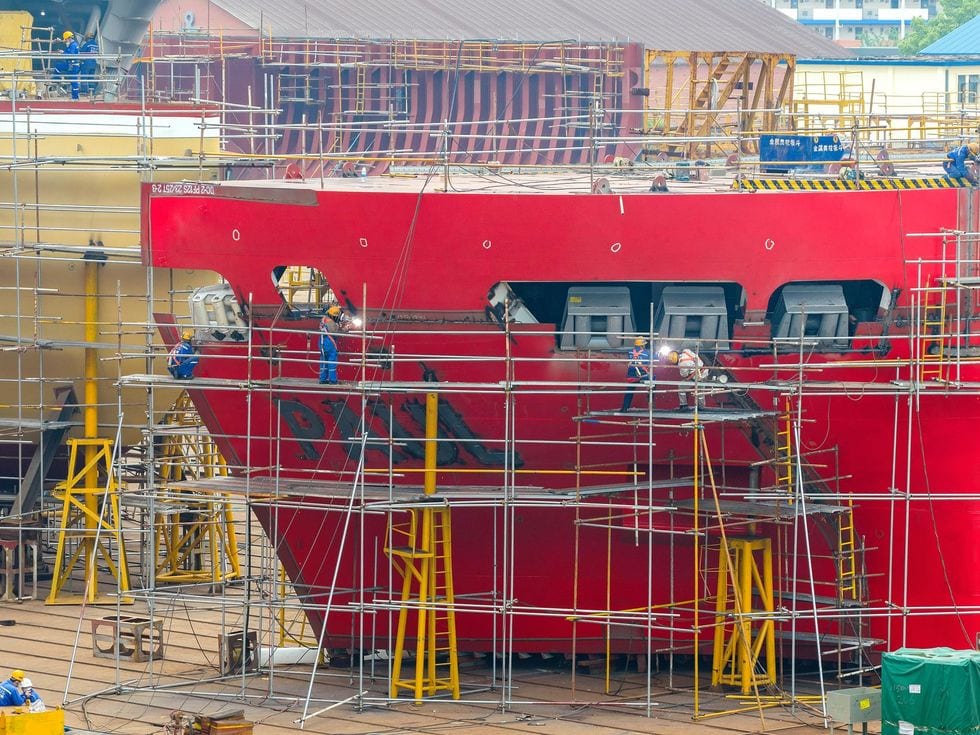
A wheeled base would be more stable, but Radford argues that shipyards call for legs. The open-air yards stretch a couple of hundred meters and are full of horizontal and vertical spars that workers step over constantly. The work happens on the ground, overhead and through portholes. Persona looked at four-legged and other forms and concluded that a biped would disrupt existing shipyard routines the least.
The environment also eases a standard worry about bipedal machines, which is a fall onto a person. Shipyard staff are already trained to work around dangerous industrial equipment.
Selling capacity instead of savings
Persona says its partners carry significant backlogs and cannot hire enough skilled workers. Radford frames the pitch as helping a customer's top line rather than its bottom line. The argument is that robots let yards build more ships, not that they make each ship cheaper. He says that even a robot costing more than a human would be valuable if it unlocks additional revenue.
Pratt adds that the absence of rivals in this use case reduces price pressure. A home robot would face heavy competition, while a shipyard robot can keep its quality and features without cutting corners to hit a price. Persona declined to give details of its deals, but Radford says it wants customers who can support hundreds of robots per location.
What it means, and what is still unproven
The strongest part of Persona's plan is the match between task and customer. The weld is slow, repetitive and precise, which fits what robots do well. The customers report labor shortages, so the robot does not have to win a cost comparison against an available worker. That is a lower bar than the one facing humanoids sold as general-purpose labor, which must justify themselves against cheap human work in many settings at once.
The plan also shares a pattern with the most credible industrial robots: a narrow task, a controlled workplace and a buyer with a measurable bottleneck. Persona's own description of shipyards as a beachhead, with grinding, painting and other fabrication nearby, suggests it sees the narrow start as a route to broader skills and not a limit.
Much remains unproven. Pratt's expectation that the robot will match human welders is a prediction, not a result. The company has said it needs tens of thousands of hours of expert demonstration data, high-fidelity simulations and real-world testing, and it has not said how far along any of that is. It has not disclosed pricing, delivery dates or how many robots are working in a yard today. The two named partnerships are public, but their scope is not.
There is also a gap between linear welds and the full range of shipyard work. Welding in tight spaces, overhead and through portholes is the environment Radford describes, and operating there reliably is a harder test than the simple weld style alone. Persona has also been told it is not thinking big enough, which Radford says hurts a little. The more important test is narrower: whether a legged robot can hold a weld line in a working yard, shift after shift, at a price a shipbuilder will pay. Pratt notes that many technical problems are the same in a house or a shipyard, so a result here would carry value for the wider field, whichever way it goes.