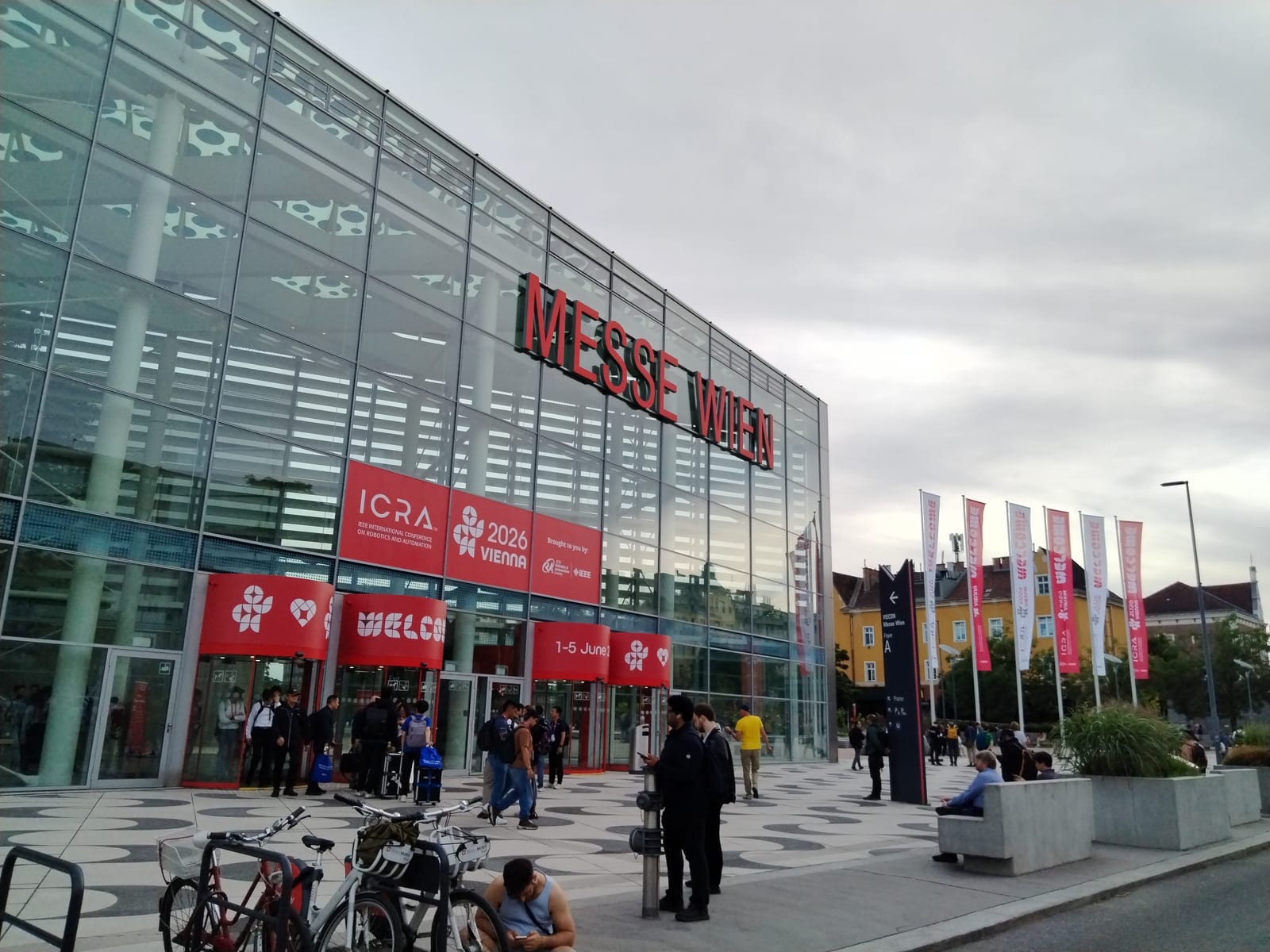
The ICRA 2026 robotics conference ran from 1 to 5 June at the Messe Wien venue in Vienna, and robotic hands, rather than humanoids, were the main trend on the exhibition floor. The IEEE International Conference on Robotics & Automation sits on the bank of the Danube. It combined an exhibition hall, industry talks, plenaries, workshops and an arts section. Veteran attendees said the robots had improved noticeably on previous years.
Hands take over the exhibition floor
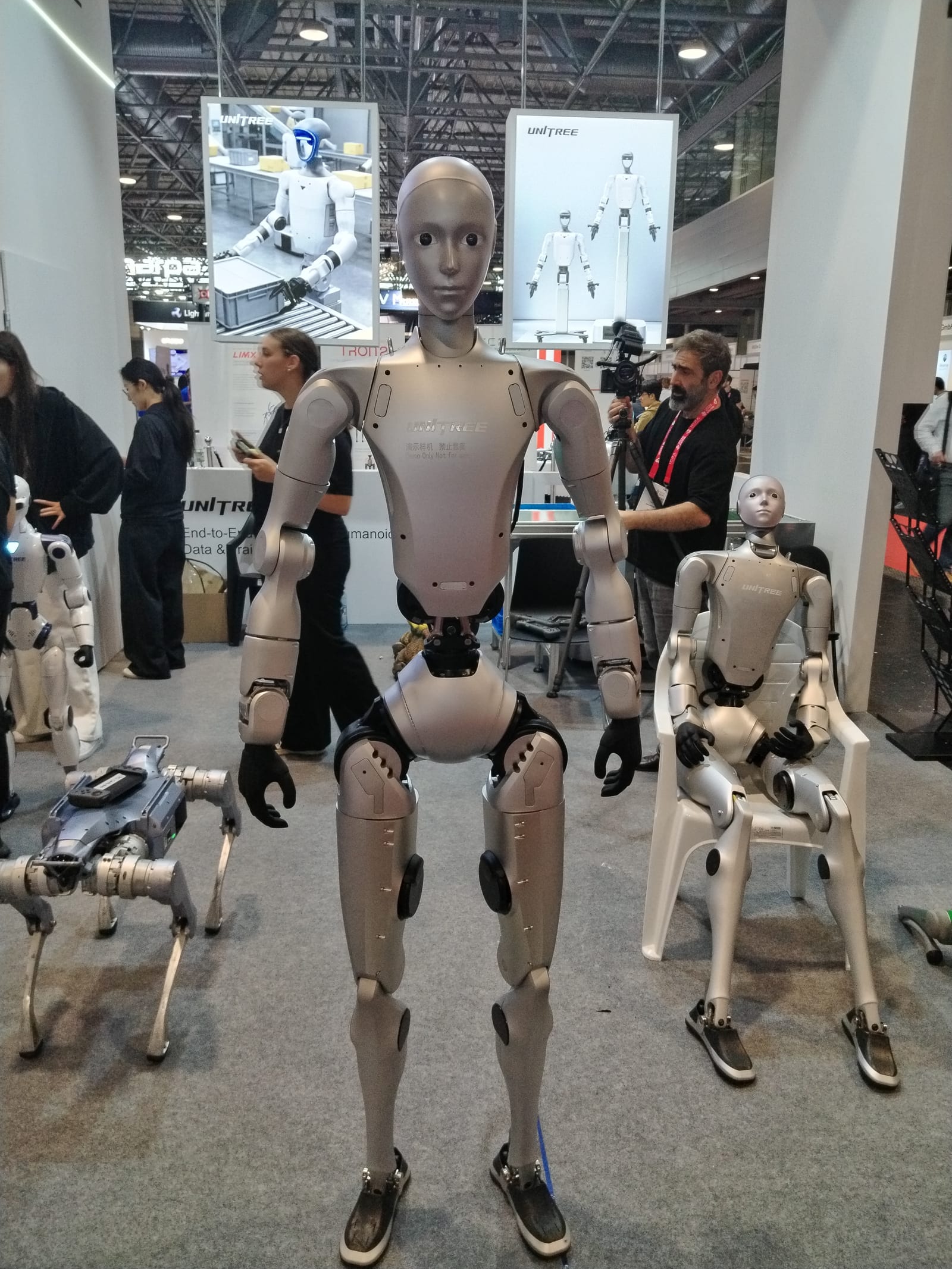
Child-sized Booster robots greeted visitors at the entrance to the exhibition hall. They played football, danced and demonstrated kung fu. Agibot machines of a similar size were nearby.
Direct Drive showed the D1-modular robot, which can split into two halves. Unlike most robot dogs, it can jump, twist and traverse difficult terrain. Sharpa's North waved at visitors and made love-hearts, and a blackjack table behind the booth let attendees play against it.
Other humanoids were doing practical work. Some zipped up rucksacks and others tried to fold laundry. Tesollo's humanoid spent much of the event using long, wavering arms to pick up fruit and drop it into baskets. Enchanted Tools showed Mirokaï, a social care robot with a bright orange body, feline ears and a furry face. Vietnamese company Vinrobotics showed a humanoid with audibly wheezing joints.
Few of the robots on the floor could handle tasks that demanded fine motor control. That made the dexterity work stand out.
Dexterity defines the industrial talks
Jenny Read, program director at ARIA, described the UK agency's Smarter Robot Bodies program. It has two branches. One covers locomotion and aims to let robots cross messy, unpredictable environments. The other covers dexterity and targets the bottleneck in manipulation by robotic hands. The program is set to launch in early 2027.
TARS, a Chinese embodied intelligence company co-founded by Dr Ding Wenchao 18 months ago, presented its DexHand. TARS says it has raised more angel and pre-seed funding than any other company in the Chinese embodied intelligence sector. It also holds a Guinness World Record for robotic flexible wiring-harness insertion completed in one hour.
DexHand is a 1:1 model of the human hand and replicates the 21 degrees of freedom of the hand and wrist. TARS says it can interpret tactile data to distinguish slipperiness, roughness and hardness in real time. The company also says it can perform 26 English alphabet hand gestures with high-precision finger control. Visitors could control the hand with their own, and it followed their movements closely. A TARS humanoid also zipped up a backpack on the show floor. Ding gave an industry keynote on Thursday that set out the company's roadmap from academia to industrial deployment.
Plenaries focus on data and language
Ken Goldberg's plenary, titled "A Tale of Two Cultures: Can Agentic Coding Close the Gap?", centred on the data gap in robot manipulation. Large datasets have largely solved computer vision and language, he said, but robotics has state spaces of more than 50 dimensions. Training vision-language models currently takes data equivalent to 100,000 years of physical experience.
He listed four ways to close the gap. Simulation works well for locomotion and body control but less well for manipulation, because of the forces and instabilities involved. World models do not yet capture physics properly and can hallucinate. Human teleoperation yields high-quality data, but the largest dataset is equivalent to only a year of data. The fourth option is real data from functioning robots, which is less common but can be powerful.
Goldberg said he used the fourth approach at his package-handling company, Ambi Robotics, which he has run for 22 years. Bag picking is repeated with different starting conditions each time, and the resulting dataset was used to build a generative model for training pick strategies. He urged other researchers to use their own production data in the same way.
Stefanie Tellex of Brown University spoke on complex language in partially observed environments. She argued that current research stays within known, predictable scenarios and action-based language. Her work targets robots that follow goal-based commands in dynamic settings, and she outlined a grounded Turing test for embodied AI.
Ethics, outreach and art
The 2nd Workshop on Robot Ethics (WOROBET) opened the week. Yasuhisa Hirata of Tohoku University discussed assistive devices such as detachable exoskeletons and cycling wheelchairs, and the risk of tipping from support into deception. Minoru Asada of Osaka University described work on giving robots pain signals. Alan Winfield of UWE Bristol took the opposing view that robots are tools, and outlined a framework for investigating social robot accidents. He warned that coding ethics into robots can shift moral responsibility away from roboticists and does not prevent malicious hacking. Praminda Caleb-Solly of the University of Nottingham led a red-teaming exercise on an assistive robot for a teacher recovering from a stroke at home.
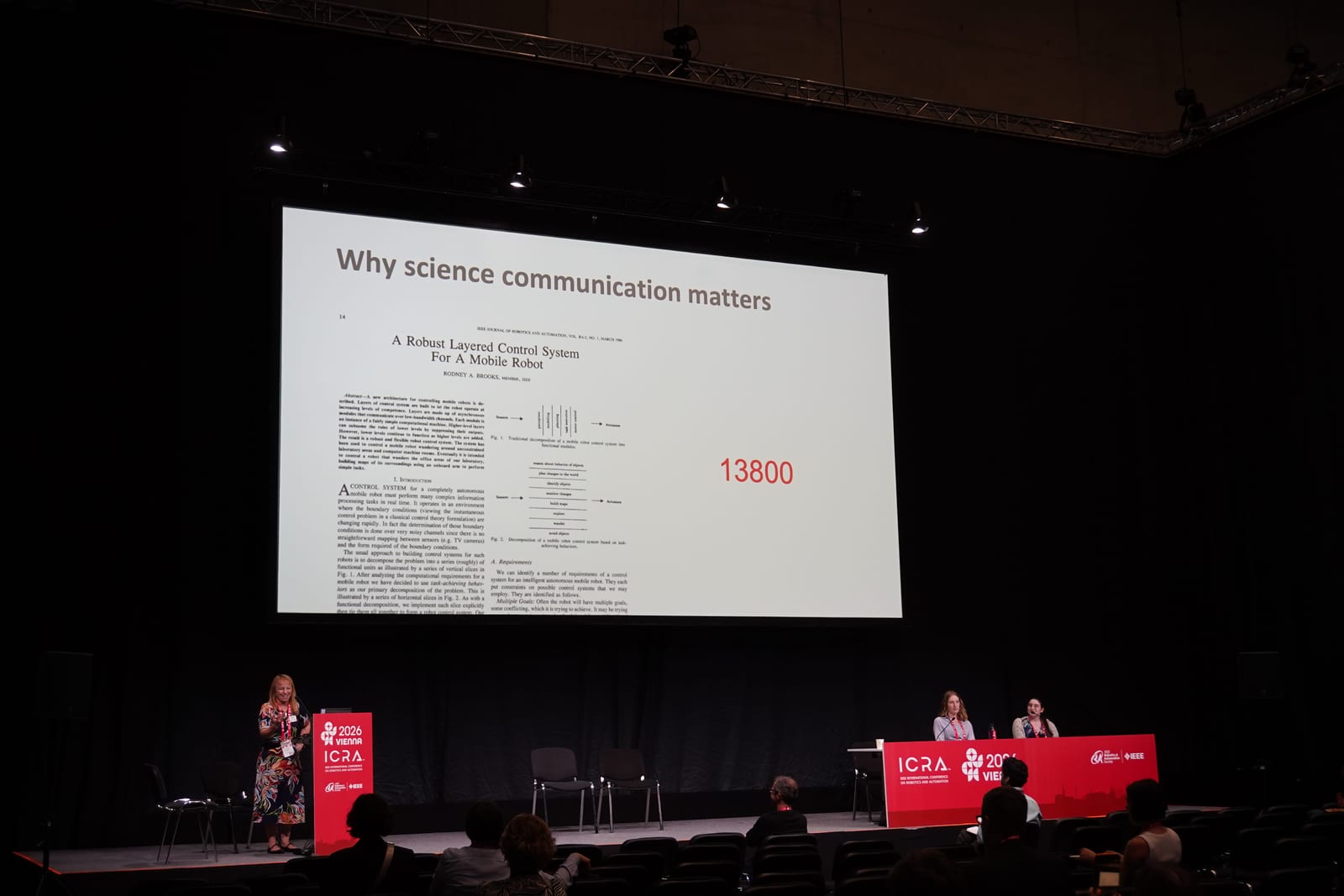
A science communication crash course drew an audience of 100 academics. The arts section included a robotic saxophone by Masatoshi Hamanaka, a touch-responsive sculpture called PET, and AREYOUARE, a performance by Silke Grabinger on human-robot interaction. The week closed with a robot parade.
What the ICRA 2026 robotics agenda means
The talks and demonstrations point to the same constraint from three directions. Hardware for hands is advancing, as the DexHand's degrees of freedom and tactile claims show. The training data to use that hardware is scarce, as Goldberg's figures show. Funders have also identified dexterity as a bottleneck worth a dedicated program, as the ARIA plan shows. Hands are therefore ahead of the data needed to make them useful.
The comparison with locomotion is informative. Goldberg said simulation works well for locomotion and body control but poorly for manipulation. Legged and wheeled progress can therefore draw on cheap synthetic data in a way that fine manipulation cannot. That helps explain why a robot dog that splits in two was a novelty, while a humanoid that zips a bag was a rarity.
Several points remain unproven. The TARS figures on tactile discrimination and gesture accuracy are company statements, and the source gives no independent test results. A hand that follows a visitor's movements in a demonstration says little about reliability across thousands of varied tasks. ARIA's program has not launched, so its results are unknown. Goldberg's answer, using production data from deployed robots, worked at one company in one task type. Nothing presented showed it transferring to the varied conditions of household work such as laundry folding.
The ethics workshop raised a separate gap. Hirata's question of how to help without deceiving, and the care-robot exercise on user autonomy, were both framed as near-term design problems. Dexterous hands move robots closer to the care settings those sessions examined. The ethics work is therefore likely to become more relevant as the hardware matures, not less.