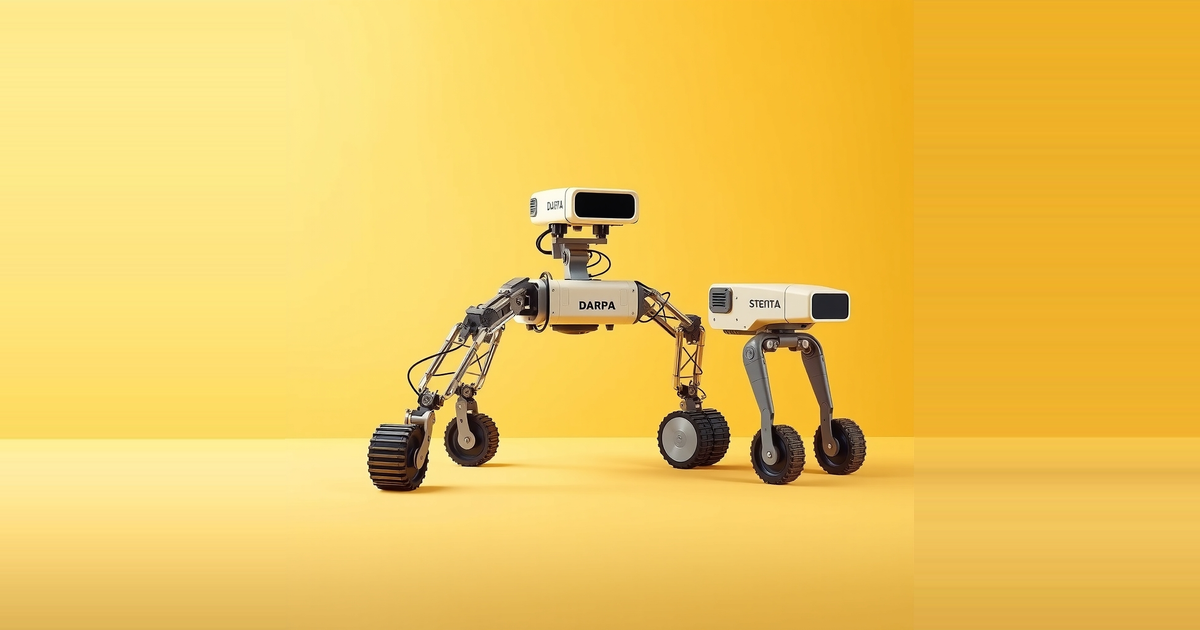
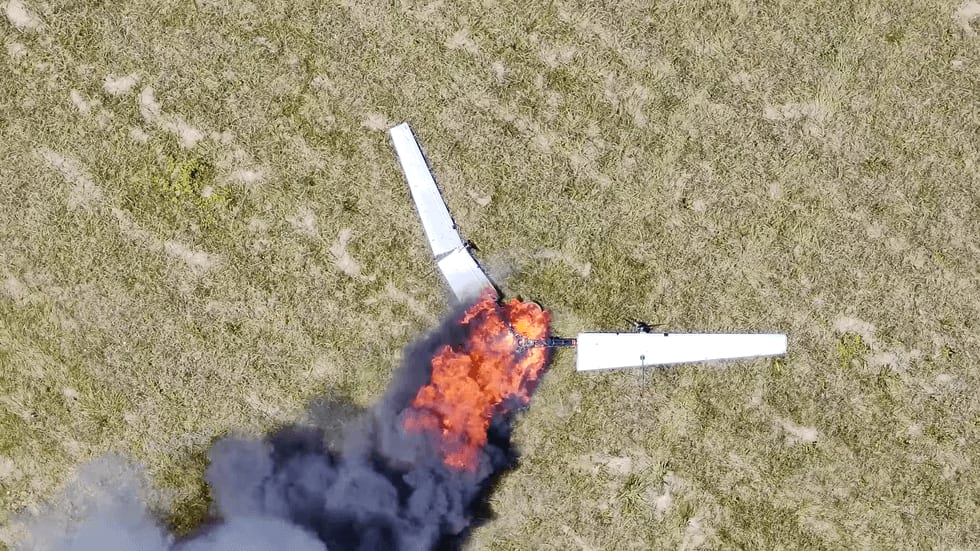
Video recaps covering the final few days of the DARPA Lift Challenge show crashes followed by battery fires. The footage is part of a weekly batch of robotics clips that also includes a brick-laying robot, a plant-climbing machine and a drone built to deliver to moving vehicles.
The DARPA Lift Challenge material is the most dramatic item in the group. The rest is a spread of work that runs from commercial construction to university research to humanoid demonstrations. Taken together, the clips show where practical robotics stands on construction, agriculture, space, locomotion and manipulation.
What the DARPA Lift Challenge footage shows
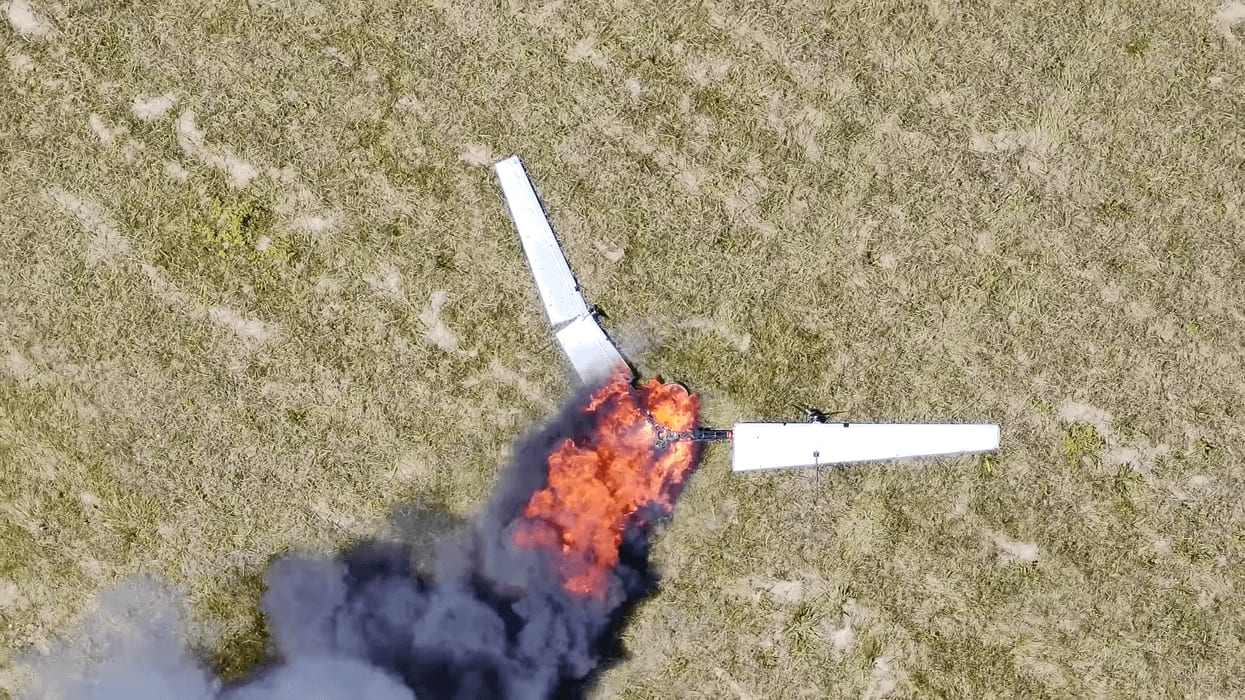
The recaps cover the closing days of the DARPA Lift Challenge. The footage includes vehicles failing badly, and some of those failures ended in battery fires. The recaps are the main record of how the final stretch went.
Public failure footage has real value in robotics. Competitions put hardware under stress that a controlled lab demonstration avoids. A crash followed by a battery fire is a data point about power systems and flight reliability. It is also a reminder that energy storage is one of the hardest parts of building machines that lift and carry loads.
The recaps do not settle which designs performed best, and no results are given here. What they offer is a view of how the hardware behaved when pushed to its limits.
Robots working outdoors and on site
Monumental's robots delivered the brickwork for a semi-detached home. They laid around 20,000 bricks in a new community. The number matters because it describes a finished building job rather than a test wall. Bricklaying is repetitive and physically punishing, and a robot that completes the brickwork on a real home addresses both problems.
The HKUST Aerial Robotics Group showed a drone delivery concept aimed at moving vehicles, and possibly at delivery through an open window. Landing a package on a platform that is itself in motion is a harder problem than dropping at a fixed address. The clip suggests the group is working on that harder case.
STEMbot takes a different approach to scale. This small robot climbs up and around plant stems to check for pests. It is not fast. Its job is inspection, and a slow machine that stays on the plant can still be useful for that.
Research and manipulation clips
Modlab at the University of Pennsylvania posted a clip of a truss robot. The source gives no technical detail beyond the pun in its description, so the clip should be read as a demonstration of the lab's structure-based approach rather than a published result.
Stanford BDML and Honeybee Robotics propose a payload to test gecko-inspired adhesives in space. The idea is to expose the adhesives to the space environment rather than rely on ground tests alone. The payload is a proposal, and the source states no launch date.
A group at BRAIN VISTEC presented a Differential Adaptive Steering mechanism, or DAST. It addresses how a legged robot can organize its own walking while keeping a desired direction. The work uses decentralized adaptive control, so steering adapts through distributed control rather than a single central planner.
Sanctuary AI posted a clip built around recovery from failure. The point is that a robot failing safely matters less than whether it gets back on task afterward.
Kawasaki Robotics showed a robot making pours, with light measures of champagne. LimX Dynamics showed clothing handling, a task made harder by the fact that people leave garments in piles. Sharpa showed shirt folding at a pace the clip's caption compares to human speed. DEEP Robotics showed its DR02 humanoid climbing stairs with stable, controlled steps. AgileX closed the batch with a structural minifridge.
What the clips say about the field
The strongest evidence in this batch is the Monumental result. A count of around 20,000 bricks on a real home is a field outcome. Most of the other items are short demonstrations, proposals or lab work, and none comes with performance figures in the material available here.
The DARPA Lift Challenge footage points to a recurring weakness. Fires after crashes put the spotlight on battery safety, which affects every item here that moves under its own power, from delivery drones to humanoids. A robot that lifts well but can burn when it fails is hard to deploy near people or buildings.
There is also a split between work that targets structured tasks and work that targets messy ones. Brickwork, pours and stair climbing happen in settings with clear geometry. Clothing piles, plant stems and moving vehicles are less predictable. The clothing and delivery clips address the harder cases, but a short video does not show how often they succeed. Success rates, speeds and failure counts are not stated, so those claims remain unproven.
The Sanctuary AI clip points to a useful measure for the field. Recovery from failure is a better indicator of deployable robots than a flawless demonstration. The DARPA Lift Challenge recaps, with their crashes and fires, show what happens when recovery is not possible. The gap between those two outcomes is where much of the remaining engineering work sits.
For readers tracking space robotics, the gecko adhesive proposal is the item to watch. It is still a proposal, and nothing in the material confirms that it has been funded or scheduled for flight.