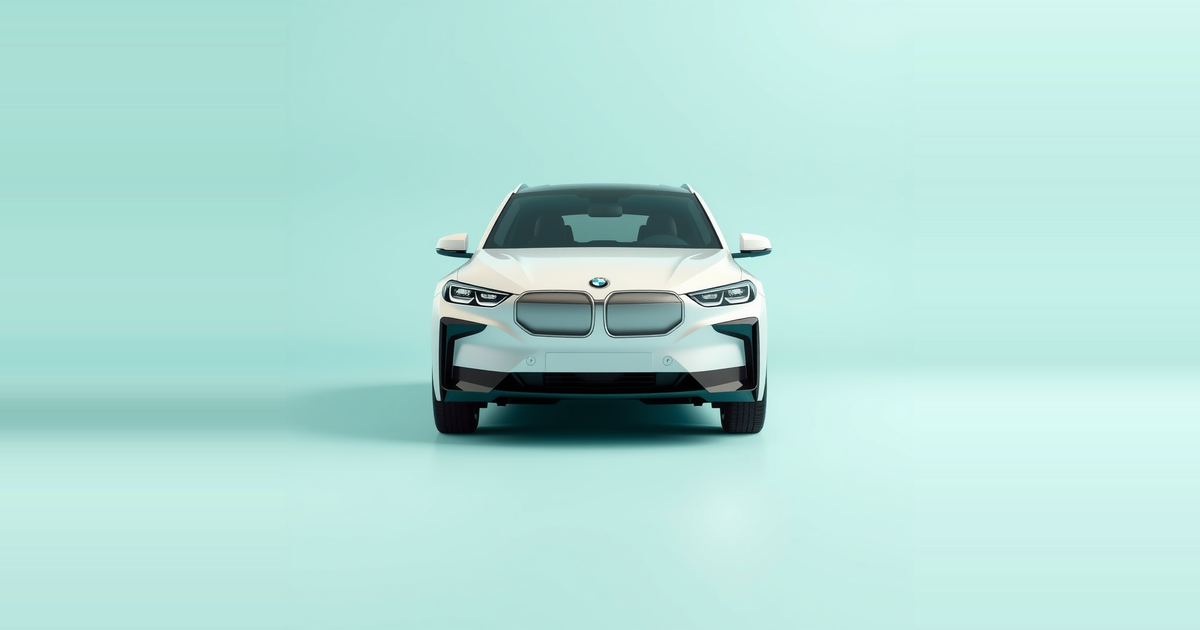
Embotech and BMW have moved 1 million vehicles with automated driving technology across four plants in the U.K. and Germany. The system now handles about 3,500 vehicle movements a day with more than 99.5% availability, according to the two companies. The milestone makes it one of the larger reported uses of BMW automated driving inside a live production network.
Vehicles leaving a production line normally need a human driver to take them to a parking area or onto a truck. Embotech's Automated Driving In-Plant system replaces that driver in defined production and logistics areas of each factory.
Four sites, one pilot lineage
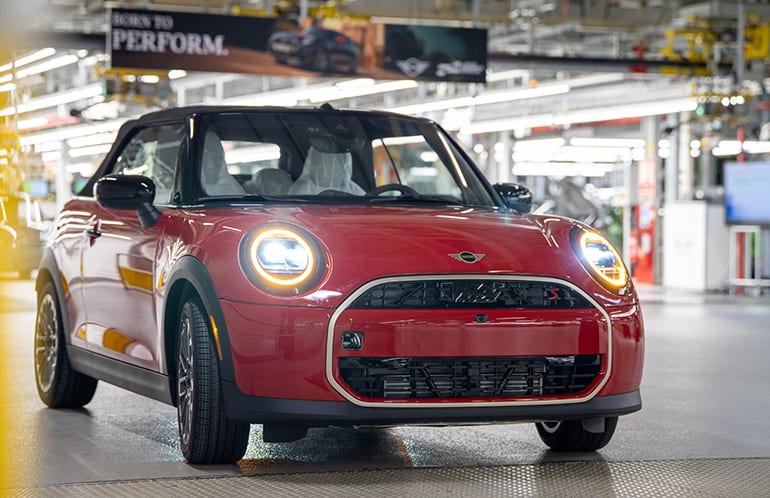
The program began with a pilot in 2022. It has since grown to BMW's Dingolfing, Leipzig and Regensburg plants in Germany and to MINI Plant Oxford in the U.K. The technology supports different use cases in defined areas at each site, and it covers different brands, vehicle types, and production and logistics processes.
Embotech's CEO, Andreas Kyrtatos, gave the pace of the rollout. The first 500,000 automated movements with BMW took 15 months. The next 500,000 took seven. Raymond Wittmann, the BMW AG board member responsible for production, said the company tested the technology in a pilot, developed it to series maturity and is now rolling it out worldwide. He described it as part of the BMW iFACTORY effort.
Embotech's Munich team worked with BMW on the tools and processes around the system, including deployment, monitoring, diagnosis and recovery. Embotech says the operating data feeds back into its perception, prediction and planning software, so later releases draw on what the live plants have shown.
Perception sits in the building, not the car
The design choice that separates this system from many autonomous vehicle efforts is where the sensing happens. Eva Beck, Embotech's chief commercial officer, said perception for the Automated Vehicle Marshalling system is in the infrastructure. The vehicles need no self-driving capability and no extra sensors. Hesai lidars are mounted in the production environment, so the cars need no hardware modifications.
In the factory, Embotech installs a standardized software interface, offboard computers and servers. The servers optimize driving trajectories 10 times per second. A fleet manager receives destinations from the automaker's back-end systems, defines vehicle routes and manages communication among the automated vehicles. The system connects to the drive-by-wire capabilities vehicles already have, and it is vehicle- and OEM-agnostic.
Embotech's software uses AI for perception, prediction and planning. A separate deterministic architecture, independently certified by TÜV SÜD, defines and enforces the safety boundary. Embotech describes itself as a Zurich-based ETH Zurich spin-out, founded in 2013, and says it was the first company to hold multiple TÜV-certified SAE Level 4 solutions. Its two certified systems, Automated Vehicle Marshalling and Autonomous Tractor Solution, share a platform. Both are used in factories, distribution centers, ports and logistics yards.
Beck said the system can work alongside factory workers and manually driven vehicles, and in all weather conditions. She named safety and fewer manual errors or damage as the main motivations for automakers.
What comes next
Embotech plans to bring the system to BMW's Spartanburg plant in South Carolina next year, Beck said. Spartanburg is also where BMW has tested Figure AI humanoid robots. Embotech says it wants to add use cases, sites, customers and industrial environments. In July it entered a strategic partnership with HTEC to scale deployment across vehicles, customer programs and industrial sites.
Why the numbers matter, and what they leave open
Embotech says much of the automotive market is still at the pilot stage, with only a limited number of vehicles moved autonomously. Against that, a program running about 3,500 movements a day across four plants, with availability above 99.5%, is operating as part of production rather than as a demonstration. The faster second half-million also suggests that each new site is easier to bring up than the last, though the companies do not break down why.
The infrastructure-based approach explains much of that. A system that puts sensors and compute in the plant avoids modifying each vehicle and works across models and brands. That is consistent with the cross-brand use at BMW. The trade-off follows from the same design. Each site needs its own lidar installation, servers and defined operating areas. Gains come from repeating a deployment process, not from a vehicle that can drive anywhere. Onboard-sensor approaches work differently, but the source offers no head-to-head data, so any claim about which is cheaper or faster to deploy would be a guess.
Several things remain unproven in public. No cost, price or payback figures have been disclosed. The availability figure has no stated definition, such as what counts as downtime or how it is measured per site. No safety incident or intervention data is given, so the TÜV certification is the main external evidence of safety. The share of BMW's total vehicle output that moves automatically is also not stated, and neither is the length of the routes. Wittmann's mention of a worldwide rollout has no schedule beyond Spartanburg next year.
The next test is whether the model travels beyond BMW. Every figure so far comes from one customer's network, and Embotech's growth plans depend on repeating the result with other automakers, ports and logistics yards, which have different layouts and traffic. Spartanburg will show whether the approach holds in a plant on another continent, and any additional customer will show whether it is truly OEM-agnostic in practice.