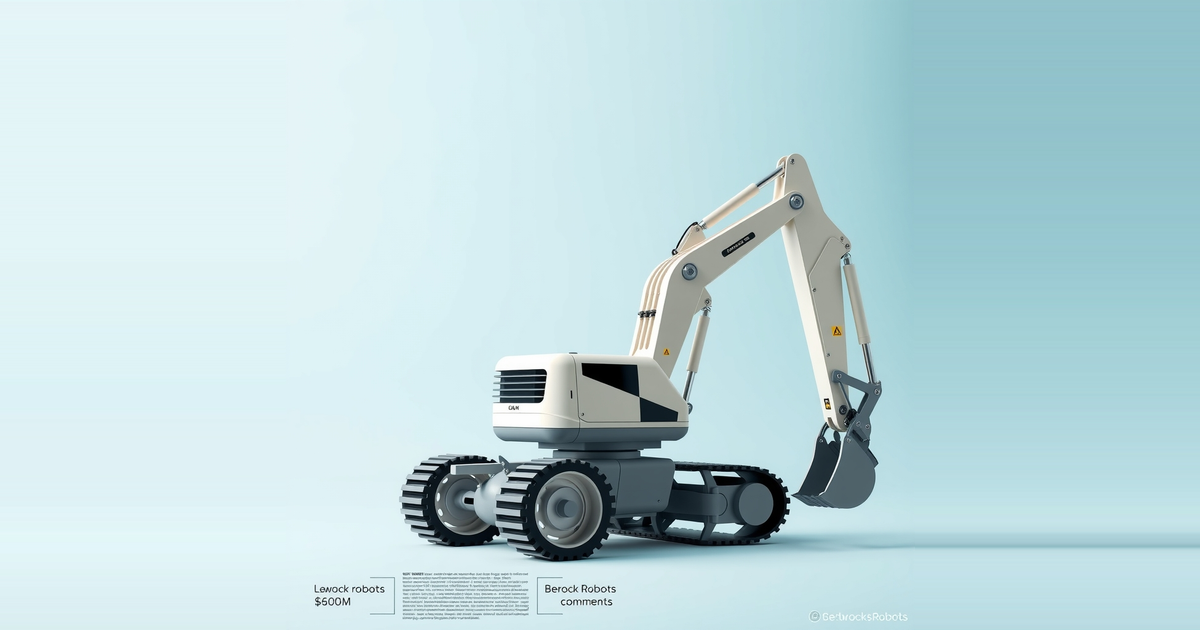
Bedrock Robotics has raised $600 million in a Series C round at a $4.1 billion valuation, bringing its total funding to nearly $1 billion. CapitalG and Emergence Capital co-led the round. The San Francisco company retrofits large machines so they work without an operator, and it will use the money to put more autonomous excavators on commercial construction sites across the U.S.
Who invested and what the money is for
New investors in the round are US Innovative Technology Fund (USIT), Bessemer Venture Partners and Temasek. Existing investors 8VC, Georgian, Valor Equity Partners, Xora, Eclipse, Perry Creek Capital and NVIDIA also took part, along with others.
Bedrock said the funding will speed up deployment of Bedrock-equipped machines. The stated aim is to help contractors use the heavy equipment they already own more safely, more predictably and at greater capacity. The company is targeting nationwide construction labor shortages.
CEO Boris Sofman described demand as very high. He said the company is growing into that demand deliberately, adding new customers it can serve alongside its longtime design partners. Scaling is under way across operations, hardware and supply chain, he said.
Expansion beyond the first markets
The round follows a period of rapid commercial growth. Bedrock began in the West and Central South and has since moved into the Midwest and South Atlantic. Its anchor relationship is a partnership with Southwest contractor Haydon to automate earthwork in Texas.
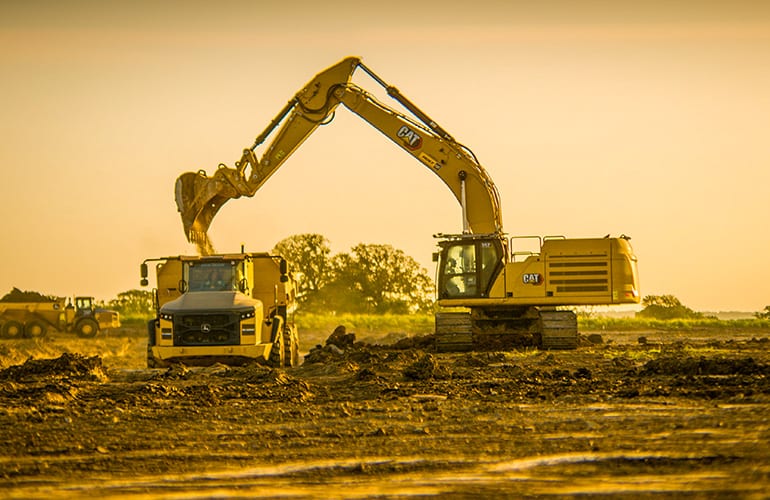
The company has also added regional partners in Minnesota, Florida, Georgia, Missouri and Virginia. Its autonomous retrofits now operate on live job sites that include data centers, healthcare facilities and heavy civil infrastructure projects.
Sofman said the company first launched fully autonomous excavators on live commercial job sites only a few months ago. That came two years after Bedrock emerged from stealth. He said the machines have shown they can do real work alongside the crews and workflows already on site.
Leadership additions
Bedrock added two executives while closing the round. Amy Jones Satrom joins as vice president of operations. She previously worked in operations at Amazon, Nuro and Uber, and she will lead the company through its next phase of scaling. Sofman said she is still early in her tenure and will be central to growing the deployment and production teams.
Lando Juarez has joined as general counsel. He was head of legal for Uber's Autonomous Mobility & Delivery business, where he oversaw commercial partnerships and regulatory pathways.
Sofman also pointed to co-founder and VP of engineering Ajay Gummalla, who is closely involved on the hardware side. His focus is the supply chain, so the company can build the hardware that customer demand requires.
Next machines, next industries, and the 2027 target
Construction remains the focus in the short term. Sofman put the sector at 4% to 5% of U.S. GDP and said Bedrock is looking at more use cases within it. Haydon will test the excavators on autonomous trench work.
The company is also considering larger machines. Haydon and others will explore bulldozers, articulated dump trucks and wheel loaders as candidates for automation. Over the long term, Bedrock is looking at mining and agriculture. Both face labor constraints and use the same kinds of heavy machines that general contractors do.
For 2027, Sofman said the goal is more Bedrock-equipped machines on more job sites. He set a target of triple-digit numbers of machines working autonomously across the country.
Asked about the installed base and the size of the economic opportunity, he declined to give figures, saying it is early for concrete numbers. He offered an illustration instead. A job finished two months sooner because autonomous machines run around the clock, seven days a week, would save a developer paying 9% interest on a $400 million loan about $6 million.
He cited labor data as the backdrop. Twenty percent of construction workers are over 55, and estimates suggest more than 40% will retire within five years. Large projects already run an average of 20% over schedule and 80% over budget. In construction, 87% of firms report openings for hourly craft positions, and 88% say those roles are as hard or harder to fill than a year ago.
What the round shows, and what it does not
The size of the round is the clearest signal. Raising $600 million at a $4.1 billion valuation, with a total near $1 billion, reflects investor confidence in a company whose fully autonomous machines have worked on live commercial sites for only a few months. The investor list mixes growth funds, a sovereign-linked investor and a chip supplier, which suggests the bet is on scale rather than on a research result.
The approach also matters. Bedrock retrofits equipment that contractors already own rather than selling new machines. That lowers the barrier to adoption, because a contractor does not need to replace a fleet. It also ties Bedrock's growth to field operations, supply chain and support, which is why the operations hire and the hardware focus on supply resilience stand out in this announcement.
Several things remain unproven. Bedrock gave no figures for machines deployed, so the distance from today's footprint to triple digits in 2027 cannot be judged. The savings example is a hypothetical, not a measured result from a customer project. The round-the-clock operation behind it is a scenario Sofman described, not a stated current practice.
Trench work, bulldozers, dump trucks and wheel loaders are all still in the exploration or testing stage with Haydon and others. Each is a different task with its own safety and reliability demands, and none has been shown yet. The move into mining and agriculture is a long-term intention only.
The labor statistics establish the need. They do not establish that autonomous machines will capture it. The test over the next year is whether Bedrock can add partners and machines at the pace the funding implies while keeping deployments dependable. Its own CEO framed that as the next challenge.