
Four matches into the seeding rounds, CAU Mountain&Sea is the only team in the small division to have won every game, and it has conceded a single goal. The team from China Agricultural University sits on 12 points. Its result sets the pace at the end of day two of the RoboCup 2026 humanoid league, with the knockout rounds due to start tomorrow.
Seeding standings across three divisions
In the small division, CAU Mountain&Sea leads the table on 12 points after four wins. Hamburg Bit-Bots and GeoHBots are second and third. Each has won three games and lost one. The same Chinese team is also in fourth place in the large division, so its play is competitive across more than one size class.
The middle division has the largest gap at the top. B-Human has won all four of its matches and holds a goal difference of +35. Four teams follow on nine points: HTWK Robots, Rhoban, whIRLwind Amsterdam and THMOS.
In the large division, teams have played three rounds of seeding, and one more round is scheduled for tomorrow. Tsinghua Hephaestus is the only team with a perfect record, on nine points. PCMS-HRG and Robo-Erectus have each won two matches and drawn the third.
Once seeding ends, 12 teams from each division advance to the knockout stages. The quarter finals take place in the evening.
A field drawn from 17 countries
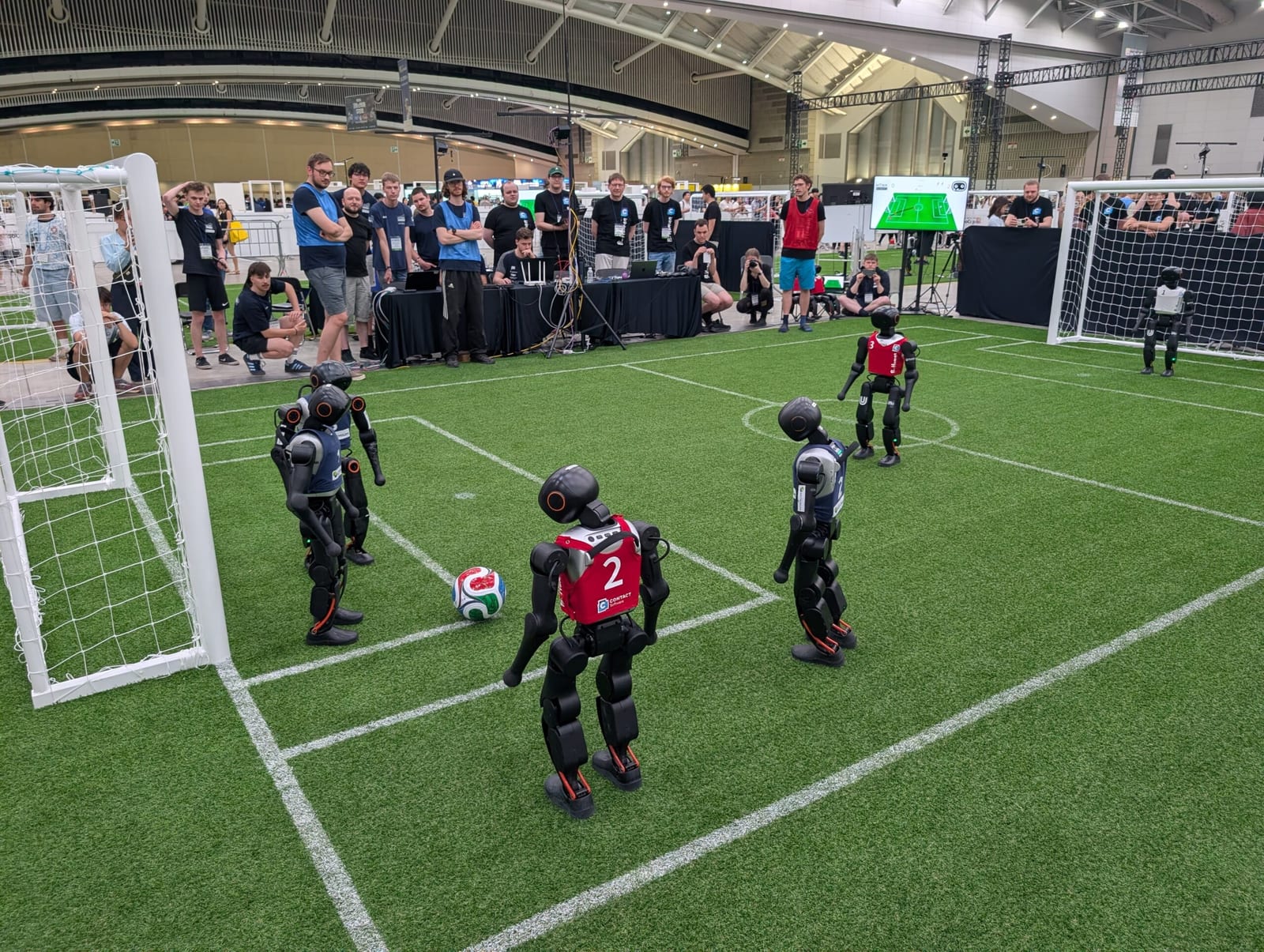
Teams from 17 countries are taking part in this year's humanoid soccer competition. China has the most entries, with 15 teams across the three divisions. The rest of the field is geographically spread, from Colombia to Malaysia and from Germany to Australia.
Before the event, every applying team submitted a qualification video, a team description paper, and information about the robots and software it uses. Those submissions give each team's technical approach a public record that can be compared across the field.
Safety on the pitch
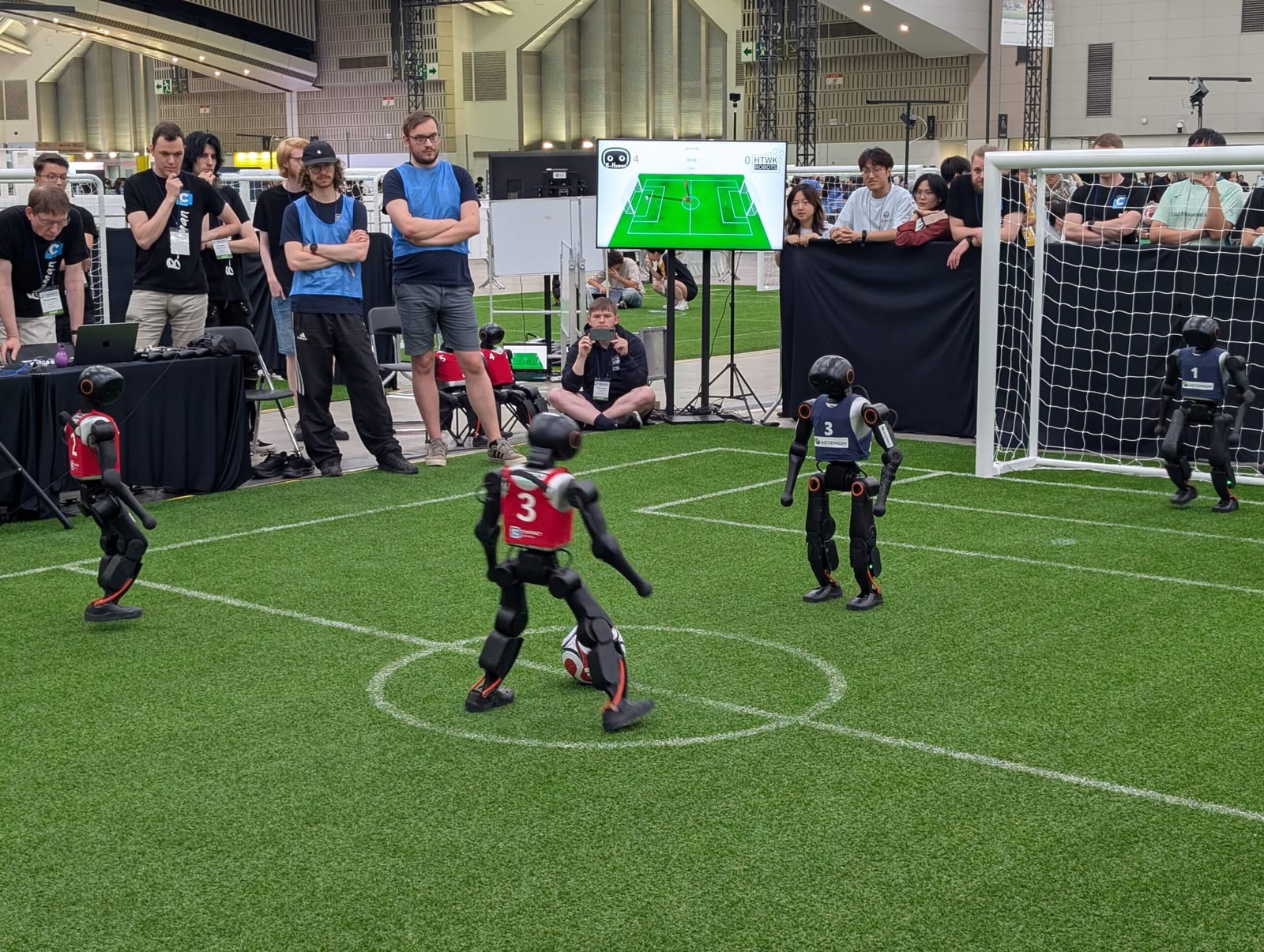
Day one produced the first red card of the competition. A robot collected two yellow cards for unsafe challenges and was removed from play on safety grounds. The second foul was recorded on video. The sequence is a reminder that referees in this league judge physical contact between machines, and that a robot can be sent off for how it challenges an opponent, not only for what it does with the ball.
The robots by weight and height
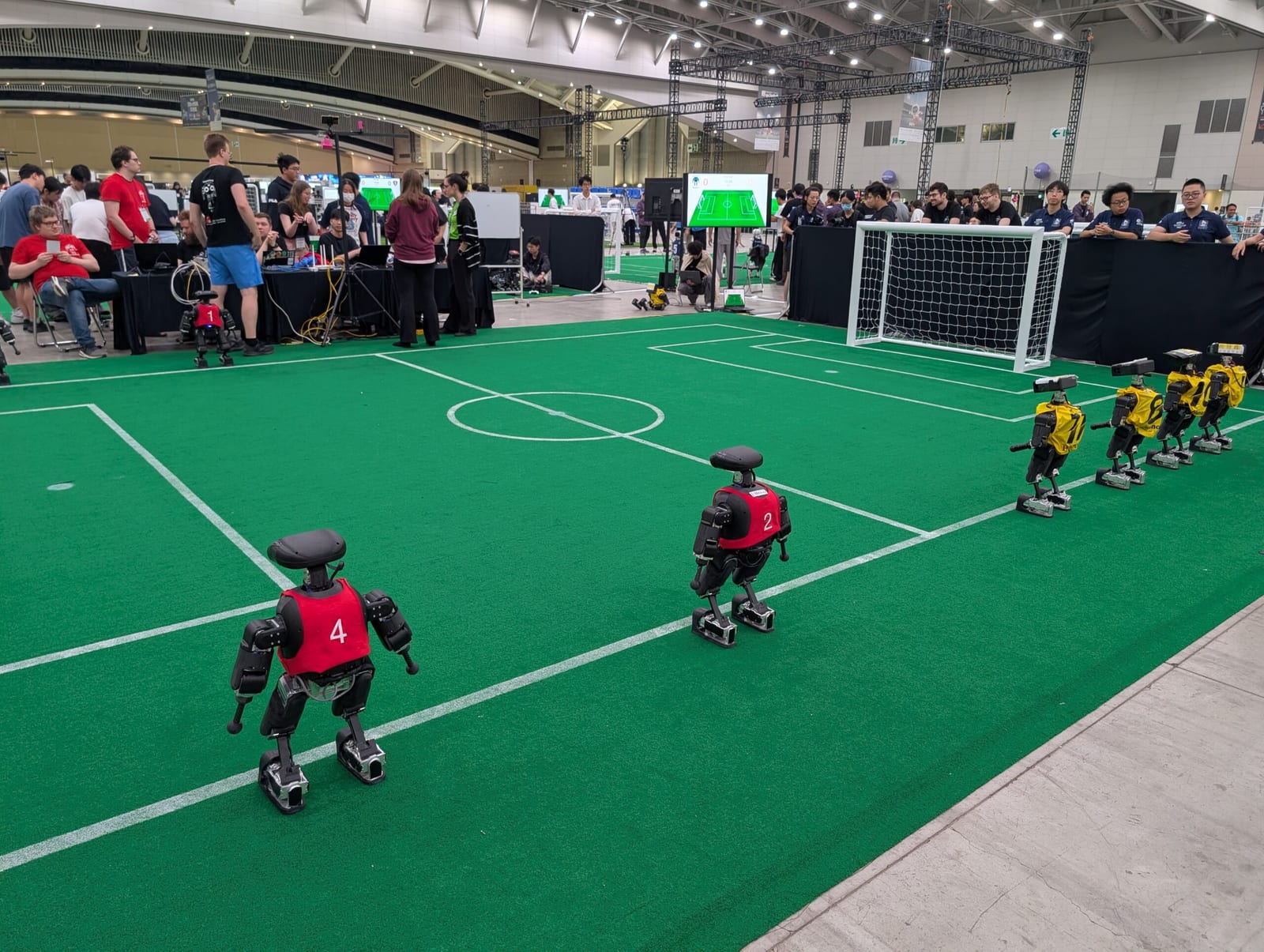
The range of machines on the pitch is wide. The heaviest and tallest robot is ALICE 4 from team HERoEHS. It weighs 48kg and stands 160cm tall. The second heaviest is the Z4 bipedal humanoid from team BigHeroX at 37kg, a large step down from ALICE 4. Several teams are using the Unitree G1, which weighs 35kg.
At the other end is Chape from ITAndroids, which weighs 3.8kg and measures 53cm. That is the lightest and shortest robot in the competition.
What the numbers suggest, and what they do not
The spread in size is the clearest technical fact in the data. ALICE 4 is more than twelve times as heavy as Chape and about three times as tall. A single sport is being played by machines with very different mass and reach. That has direct consequences for stability, fall damage and contact risk, and it fits with the league running separate small, middle and large divisions. The red card on day one shows why contact rules matter more as the machines get heavier.
The use of the 35kg Unitree G1 by a number of teams is also worth noting. The source does not say how many teams use it or which divisions they play in, so no conclusion about its share of the field can be drawn. It does show that some teams are working on a shared hardware platform rather than only on robots built in-house, as the 3.8kg Chape and the 48kg ALICE 4 may suggest. Where the platform is shared, results depend more on software and strategy than on mechanical design. The source does not report which teams fall into each group, so that comparison cannot yet be tested.
The standings also need careful reading. They are seeding results from three or four matches per team. A +35 goal difference for B-Human is large, but it is a record against the opponents it has met so far, and the source gives no breakdown of those matches. CAU Mountain&Sea's single conceded goal is a strong defensive figure, yet its fourth place in the large division shows that a strong run in one division does not carry over to the next. The knockout rounds will test these records against stronger opposition and with elimination on the line.
What remains unproven is how well any of these results reflect general humanoid capability outside the competition. The source reports scores, weights and standings, not measurements of walking speed, fall rates or recovery from contact. Until such figures are published, the league shows which teams win under its rules, and it does not show how reliable the robots are in other settings. The team description papers and qualification videos submitted by each entrant are the best available basis for judging the technical differences behind the table.