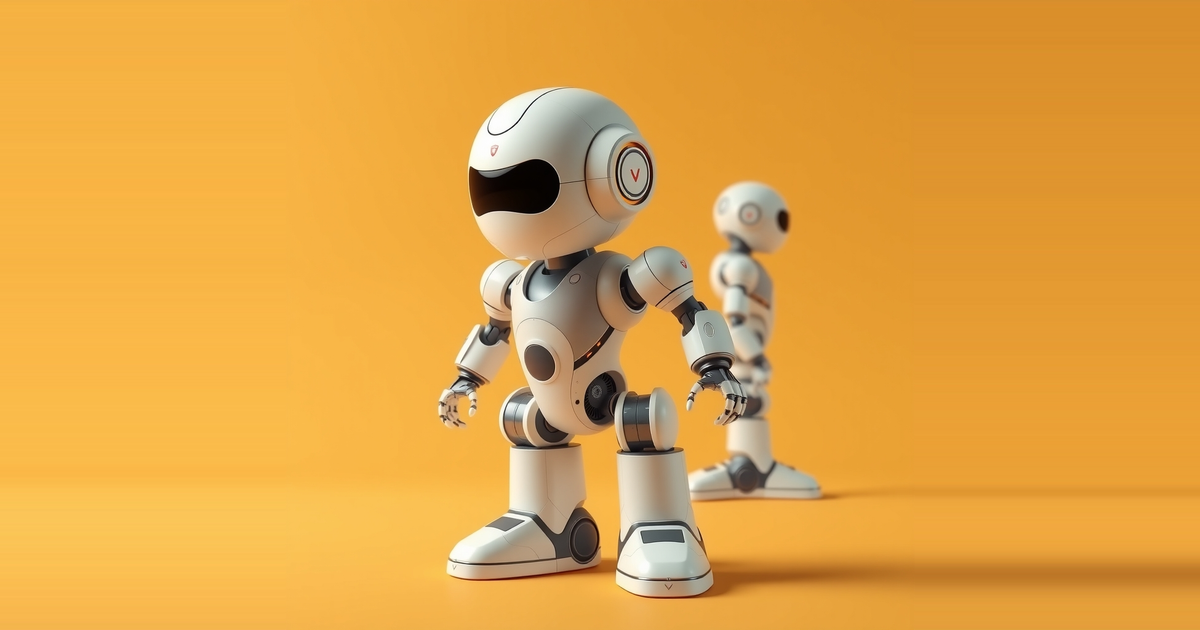
Tsinghua Hephaestus of Tsinghua University won the large division at the RoboCup 2026 humanoid league in Incheon, South Korea, with CAU Mountain&Sea of China Agricultural University and Water of Beijing Information Science & Technology University completing the top three. All three finalists in that class come from China. The knockout stages over the weekend closed out the league competitions, and winners were decided in the small, middle and large humanoid divisions.
The results split across three countries. China holds five of the nine podium places, Germany three and France one. The sections below set out who placed where, how the middle division finished, and which teams took the league-wide awards.
Podium results in all three size classes
In the small division, the top three were Invic from Wuhan University, Hamburg Bit-Bots from Universität Hamburg, and GeoHBots from the School of Artificial Intelligence at China University of Geosciences. Two of those teams are Chinese and one is German.
The middle division went to German and French teams. B-Human, a joint team from Universität Bremen and the German Research Center for Artificial Intelligence (DFKI), is listed first. HTWK Robots from Leipzig University of Applied Sciences is second, and Rhoban from the University of Bordeaux is third.
The large division was the most one-sided by country. Tsinghua Hephaestus, CAU Mountain&Sea and Water make up the full podium, and every one of them is a Chinese university team. Team Hephaestus of Tsinghua University, the large division winner, was also featured in a video interview from the event.
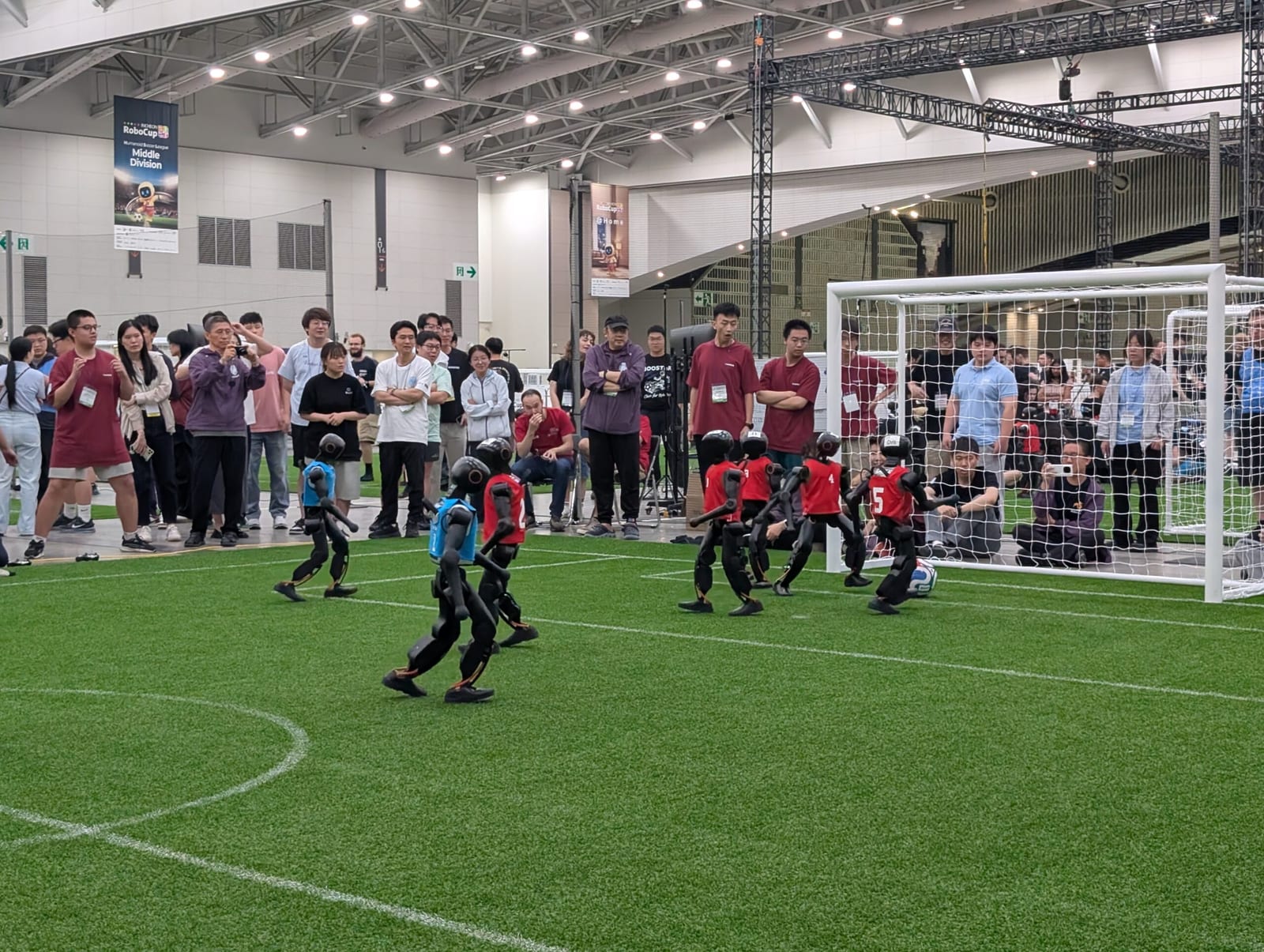
The middle division knockout
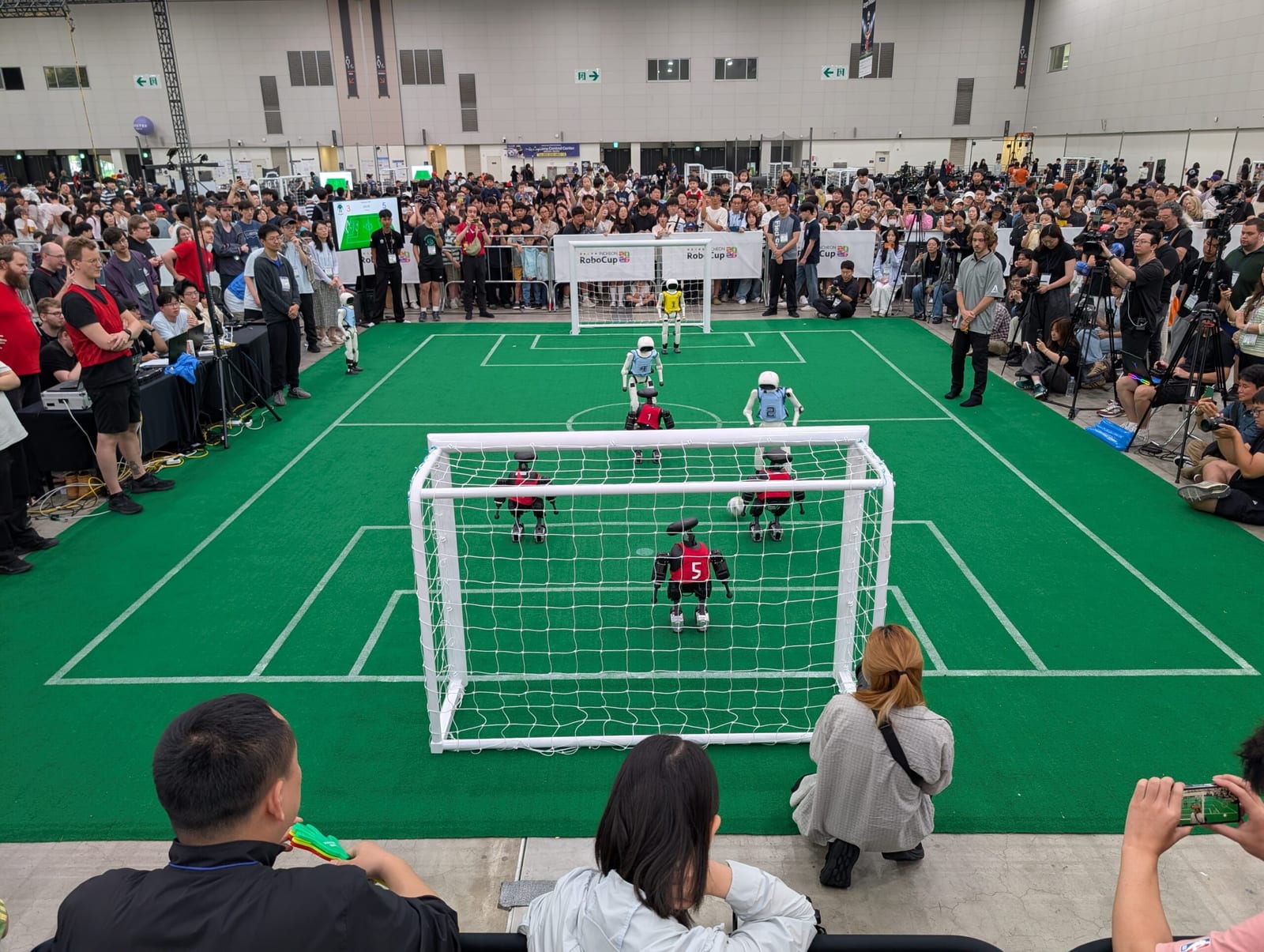
The middle division produced the two matches that were singled out from the weekend. In one semi-final, HTWK Robots played Rhoban. In the final, HTWK Robots met B-Human. HTWK reached the final by getting past a French team that finished third overall, and B-Human was the opponent in the deciding match.
The source material does not give scores, match lengths or details of how either game was played. It does not say which team lifted the trophy in each division beyond the order in which the top three were listed, so this report does not describe the finals in more detail than that.
Five league-wide awards
Outside the divisional competitions, the humanoid league handed out five awards. The Best Customized Humanoid Award went to HERoEHS for its ALICE 4th version. The Best Humanoid Software Award went to B-Human for its Game Controller.
The Open Research Challenge was won by Ruhrbot Devils for an AI camera platform for embedded 2D and 3D game analysis in the RoboCup humanoid soccer league. The Best Innovation Award went to Bahia Robotics Team. The Best Referee Award went to Anastasia Prisacaru of Berlin United.
B-Human is the only team that appears both on a divisional podium and in the award list, with a software prize alongside its middle division result. The other award winners are separate from the podium teams, which shows that recognition at the event was not confined to the teams that won matches.
The league competitions are over, but RoboCup 2026 continues with a symposium. It brings together researchers and practitioners to present and discuss research in robotics and artificial intelligence.
What the results show, and what they leave open
The clearest pattern is the geographic spread by size class. The large division podium is entirely Chinese, the small division has two Chinese teams out of three, and the middle division has none. German teams hold two of three middle division places and one small division place. That is a pattern across nine places in one tournament, and it should be read as that. One event does not establish a trend, and the source gives no results from earlier years to compare against.
What can be reasoned from the lists is that the three size classes are not equally contested by the same institutions. Different teams lead different classes, and no organisation appears on more than one divisional podium. Each class therefore appears to reward its own engineering choices, and a strong team in one size class has not simply carried over to the others. The results cannot say why, because they contain no information about robot hardware, budgets or team size.
The awards add a second signal. Software, customised hardware, research tooling, innovation and refereeing were each recognised separately from match results. The Open Research Challenge entry, a camera platform for analysing games in 2D and 3D, points to research in game analysis running alongside the matches. That fits with the symposium that follows the competition, which is where the research side of RoboCup is presented.
Several things remain unproven from what has been published. The source does not report scores, so the margins of victory are unknown. It does not describe the robots, so it is not possible to say whether the large division winners succeeded through hardware, software or both. It gives no information on how the knockout brackets were seeded or how many teams entered each class. Any claim that one country or one approach now dominates humanoid robot soccer would go beyond these facts.
What the weekend does establish is a verifiable record: nine podium teams, five award winners, and a middle division final decided between two German teams from Leipzig and Bremen. Those names give a baseline against which later RoboCup humanoid league results, with scores and robot specifications, can be measured.