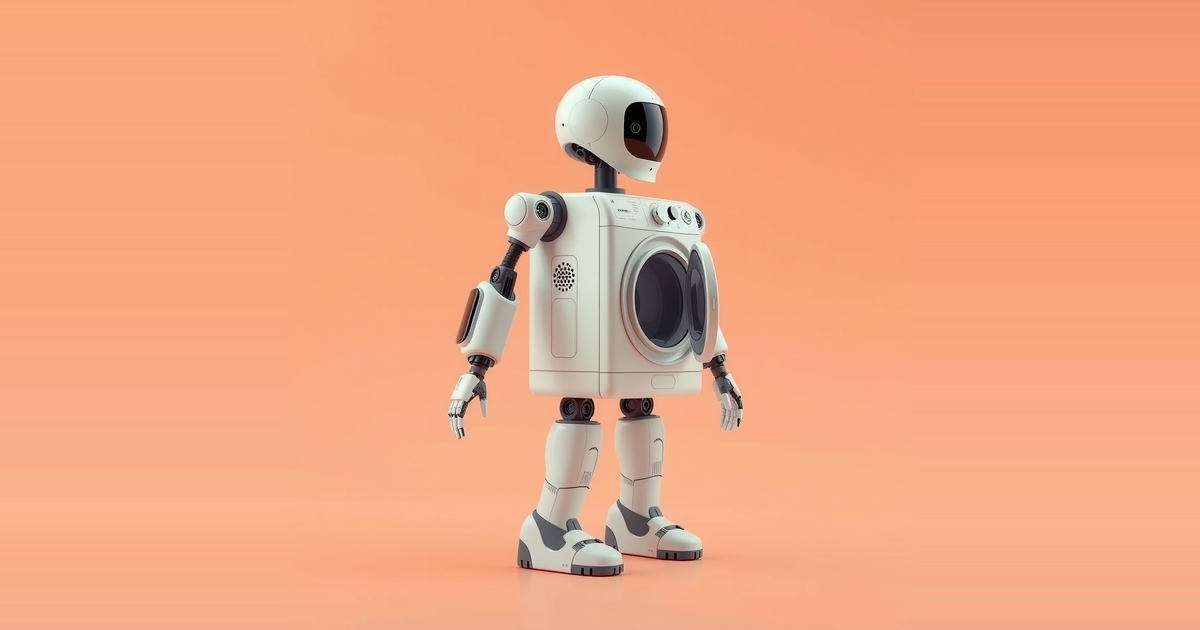
Tiangong Ultra ran the 100 metres in 8.64 seconds at the World Humanoid Robot Games 2026 in Beijing, ahead of Usain Bolt's 9.58-second world record. No robot can yet reliably complete a full humanoid robot laundry cycle, from carrying the basket to folding the last shirt.
The Beijing games also featured robots boxing, playing football and working through tasks inspired by factories, restaurants and emergency situations. Wai-keung Fung, a senior lecturer in electronics, robotics and control engineering at Cardiff Metropolitan University, argues that a plainer chore says more about readiness for everyday life.
Why a sprint is the easier problem
Running fast is hard. A humanoid has to coordinate many joints, keep its balance and produce powerful movements without falling. But the task is well defined. The robot knows where to go, the track is predictable and the finish line does not change shape.
Laundry offers none of that predictability. A shirt may be inside out. A sleeve may be hidden under another garment. Trousers may be twisted around a towel. Fabric is soft and keeps changing shape, so lifting one corner of a T-shirt moves the rest of it.
The full process includes carrying a basket to the washing machine, sorting clothes for different programmes, taking them out, hanging them to dry, folding and ironing. No system handles all of it reliably. Folding alone remains difficult, because robots must cope with different shapes, sizes, materials and levels of creasing.
People manage this with little thought. They shake a shirt out, find the sleeves, feel when fabric slips and adjust their grip. For a robot, each of those small actions is a separate problem to solve.
Homes are not production lines
A household robot cannot replay one movement over and over. It has to notice when reality differs from what it expected and adapt. That matters because humanoid robots are increasingly discussed as future helpers in homes and care settings, as well as in factories and warehouses.
A factory line can often be arranged so parts arrive in predictable positions. A family home cannot. Clothes, toys and furniture move around constantly, and people, children and pets add further unpredictability.
Skills do not copy between robots
Even when one robot learns to fold a shirt, the skill does not simply install on another machine. A specialist laundry robot might have rigid arms, overhead cameras and grippers built for fabric. A humanoid may have cameras in its head, five-fingered hands, and different joints and balance constraints. The same movement can produce a very different result.
A fixed arm can reach forward without any risk of falling over. A humanoid may need to shift its hips, legs and feet just to stay stable while reaching across a table. Sensors differ too: one robot may have sensitive touch sensors in its fingers, while another relies mainly on cameras.
Some knowledge can still transfer. One robot can teach another what a shirt looks like, where the shoulders are likely to be, what a good fold looks like or how to recognise a trapped sleeve. The receiving robot still has to work out how to carry out those ideas with its own body.
The Open X-Embodiment project is exploring this by pooling experience from many robots. It has gathered more than one million real robot trajectories from 22 different robot types. The aim is for robots to learn useful patterns from one another instead of starting from zero each time.
What the field should measure
Fung does not dismiss the Beijing games. He says they make robotics visible and show how quickly the technology is moving. His concern is what such demonstrations prove.
For robots meant to work alongside people, he proposes different questions. Can the robot handle an unfamiliar object? Can it notice its own mistake and recover without human help? How long can it work before someone has to step in? These measures are unlikely to produce viral videos, he says, but they sit much closer to the abilities that will decide whether humanoids become useful.
Analysis: what a sprint record does and does not show
The two kinds of test measure different things. A 100-metre race fixes the course, the goal and the surface. That makes it a clean measure of locomotion and power, and the 8.64-second result shows that part of the hardware is advancing quickly. It says little about perception or recovery from error, because the race gives the robot almost nothing to be surprised by.
Laundry reverses that. The difficulty lies in a changing object, hidden geometry and slipping grip, so success depends on sensing and adjusting mid-task. The three questions Fung raises are about unfamiliar objects, self-correction and unattended run time. Those are also the points where a scripted demonstration and a general-purpose machine diverge. A robot that has rehearsed one routine can look capable on stage and still fail on the first sleeve it has not seen.
The transfer problem adds a second constraint for the field. If skills moved cleanly between machines, each new humanoid could inherit what earlier robots learned. The differences in hands, joints, balance and sensors that Fung describes mean that inheritance is partial at best. Pooled data efforts such as Open X-Embodiment, with over a million trajectories across 22 robot types, are a direct attempt to close that gap. Their scale shows how much data the problem is being thrown at.
Several points remain unproven. Nothing in the available evidence shows that pooled experience from varied robot types produces reliable folding on a humanoid. No system has been shown to run the whole laundry chain. There is also no agreed benchmark for recovery or unattended operation, so claims of progress are hard to compare. Until such measures are reported alongside speed records, a fast sprint remains evidence of good legs rather than of general-purpose robot intelligence.