
Walmart and its affiliates supplied 90.5% of Symbotic's revenue in the quarter that ended June 27, 2026. Symbotic's quarterly filing calls the buyer "Customer A," and the annual report names it as Walmart. The Symbotic Walmart anchor customer relationship produced $720.8 million in revenue and $55 million in net income for the quarter.
One profitable quarter does not settle the question
Few robotics companies have turned a single demanding customer into a business this size. The quarter also included $19.4 million of investment gains and negative non-GAAP free cash flow. One quarter's profit therefore cannot show whether the reliance on Walmart has paid off.
Symbotic cannot afford to lose Walmart, and that dependence already gives the retailer some protection. Walmart did not rely on that incentive alone. The 2022 master automation agreement gives it continuity rights, including the right to embed engineers with Symbotic and to use technical material held in escrow under specified conditions. The 2025 agreement for Walmart's store-level Accelerated Pickup and Delivery (APD) systems repeats those protections. It also caps, at a redacted number, how many comparable APD systems Symbotic can sell to each outside customer every year during the build-out. The filings do not show that Walmart has ever invoked these rights.
What Walmart paid for and what it received
When the APD deal closed in January 2025, Walmart committed $520 million of development funding. In the same transaction Symbotic paid Walmart a $200 million base price for its robotics business and agreed to two possible milestone payments of $175 million each. Symbotic gained funded development and the prospect of a large rollout, though the additional purchase commitment depends on performance milestones. In return it accepted delivery obligations and limits on comparable APD sales to other customers.
The backlog terms matter here. Symbotic's fiscal 2025 annual report says the contracts behind its backlog lack termination-for-convenience clauses. Most of that backlog can be terminated only for missed performance standards, insolvency, or specified changes in control. Orders the contract commits a customer to are a firmer basis for hiring than expansion the customer can still walk away from.
Field work and slow onboarding
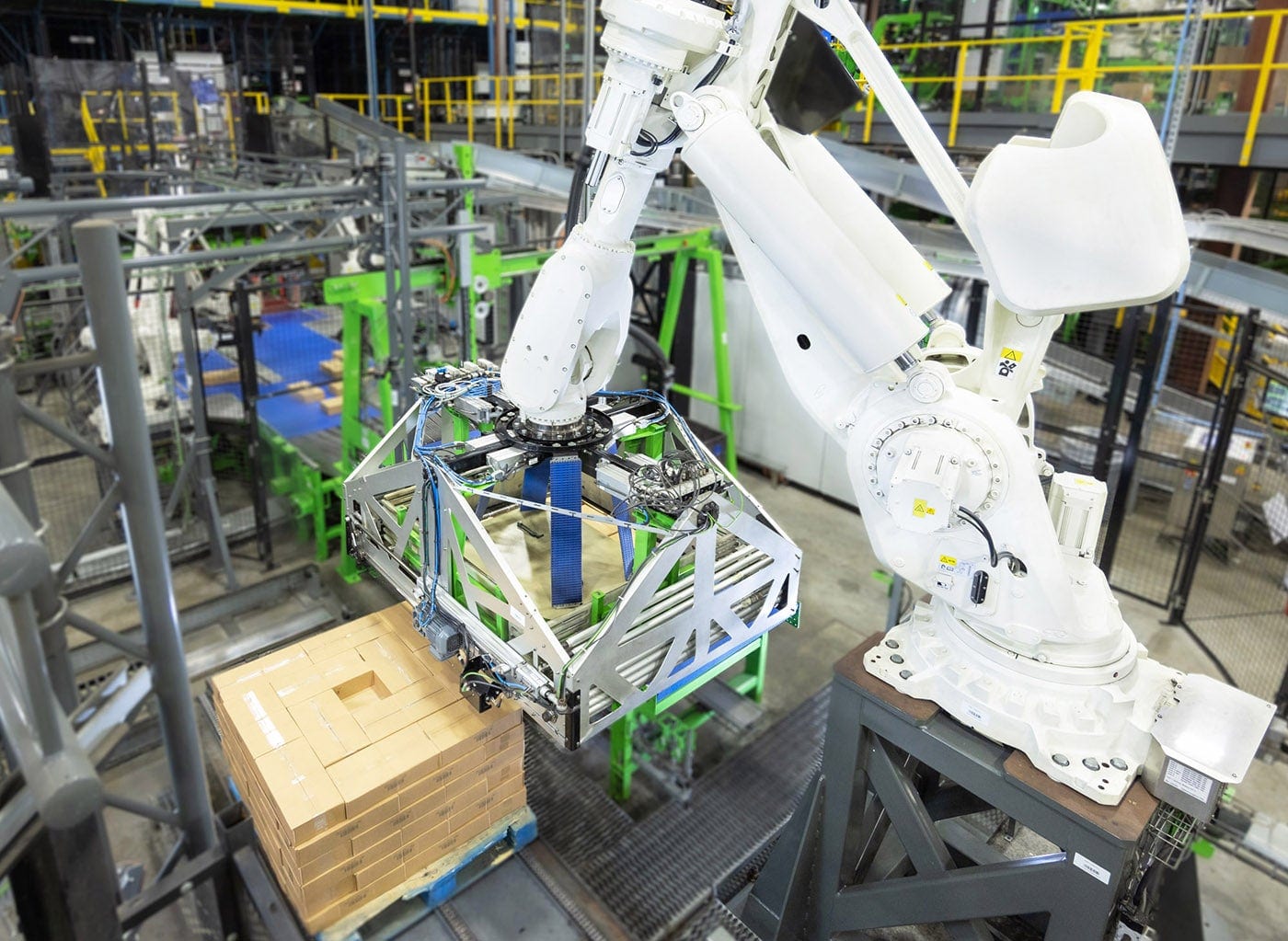
Symbotic reported about 2,000 employees at the end of fiscal 2025, with roughly half working at customer sites to install, commission, and maintain its systems. It also uses contractors as needed. Under its standard model, Symbotic operates a new system for a limited time before handing daily operation to the customer. The same field teams serve new deployments and running systems, so the headcount does not show what one more site would require.
New customers take time to reach go-live. Management said in 2023 that it aimed to add one or two new customers a year, and it has described its historical timeline as about 24 months from a signed statement of work to acceptance. Medline signed in late fiscal 2025 and plans a pilot in 2027. Associated Wholesale Grocers announced a project in March 2026 and expects operations in the fourth quarter of 2027. Associated Food Stores announced its agreement in May 2023 and had its first phase running by February 2025.
Symbotic generally recognizes system revenue as it incurs costs, once acceptance is reasonably assured. Revenue can therefore begin before installation and well before go-live.
Newer demand still leans on partners
Exol, Symbotic's warehouse-as-a-service venture with SoftBank, accounted for $11.6 billion of the $22.5 billion backlog at June 27, 2026. Symbotic owns 35% of Exol and helps fund its build-out. Walmart de México, another newer customer, is majority-owned by Walmart. Both routes make commercial sense, since Exol lets customers use the system without buying it outright and Walmex carries a proven relationship into a new market. Both also move partly with decisions made by Symbotic or Walmart.
Why this matters for the field
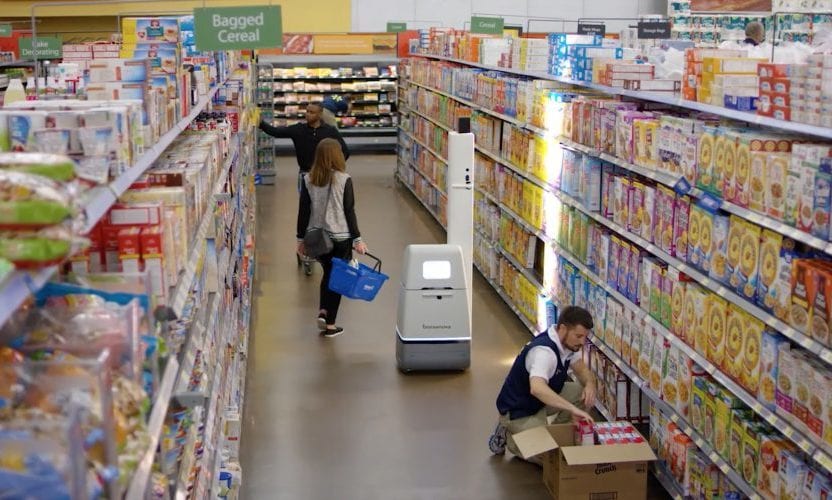
The clearest lesson is that the percentage matters less than the terms behind it. Bossa Nova Robotics also had Walmart as its main customer. Its shelf-scanning robots reached about 500 stores, and the companies had announced plans for 1,000. By November 2020 Walmart had ended the relationship, and Bossa Nova laid off about half its staff and later closed. Symbotic's backlog contracts, by contrast, can be ended only for specified causes. Comparing the two cases suggests that contract structure, not the size of the anchor, separates a dependent supplier from an exposed one. Walmart's own protective terms show the same logic applied from the buyer's side.
Customer counts also overstate independence. AutoStore reached about 1,300 end customers through 23 distribution partners in fiscal 2025, yet four partners supplied 74% of its revenue. Symbotic's Exol and Walmex accounts add logos while staying tied to partners it already has. Any robotics company judging its own diversification would learn more from independent budgets than from a customer list.
Several questions remain unproven. The filings do not show whether Walmart's continuity rights have been tested, so their practical effect is unknown. The cost of serving a second or third account is not disclosed, because field staff are reported as one pool. And no data yet shows whether Exol or unrelated customers can reach a scale that replaces distribution-center system revenue when that rollout tapers. Until those numbers appear, Symbotic's profit reflects how well one anchor relationship has worked, not whether the model carries over to other robotics startups.