Intrinsic Core, a set of ROS-compatible capabilities for building robotic applications, is now available as open source. Intrinsic, an AI robotics group at Google, is releasing parts of its platform in the Intrinsic Core open source package, and developers can download it on GitHub. The release covers control, perception, planning, simulation and drivers.
Alongside the package, Intrinsic has released the Open Machine Tending Solution, or OMTS. It is a ready-made reference design for a real-world use case, and it is meant to give developers a starting point rather than a blank page.
What the package contains
The release lists seven capabilities. The first is Intrinsic Control, a hardware-agnostic, real-time control framework that delivers sensor-based control. It lets a robot change its behavior mid-trajectory when the environment changes. It is designed to produce efficient, collision-free paths. The stated aim is that users can swap robot arms, grippers, sensors and other components without rewriting drivers.
Pose estimation is the second. It provides six-degrees-of-freedom pose estimates of 3D parts. Knowing exactly where a part sits and how it is oriented is the input that most manipulation tasks depend on.
Motion planning is the third. Its logic generates efficient paths automatically and avoids collisions. Grasp planning follows. It is designed to let different grippers adapt automatically and dynamically to the location and orientation of a part, and to grasp it with a higher probability of success.
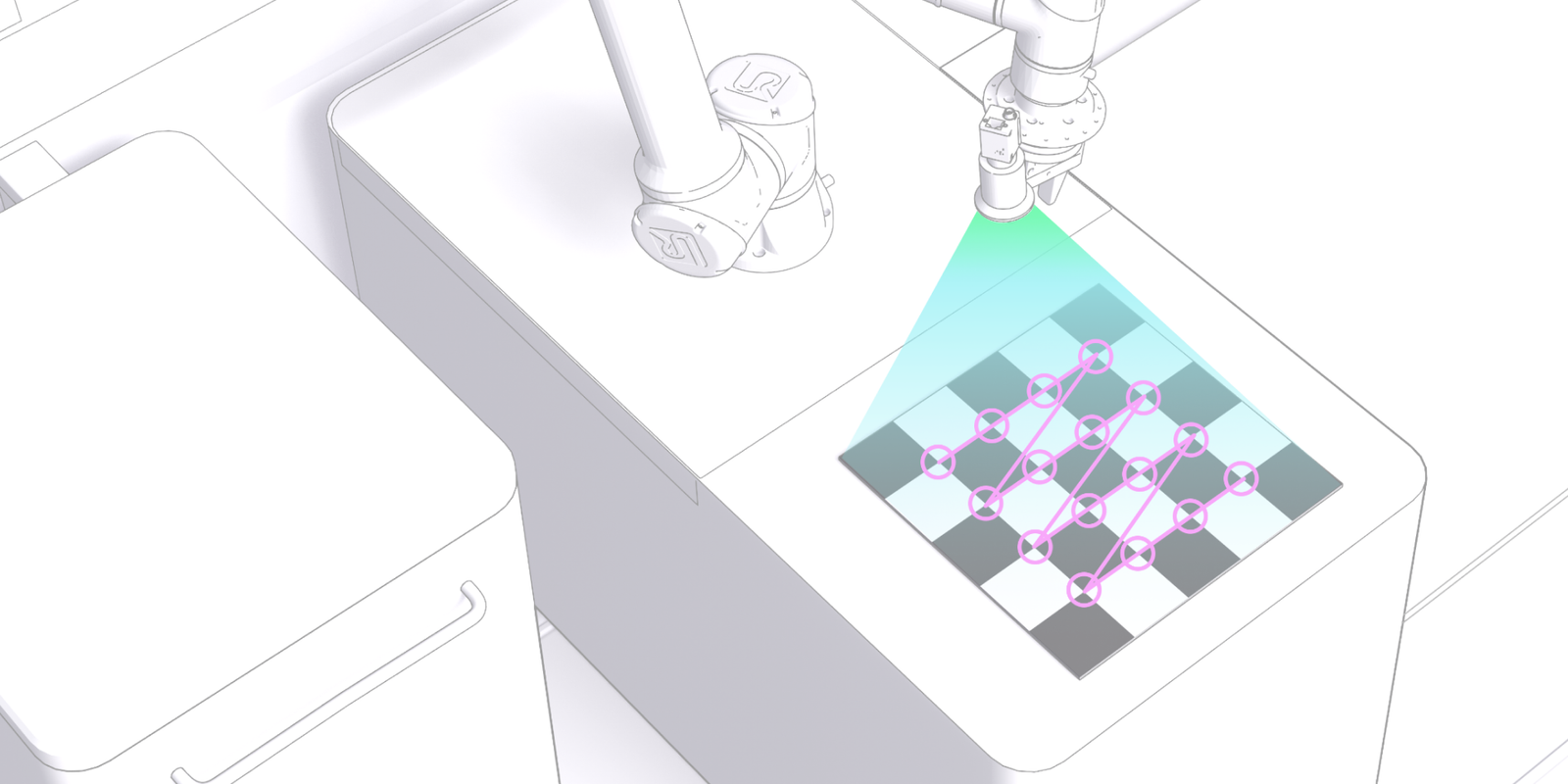
The package also includes simulation services. These are intended to give developers a straightforward way to test and troubleshoot robotic solutions, and they update as the solution is built. Camera calibration automates the calibration of a robot's camera and its physical alignment.
The last item is a set of Intrinsic-ROS drivers. These are pre-configured, ROS-compatible drivers for supported robots, grippers and 3D cameras.
The machine tending reference design
OMTS targets machine tending, a task in which a robot loads and unloads a machine. The design is offered as a reference, not a finished product. Developers can take it and customize it for their own cell, which means they do not have to build the whole application from scratch.
The reference design also shows how the individual capabilities are meant to fit together. Perception, planning, grasping and control are separate entries in the list, but a working application needs all of them to run as one system. A worked example for a concrete use case is a practical way to show that integration.
How the pieces fit together
The release is organized around a workflow. A robot has to find a part, plan a path to it, grasp it and move it without collisions. The package supplies a component for each step. Simulation and camera calibration support the work around those steps, and the drivers connect the software to hardware.
ROS compatibility runs through the package. The capabilities are described as ROS-compatible, and the drivers are pre-configured for ROS. Developers who already work in ROS therefore do not have to change their tooling to try the components.
Analysis: what this changes and what is still unproven
The most consequential claim in the release is hardware independence. Robot cells are often tied to the specific drivers of their arms, grippers and sensors, and changing a component can mean rewriting that integration. If Intrinsic Control delivers on swapping components without rewriting drivers, it would reduce a real source of cost in building and maintaining robot applications. That is a conditional benefit, because the release does not say which robots, grippers and cameras the drivers support.
The choice of ROS compatibility is also a reasoned one. ROS is the environment many robotics developers already use, so a package that fits into it asks for less migration than a separate platform would. This should lower the barrier to testing the components one at a time. It does not make the package unique. Open motion planning and driver packages already exist in the ROS ecosystem, so Intrinsic Core will be judged against those on the quality of its planning, grasping and control, not on the fact that it is open.
What sets the release apart from a loose collection of libraries is its scope and the reference design. It covers sensing, planning, control, simulation and drivers together, and OMTS shows them working in one application. A developer can evaluate the whole chain on a concrete task. That is more useful than evaluating each component in isolation.
Several questions remain open. Intrinsic says it is making parts of its platform open source, which implies that other parts are not. The release does not say what stays closed or how the two relate. It does not state the license terms, the list of supported hardware, or any performance figures for pose estimation, grasp success or path quality. The phrase about a higher probability of grasp success is a design goal, not a measured result, and no baseline is given for the comparison.
Adoption will be the practical test. The package will matter if developers use OMTS as a starting point and extend it to their own machines, and if outside contributors support more hardware. Those outcomes depend on documentation, driver coverage and maintenance, none of which the announcement describes. For now, the release gives robotics developers a set of components to test on GitHub, and the evidence on how well they work will come from that testing.