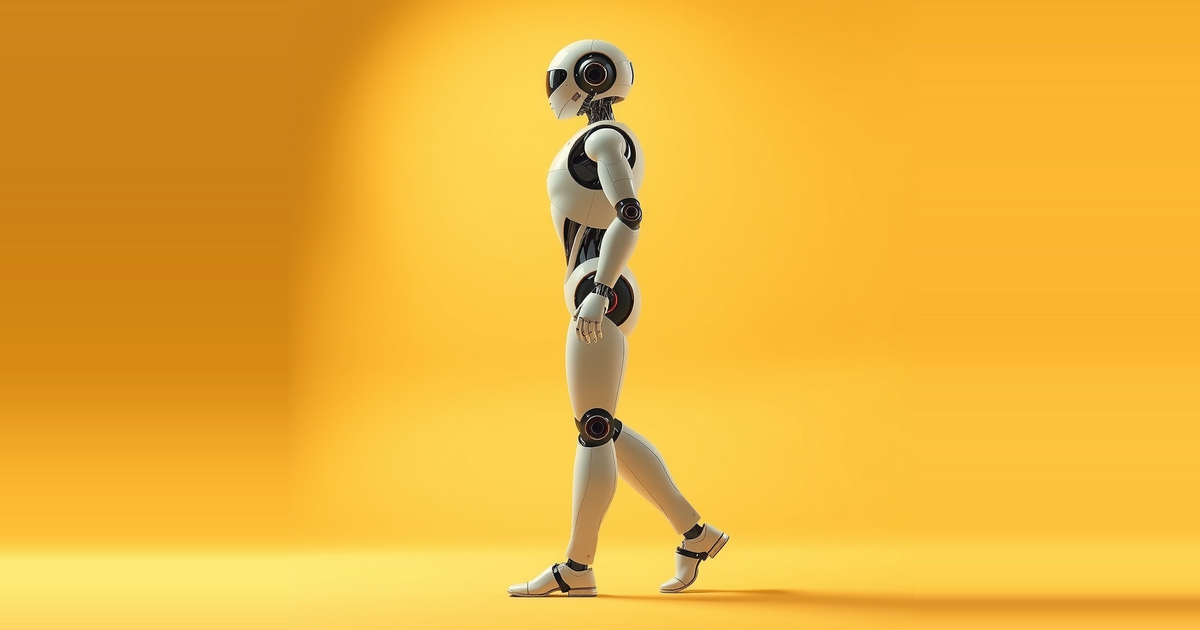
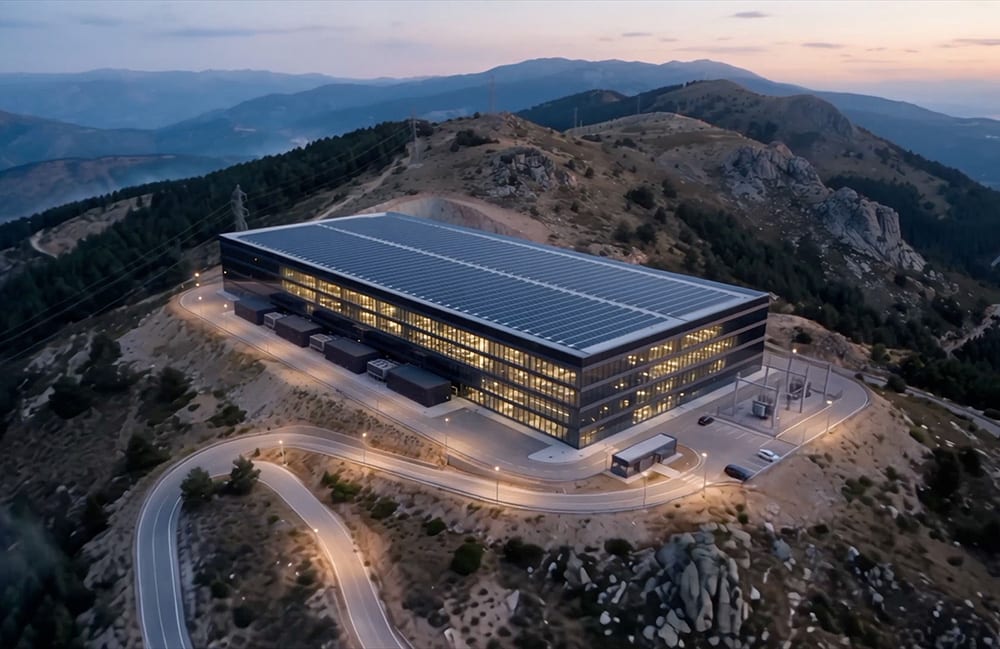
Generative Bionics plans to build a 5,000-square-meter (53,819.5-square-foot) physical AI data factory in Italy, with the first site due to be operational by the fourth quarter of 2027. The Genoa-based humanoid developer says the facility will reproduce real industrial environments, generate physical data from working robots and link that data to large-simulation systems. It describes the hub as one of Europe's largest physical AI training facilities for humanoid robots.
A three-site network built on AMD compute
The Italian site is the first of three. Generative Bionics intends to open a second facility elsewhere in Europe and a third that serves global markets. Together they will form a proprietary, multi-site network.
Advanced Micro Devices will act as the company's AI infrastructure partner, building on an existing technology collaboration. The network will run on AMD Helios, a rack-scale architecture. The company says it will process physical and synthetic data, train physical AI models and run thousands of digital-twin scenario variations in parallel.
The company also frames the project as a sovereignty effort. It wants the data, models and know-how behind Europe's industrial humanoids to be generated, trained and validated on the continent. CEO Daniele Pucci argues that Europe's advantage lies in its industry. "The value that Europe has right now is within its industry, and we have to extract physical AI data in order to train our own models," she said, pointing to four decades of automation investment.
Real-to-sim-to-real training for GENE.01
The facility is built around GENE.01, the company's humanoid robot. Fleets of GENE.01 units will perform tasks continuously in environments recreated with industrial partners. Those runs will produce data for training world action models and for validating the whole robot system, including perception, control, safety behavior and task execution, before it reaches a customer site.
Each physical environment and robot configuration will also exist as a digital twin. Operators can then repeat a task across thousands of variations in layout, objects, materials, operating conditions and failure modes that would be impractical to stage physically. Models trained and tested in simulation return to the robots for validation, and data from physical operation feeds the next training cycle. Data from deployed fleets will also flow back into later training.
The company says industrial humanoids need data on contact, force, motion, proximity, temperature, task constraints and human interaction. For GENE.01 the dataset will combine vision and motion data with signals from its full-body multimodal skin. "A robot is not only vision and is not only language," Pucci said. "It is position, velocity, acceleration, temperature, and contact forces."
Generative Bionics contrasts this with language models, which learn from the vast amount of information available online. Humanoid robots have no comparable source of data on how to act in the physical world. The data factory is meant to create one.
Safety, certification and a business-first plan
Pucci says Europe must invest in three kinds of manufacturing to achieve sovereignty: data, robots and models. She said the company is examining the supply chain for its future manufacturing.
She also addressed competition from China, where humanoid makers have drawn attention with demonstrations and large funding rounds. Pucci said that does not mean China is necessarily ahead. "Many of the Chinese robots that are out there are simply not certified to enter industrial settings," she said. She added that many existing solutions are "basically for entertainment," a segment she said the company respects, and that Generative Bionics is taking safety and certification seriously because it wants to go business-to-business first.
GENE.01 has full-body tactile sensing, which the company says covers both touch and proximity. Generative Bionics also plans to sell it as a base platform. Customization would happen at three levels: the AI, the exterior design and the hands and feet. A shipyard robot, Pucci said, must resist high temperatures, sparks and powders, and it differs from a healthcare robot in its development cycle. She compared the approach to automotive manufacturing, where a common platform is finished at the end of the line.
The company builds on more than 20 years of humanoid research at the Italian Institute of Technology. It spun out of the institute in 2024, and the institute has granted it exclusive licenses to key technologies.
What the plan shows, and what it does not
The announcement targets a real bottleneck. Humanoid developers can draw on language and image data from the internet, but data on force, contact and failure in physical work is scarce. A facility that produces it under controlled, repeatable conditions is a logical response. Owning the facility also lets the company capture tactile data from its own skin sensors, which general-purpose datasets are unlikely to contain.
The design also ties validation to training. Because the same site tests perception, control and safety behavior before deployment, it could shorten the gap between a demonstration and a certified industrial product. That fits the company's stated business-first focus, and it distinguishes the plan from approaches that rely mainly on demonstrations.
Much remains unproven. The source gives no figures for investment, robot count, data volume or named industrial partners. The facility will not operate until the fourth quarter of 2027, so the claimed benefits are projections. Whether data from a recreated environment transfers to a customer's real site is the central technical question, and the company has not published results on it. The comparison with Chinese competitors rests on Pucci's statement about certification, and the source offers no evidence for it either way.
The sovereignty argument is also a policy position, not a technical result. A European physical AI data factory only matters if the models it trains outperform alternatives in paid industrial work. Until GENE.01 units are deployed with customers and their performance is reported, the data factory remains a well-reasoned plan that has yet to be tested.