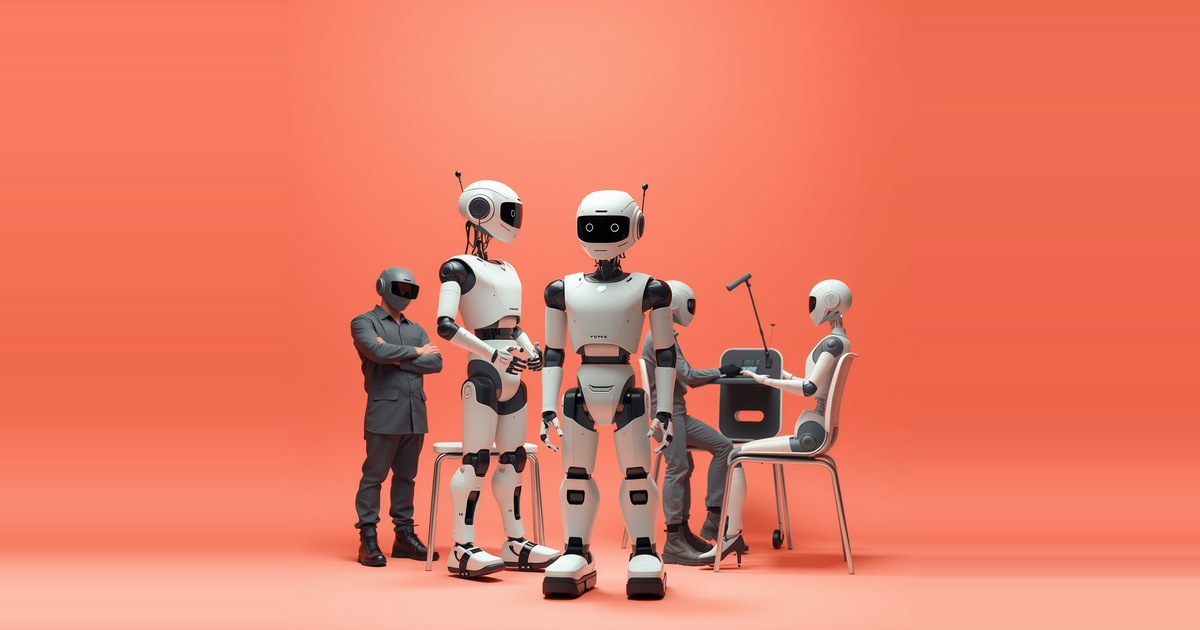
A panel on the state of humanoids at 9:30 a.m. PT opens the final day of RoboBusiness 2026, the 20th anniversary edition of the show. The session sits in the theater on the second floor, where all keynotes take place. Its stated aim is to cover what humanoids deliver today, the technical and operational challenges that remain, and lessons from early industrial deployments.
Humanoid panel sets the tone
Four industry figures will speak on the panel. Pras Velagapudi is chief technology officer of Agility Robotics. Parker Conroy is head of product management at Apptronik. Michael Patrick Perry is head of commercial strategy at Persona AI. Aadeel Akhtar is founder and CEO of PSYONIC. Mike Oitzman, a senior editor, will host.
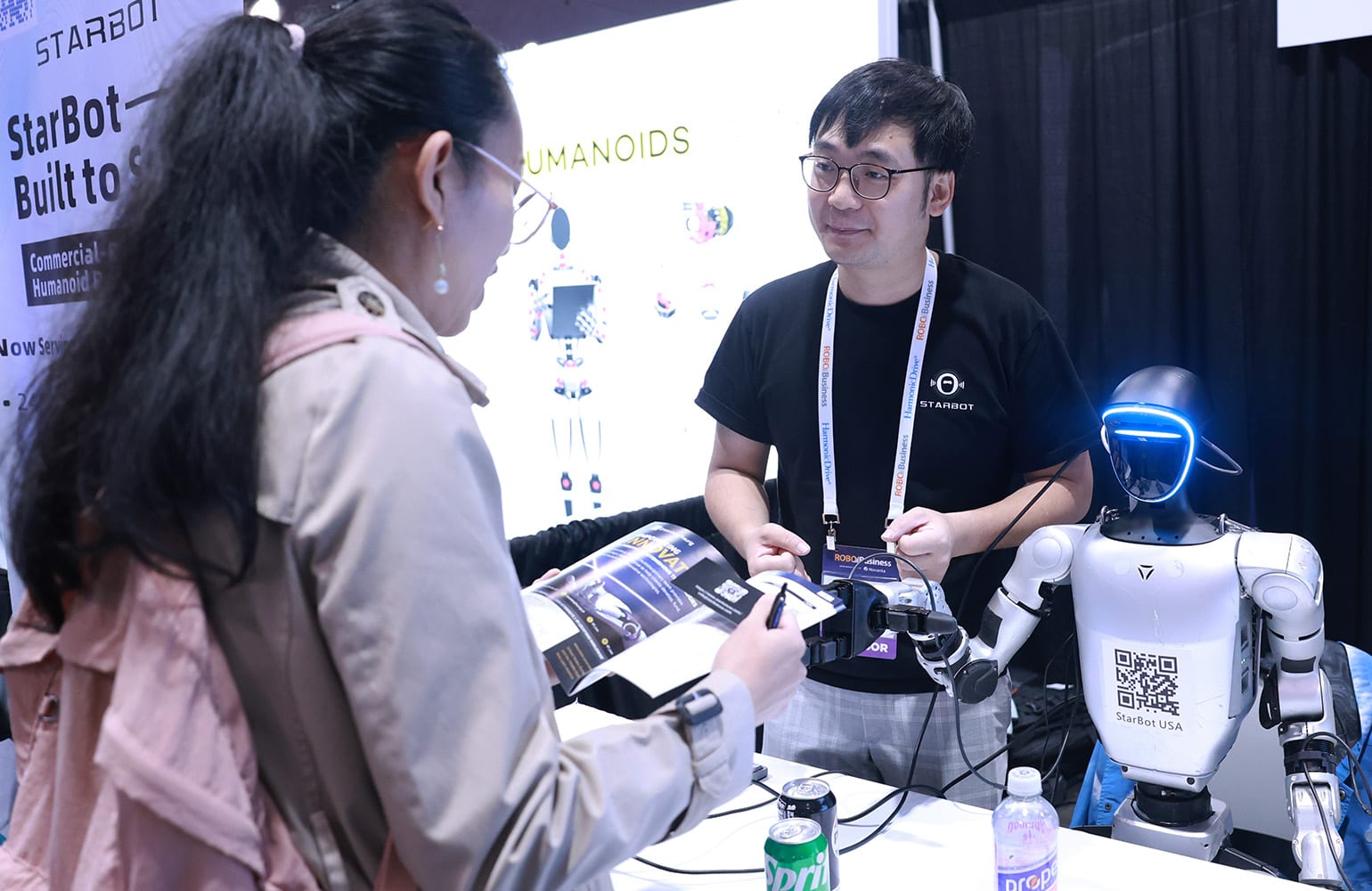
The Exhibitor Hall opens at 10:00 a.m. and stays open until 3:00 p.m. It includes robotics demos and the Startup Alley. Registration is available on site.
Morning breakouts: learning, actuation and field work
Breakout sessions begin after the keynote and a short networking break. The first block starts at 10:45 a.m.
In Room 203, Ted Larson, co-founder and CEO of OLogic, will discuss egocentric robot learning, in which robots are taught through human experience. He will cover the technical challenges of building such systems and what they mean for commercial robotics. In Room 207, Georg Stieler, managing director for Asia at Stieler Technology, will present findings from his company's work in China under the title "China's Physical AI Ecosystem in 2026: Competitor, Supplier, Benchmark."
Trevor Anderson, chief strategy officer at FulcrumAir, will speak in Room 209/210 on robotic tools for overhead power line operations. His topics include mobilization, installation precision, live-line capabilities and ways to finish work without helicopters or required outages. In Room 206, Jordan Grotz, senior robotics systems engineer at Allegro MicroSystems, will cover the technology behind next-generation humanoid actuation.
In Room 204, a panel titled "Why Physical AI Fails in the Real World" brings together SK Gupta of GrayMatter Robotics, Brian Geisel of Geisel Software and Symage, and Sparsh Gautam, a computer vision engineer at Tesla. They will discuss how teams address perception, decision-making and manipulation so robots can operate safely and predictably outside the lab.
The second morning block starts at 11:45 a.m. Dermot O'Driscoll, vice president of go-to-market physical AI at Arm, will speak in Room 203 on compute principles for trusted physical AI. He will address how intelligence is split across cloud and edge compute and how learned and deterministic behaviors are coordinated.
In Room 207, a policy panel on reshoring with robots includes Ellie Sakhaee, an AI policy manager at Google; Dr. Henrik I Christensen, a distinguished professor of computer science at UC San Diego; Brendan Schulman, vice president of policy and government relations at Boston Dynamics; and Michael Bearman, chief legal and safety officer at Vecna Robotics. They will examine the need for a national robotics strategy and debate industrial priorities. Eugene Demaitre, editorial director, will moderate.
Yakov Bobrov, co-founder and chief technology officer of Hardhat Robotics, will present SparkE-B, a robot for safer electrical work, in Room 209/210. He will describe the challenges of deploying robots on dynamic construction sites. Jim Hotary, VP of technology at Maeden Innovation, will cover synthetic tendons for dexterous hands in Room 206, including fatigue life, creep, abrasion resistance, friction management and reliability under millions of flex cycles. In Room 204, Fraz Yousuf, a senior robotics application engineer at Eli Lilly, will share early findings from human-robot interaction field studies around live AGVs.
Afternoon sessions and the closing keynote
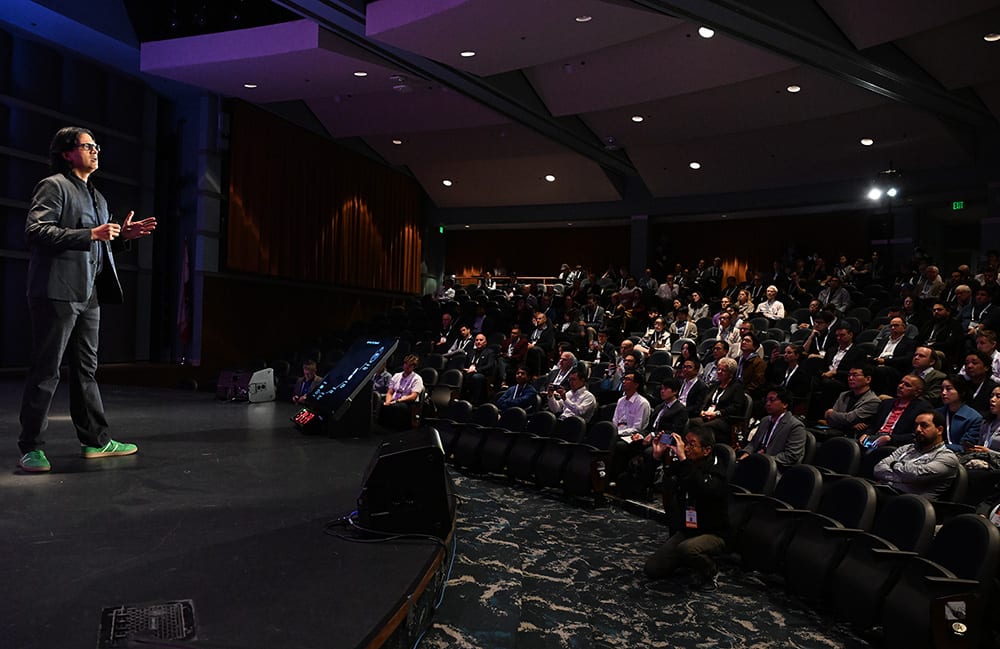
Afternoon breakouts start at 2:00 p.m. Rohit John Varghese, director of systems engineering and product at Contoro Robotics, will introduce the Model Context Protocol and demonstrate AI-agent troubleshooting on a real industrial robot deployed in a warehouse. That talk is in Room 206.
David Sokolic, a partner at Toyota Ventures, will discuss what it takes to build, fund and scale intelligent physical systems in Room 207. Spencer Krause, president and CEO of SKA Robotics, will describe how he evaluates the viability of a robotics business case and decides whether to accept a partner engagement. That session is in Room 209/210.
In Room 204, Jingwei Tan and Joe Kraft of Geek+ will examine how software, not only hardware, lets organizations grow from a single automated workflow to enterprise-scale warehouse operations.
The show closes with a keynote at 3:00 p.m. Morgan Pope, director of companionship at Familiar Machines & Magic, will lead a session on how the startup is creating robotic characters.
What the schedule suggests
The agenda is a program, not a set of results, so the claims in the session descriptions remain to be tested. Even so, the lineup shows where the industry's attention sits at the close of RoboBusiness 2026.
First, the humanoid panel pairs companies at different stages of commercial exposure and addresses "early industrial implementations." That wording points to deployments that are real but limited, and the panel's stated focus on remaining technical and operational challenges is a more cautious framing than a product pitch. Whether the panelists give figures on uptime, task completion or cost is not something the schedule can show.
Second, several sessions treat physical AI as an engineering and reliability problem rather than a capability demo. The panel on why physical AI fails outside the lab, the Arm talk on mixing learned and deterministic behavior, and the Contoro demonstration on a live warehouse robot all focus on predictable operation. The Arm description calls for systems that stay adaptable, reliable and safe at production scale, which implies that scaling is the open question, not the existence of capable models.
Third, the hardware talks on actuation and synthetic tendons address the parts that limit humanoid hands and joints. Millions of flex cycles and friction management are durability questions that decide whether a demo robot becomes a maintainable product. These talks will not resolve them, but they show the supply chain is working on them.
Fourth, the mix of tracks is notable. Policy, venture investment, a China benchmark session and a construction-safety robot share one day with technical talks. Commercial robotics is being discussed as an industrial-policy and capital-allocation matter as much as an engineering one. The reshoring panel's focus on a national robotics strategy and the China session's framing of that ecosystem as competitor, supplier and benchmark suggest the two are linked, though the schedule does not say how.
What remains unproven is how much of this reaches customers. The program includes field studies, a warehouse deployment and a construction-site robot, but the descriptions do not state deployment counts, performance data or pricing. Those details, if offered at all, will come from the speakers themselves.