
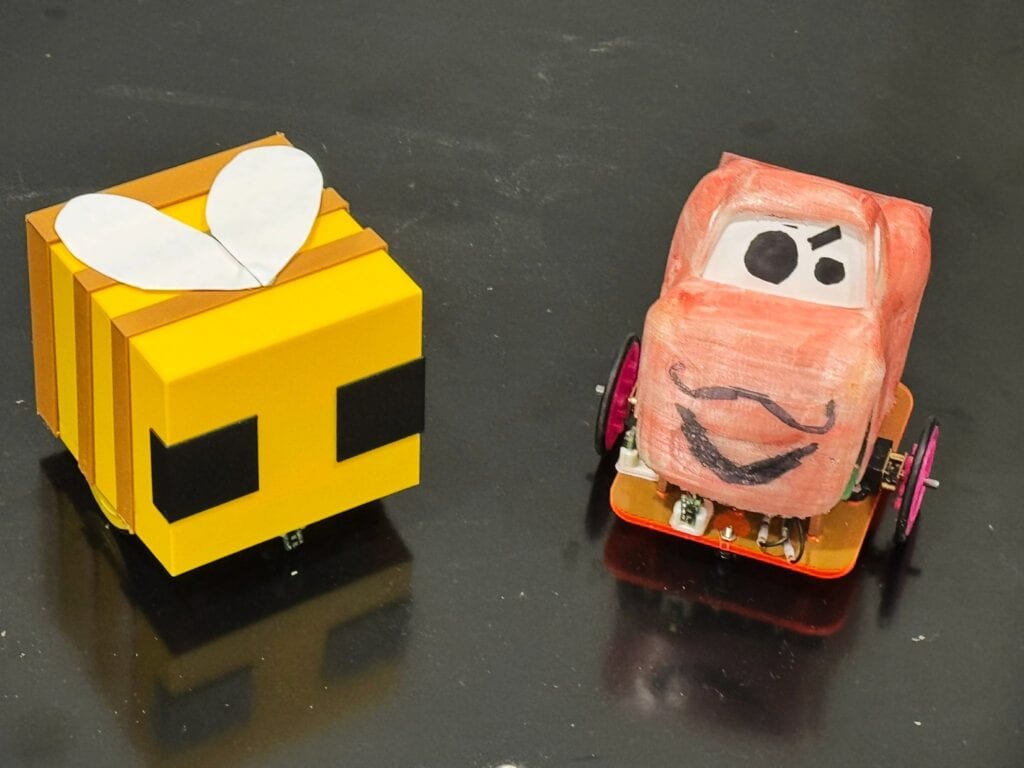
A box of parts and a laser-cut chassis were the starting point for each team at the UK RAS STEPS MicroMaze Robot Hackathon, held 25-27 August at the Institute for Safe Autonomy, University of York. Three days later, one team of three had a small autonomous robot that could make its way through a maze. The MicroMaze robot hackathon asked participants to build the machine themselves and then test it against mazes that became harder over the course of the event.
The brief and the build
The task was to build a small autonomous robot and keep it working through increasingly difficult mazes. The goal was stated plainly, but the work was not simple. Participants had to turn a kit into a machine that could sense its surroundings and move on its own.
The hardware and software were modest and specific. Teams worked with sensors, motors, a Raspberry Pi Pico W and MicroPython. The chassis was laser-cut. That combination covers the basic loop of any mobile robot: sensing, deciding and moving. At this scale, each part of that loop is visible to the person building it.
One participant's team had three members: the participant, Emily and Joolz. They had not met before the event. Over the three days they moved from unassembled parts to a robot that could complete a maze run. The path there included a lot of debugging and failed runs. The team often found the robot doing something it was not meant to do, and had to work out why.
The source does not give maze dimensions, scoring rules, sensor types or the number of teams. It also does not say how the team's robot performed against the hardest mazes. It says only that the robot could make its way through a maze.
The setting and the people
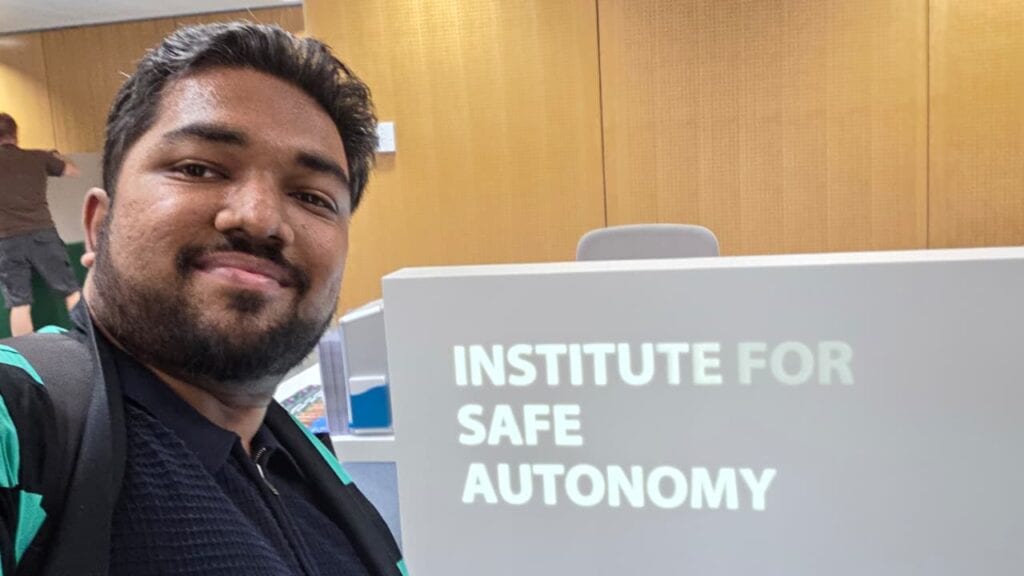
The hackathon took place at the Institute for Safe Autonomy at the University of York. The participant described the venue as a fitting one for asking a room of technical people to make a tiny autonomous robot behave itself. The institute's name points to its focus on autonomous systems that behave safely, and a maze robot is a small version of that same problem.
Rob Woolley organised the event. The participant thanked him, the Institute for Safe Autonomy, the University of York and the wider UK RAS STEPS team for creating opportunities for Research Technical Professionals. That audience matters. Research technical professionals are the people who build, run and maintain the technical systems that research depends on, and they often have fewer formal events built around them than academic researchers do.
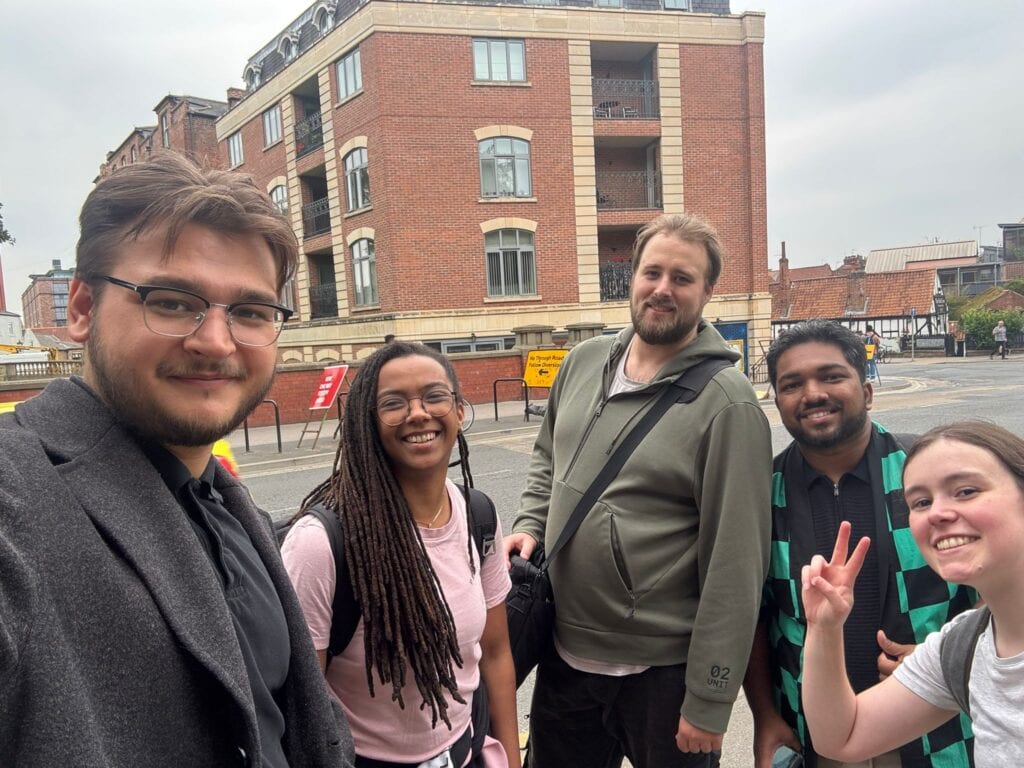
The social side of the event drew as much comment as the engineering. On the final day, Michael Smith, Eugen Guritanu, Emily, Joolz and the participant spent the day walking around York, eating and talking. The participant wrote that people arrive at these events knowing very few others and, within days, are arguing over how to fix things, swapping stories and making plans to meet again.
The participant ranked that outcome above the technical work. By their account, the three team members went from strangers to friends during the build, the debugging and the failed runs. They also said that the best things built at such events are not always the things that were planned.
What the event shows about small-robot hackathons
Several points follow from what is stated. The event ran for three days, used a fixed kit, and gave every team the same task. Those constraints keep the barrier to entry low. A shared chassis and a common controller board mean that teams spend their time on integration and tuning, not on sourcing parts.
The choice of the Raspberry Pi Pico W and MicroPython is worth noting. MicroPython is a version of the Python language that runs on small microcontrollers. Using it means a participant who knows Python can write robot code without learning a lower-level embedded toolchain. That is an inference from how the tools are generally used, not a claim the source makes about the event, but it fits a three-day format where time is short.
The maze format also gives a clear way to measure progress. A robot either gets through a maze or it does not. Mazes that grow more difficult give teams a reason to keep improving the same machine instead of stopping at a first working version.
Analysis: why a small event matters, and what it leaves unproven
The main value of this event lies in who it served. It was run for research technical professionals under the UK RAS STEPS banner, and it paired hands-on robotics with time for building working relationships. The participant's account suggests the second part worked. Three people who had just met finished as a team that still wanted to stay in touch. For a field that relies on technical staff to keep robots running, that kind of network is a practical outcome, even if it is hard to count.
The choice of venue also fits the content. A maze is a closed, simplified environment, which makes it a reasonable way to introduce autonomy and its failure modes. When a robot misbehaves in a maze, the cause is usually traceable to a sensor reading, a motor setting or a line of code. Debugging that chain in three days builds habits that carry over to larger systems, where the stakes of an unexpected behaviour are higher. Holding the event at an institute focused on safe autonomy makes that link easy to see, though the source does not say the programme covered safety topics directly.
Compared with larger robotics competitions, this format is small and low-cost in its parts. It does not rely on custom hardware or large budgets, and the kit approach lets newcomers take part. The trade-off is that a fixed kit limits how far teams can push design. The source gives no results or rankings, so there is no way to judge how much variation in performance the format produced.
Much remains unproven. The account comes from a single participant and describes personal experience, not measured results. It does not state how many teams took part, how many robots finished the hardest mazes, or whether participants went on to use the skills in their work. It also does not say whether the friendships formed will lead to later collaboration, though the participant mentions plans to meet again. Whether the event shifts the careers or output of research technical professionals can only be judged by follow-up that has not yet been reported.
What can be said is narrower. In three days, a team of strangers built a working maze robot from a kit, and the participant counted the people they met as the most lasting result. For an event aimed at a professional group that is often overlooked, that is a credible first sign. Evidence of wider effect would need data on participation, completion and later collaboration.