
AURA Foresight is one of four teams left from more than 130 entrants worldwide in the XPRIZE Wildfire finals, which will be held in Nenana, Alaska. The team is competing in the Autonomous Wildfire Response track with a system that pairs fixed sensors, artificial intelligence and swarms of flying robots to find and deal with ignitions while they are still small.
The track is worth US$5 million within a four-year, US$11 million global competition. Its task is demanding: teams must autonomously detect, verify and respond to wildfire ignitions across a 1,000 km² landscape within ten minutes. In Nenana, the finalists will demonstrate their technologies in realistic wildfire response scenarios.
What the system does
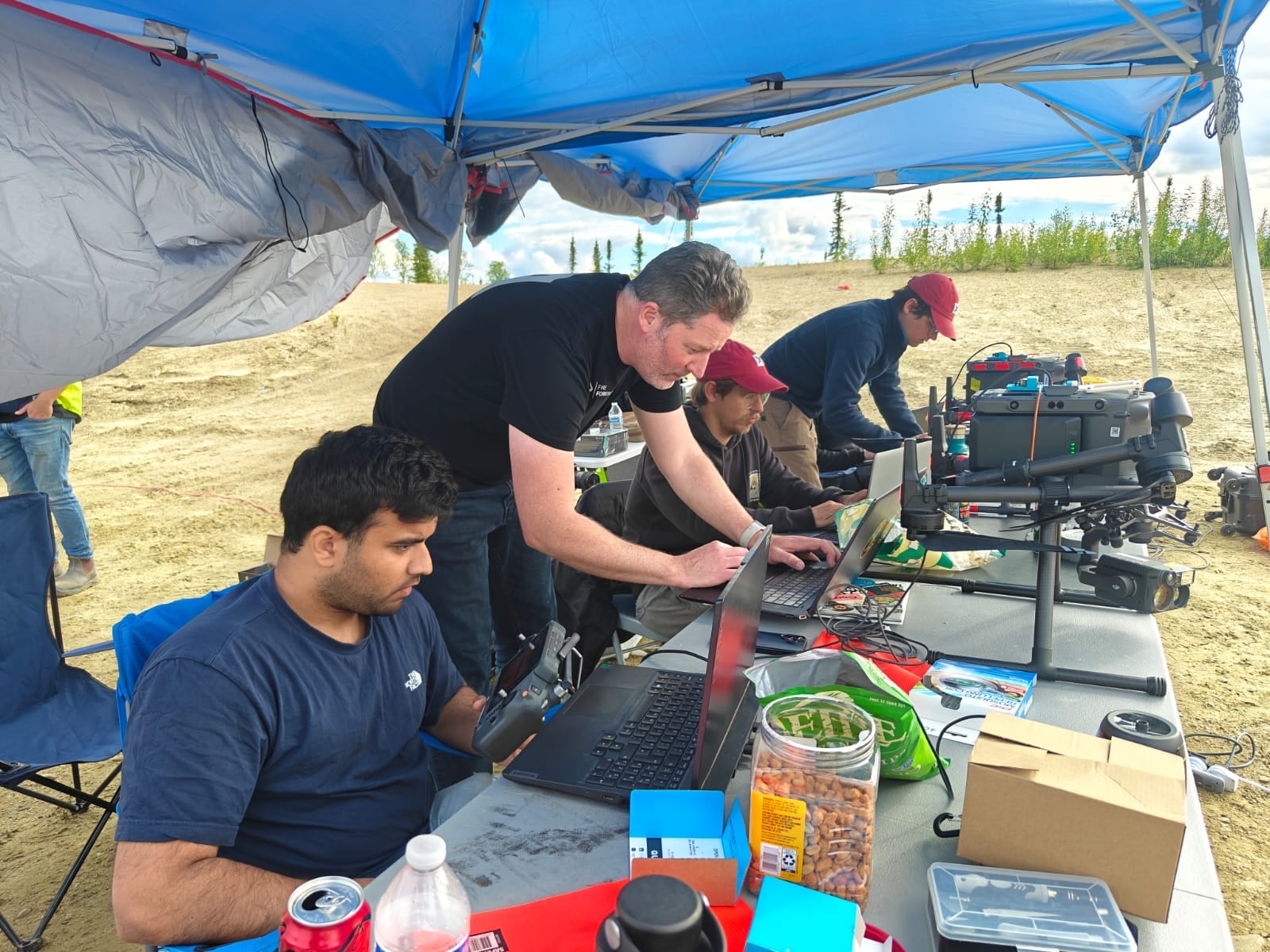
AURA Foresight describes its approach as detect, verify, act. Fixed optical and thermal sensors monitor a landscape continuously. AI software scans that data and flags potential ignitions. Flying robots are then dispatched to check whether the flagged event is a real threat, and the system coordinates an intervention before the fire can spread.
The design aims at the earliest stage of a fire, when a small spark can still be contained safely. The team contrasts this with the usual pattern of responding to large fires after they have taken hold, and says the system lets agencies move from passive monitoring and delayed response to automated intervention.
The team also stresses practicality. It says the platform is built on commercially available technologies and is meant to deploy out of the box with minimal setup. It is intended to work in environments ranging from forests and remote wilderness to infrastructure corridors. The number of flying robots can scale from a handful to dozens, depending on operational needs. The system is also designed to work with different aircraft and robot platforms, which the team says avoids vendor lock-in.
Who is behind it
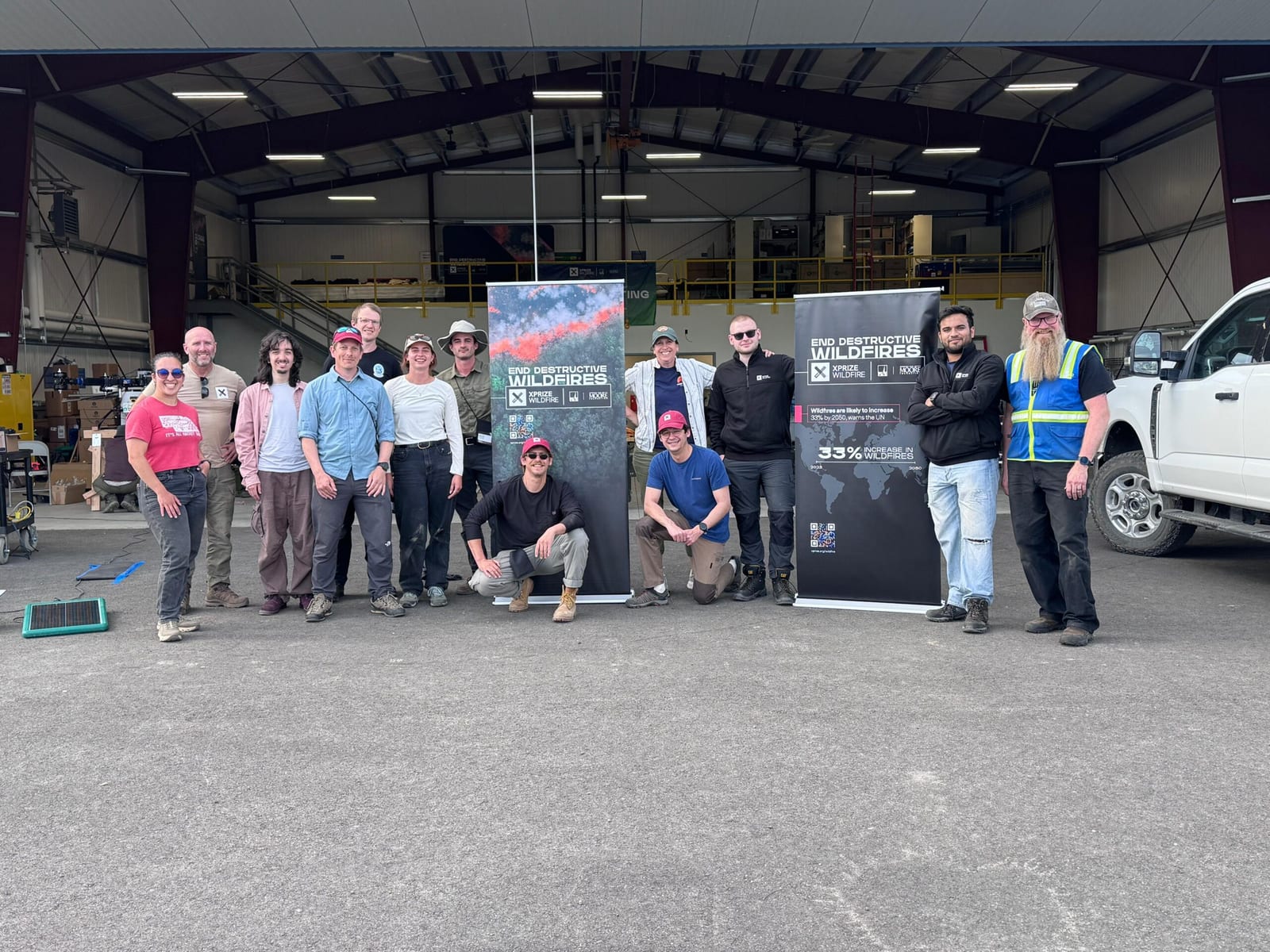
AURA Foresight is a collaboration between AURA in the United Kingdom and Fire Foresight in Australia. The consortium includes the University of Bristol, Bristol Robotics Laboratory, the University of Sheffield, Lancashire Fire and Rescue Service, Fire Foresight, SkyFly Drones, Southern Denmark University, Manchester University, Indicium Dynamics, Robotic Cats, Taz Drone Solutions and Little Place Labs.
Firefighters are part of the development process. The consortium works directly with Lancashire Fire and Rescue Service and with wildfire response experts in Canada and Australia. The stated purpose is to make sure the technology addresses real operational problems and fits into existing emergency response workflows.
Dr Georgios Tzoumas, team co-lead and a research fellow at the University of Bristol, said the group has worked on autonomous wildfire detection and intervention for more than six years. "Reaching the XPRIZE finals is an exciting milestone because it feels like the solution is finally within reach," he said. He added that combining AI, swarm robotics and collaboration with firefighters shows it is possible to tackle wildfires while they are still small.
Fire Foresight CEO Rob Vernon said the company has been building the largest network of bushfire detection capabilities in Australia. According to Vernon, the partnerships formed through the competition let his company focus on autonomous mitigation and suppression. He described those capabilities as "so desperately needed" given wildfire and climate change.
Why the XPRIZE Wildfire finals matter for the field
Most public discussion of wildfire technology centres on detection: cameras, satellites and sensors that raise an alarm sooner. The Autonomous Wildfire Response track asks for more. It requires a single system to detect, verify and respond, with the whole chain finished inside ten minutes over a 1,000 km² area. That makes it a test of integration as much as of any single component.
That framing explains why a consortium of this shape is notable. The team combines sensing, AI, swarm robotics, aerial platforms and operational firefighting knowledge. A system that stops at detection leaves the hardest step to human crews who must travel to the site. A system that verifies and intervenes automatically tries to remove that delay. The XPRIZE finals will show whether the full chain can work as one pipeline.
The design choices are also worth noting. Using commercially available hardware and supporting multiple aircraft types addresses a problem common in robotics deployments, where agencies can end up tied to one vendor's equipment. If the approach holds up, it would lower the barrier for smaller organisations. That claim is the team's own and remains to be tested outside the competition.
What remains unproven
The available details leave several questions open. The team has not described how its robots intervene once a threat is verified, so the suppression method and its effectiveness cannot be judged. No performance figures have been published for detection accuracy, false alarm rates or response times. No cost figures have been given either, so the claim that the system is affordable cannot be checked.
Scale is another open point. The team says the system can grow from a handful to dozens of flying robots, but the competition area of 1,000 km² is a defined, staged environment. Real deployments involve changing weather, terrain, airspace restrictions and regulatory limits on autonomous flight, none of which the team addresses here. Integration with existing emergency workflows is a stated goal and has so far been developed with services in the UK, Canada and Australia, not with the agencies that manage fires in Alaska.
The Nenana demonstrations will provide the first public evidence on these points. Results against the ten-minute, 1,000 km² requirement will show how close autonomous detect-verify-act systems are to field use, and how AURA Foresight compares with the three other finalists.