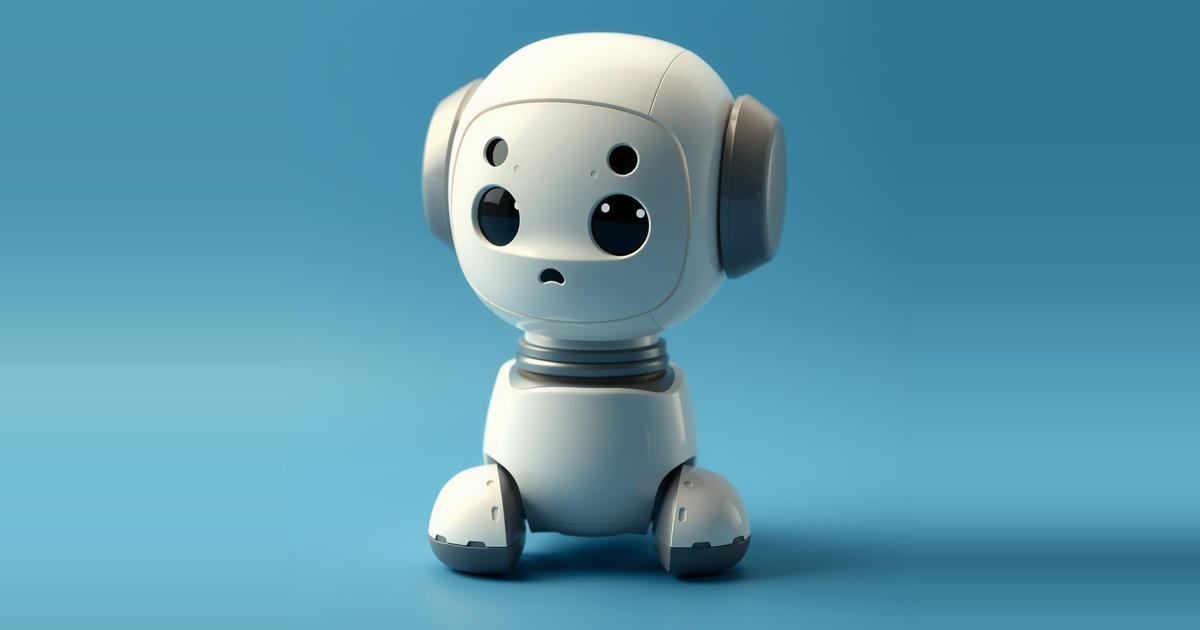
Twenty-four volunteers wearing augmented-reality headsets ranked dozens of face and voice combinations on a Qoobo, a cushion-bodied robot with a swinging tail, and rated anime-style faces as highly as animal faces. The result points to a wider range of options for social robot design than animal mimicry alone.
The work comes from Dr Shaun Macdonald and Josh Yip of the University of Glasgow's School of Computing Science. Their paper, titled Anime, Animal or Animal Crossing? Comparing Aesthetic Styles for Zoomorphic Robot Faces and Sounds using Augmented Reality, was set for presentation at the ACM International Conference on Mobile Human-Computer Interaction in Swansea, Wales, on Thursday 3 September.
How the prototypes were built and tested
Social robots offer companionship by imitating human or pet-like behaviour. Zoomorphic robots, which copy the look and behaviour of animals, are one branch of the field. Macdonald says their appearance has so far been largely the result of educated guesswork, with little research on what makes them appealing to users.
The team replaced guesswork with side-by-side comparison. They used an existing robot, the Qoobo, as the physical base. Its soft, cushion-like body and tail stayed the same. Faces and sounds were added virtually through AR headsets, so many designs could be tried without building new hardware for each one.
The overlay system is called Augmenting Zoomorphic Robotics with Affect, or AZRA. Macdonald developed it in earlier work. It places AR sounds and animations over the bodies of real social robots to prototype new appearances and functions.
To design the faces, the researchers assembled a mood board of appealing images of animals and robots from real life and popular culture. That produced five prototype faces: animal-like, robot-like, emoji-style and anime-inspired designs, plus one made up of eyes alone.
They also chose five vocalisations: cat noises, human-like vocal sounds, abstract electronic noises, music, and samples of animalese, the nonsense speech used by characters in the Nintendo series Animal Crossing.
What the volunteers preferred
Each of the 24 participants ranked combinations of face and voice on three measures: how clearly the robot expressed an emotion, how much empathy they felt toward it, and how appropriate the combination seemed.
Animal-like faces and sounds paired with Qoobo's animal-like body were well liked. Participants found them more engaging and immersive. Anime-like faces ranked just as highly, even though they are not based on real animals.
Yip said anime faces can be more expressive than animal faces could be, letting a robot show more than a normal pet without feeling uncanny. Participants still saw it as a pet-like creature.
Faces consistently outperformed sounds at conveying emotion and building connection. Human-like sounds were easier to read emotionally but were liked less than animal sounds. Participants found them harder to link to specific emotions.
Pet ownership shaped reactions. Owners of real animals were more likely to treat animal-like prototypes as real pets. They were also more likely to treat robot-like faces as machines.
Readability did not predict preference
The team did not expect one result. Participants said that reading the robot's emotions correctly was very important to them. The data showed that readability had little effect on which designs they preferred.
Animalese showed a similar pattern. It ranked highly even though listeners could not understand it. Some participants said it suggested the robot had greater intelligence than the other sounds did.
Macdonald concluded that no single face or voice has universal appeal. The combination of the two, he said, can strongly affect how well users feel a robot communicates emotion.
What this means for social robot design
The findings give designers something concrete to work from. A field that Macdonald describes as driven by educated guesswork now has a ranked comparison of face and voice styles. The ranking points to faces as the stronger lever for emotional connection. A team with a limited budget could put effort into the face before the voice.
The gap between what participants said and what they chose also matters. If stated priorities do not predict preferences, design surveys that ask people what they want may mislead. Testing actual reactions to prototypes, as this study did, looks like the more reliable method. The AR approach makes that testing cheaper, because a new face or voice is a software change rather than a manufacturing one.
The limits are clear from the study's own design. There were 24 participants and one robot body. Qoobo has no face of its own, so the results may not carry over to robots with different shapes, materials or movement. The faces and sounds were virtual, seen through headsets, so the study does not show how the same designs would feel on a physical robot a person lives with. Participants made rankings in a test setting. Nothing in the study measures whether the appeal lasts, or whether it reduces loneliness, which is the benefit older users have reported from social robots.
Two ideas from the team remain proposals. One is a generation of robots that tailor their looks to an owner's preferences. The other is extending the life of existing devices by letting users overlay new faces, voices and functions through AR. Both follow logically from the results, since pet owners and non-owners reacted differently and no single design won outright. Neither has been tested in the study. Whether people would wear AR headsets or use other displays at home to see a robot's face is an open question. Follow-up work would also need to show that preferences hold with other robot bodies and over longer periods of use.