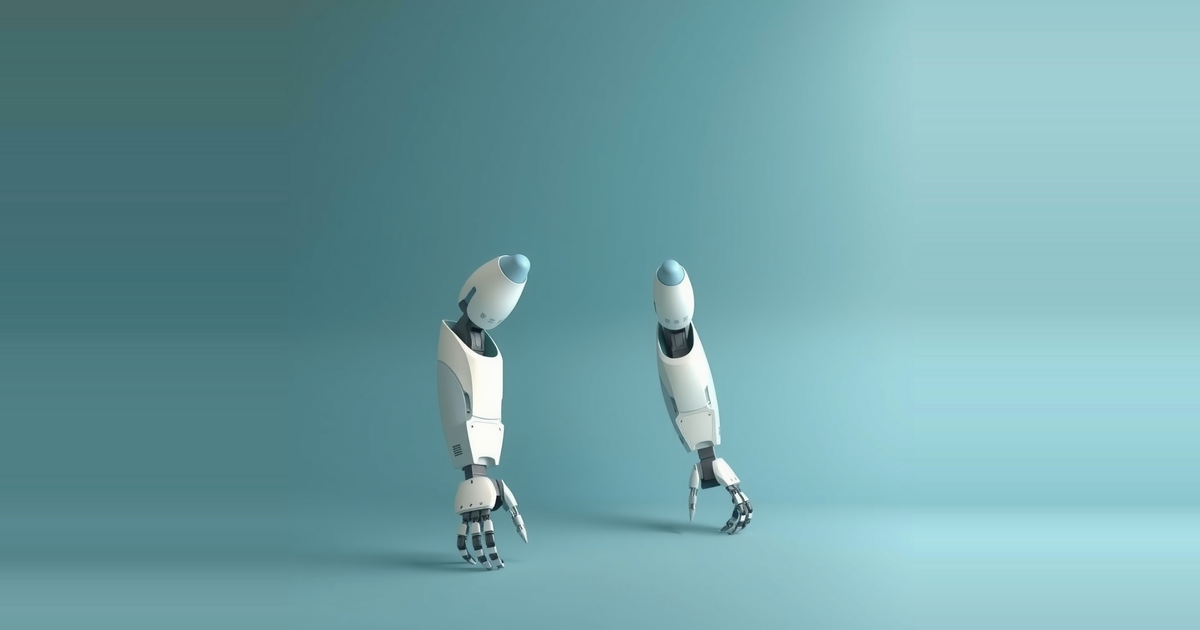
Josie Hughes, an Assistant Professor at École Polytechnique Fédérale de Lausanne (EPFL), discussed the use of AI for robot design in a podcast conversation published on 22 May 2026. The topic was how artificial intelligence can be used to develop new designs for robotic manipulators. The host, Claire, spoke with Hughes about that work as episode 157 of a weekly show on robotics, AI and autonomous machines.
What the conversation covered
The stated subject is narrow and specific: AI-assisted generation of manipulator designs. A manipulator is the part of a robot that reaches for, grasps and handles objects, so the question is how the physical form of an arm or hand can be produced with help from AI instead of being drawn up entirely by a human engineer.
The published description does not include technical detail from the discussion. It does not name the AI methods Hughes uses, the manipulators produced, or any test results. No performance figures, hardware specifications or publication dates for specific projects are given. This article therefore limits itself to what is established about Hughes, her lab and the stated focus of her research.

Who Josie Hughes is
Hughes is an Assistant Professor at EPFL. She established the CREATE Lab there in 2021. She completed her PhD in the Bio-inspired Robotics Lab at the University of Cambridge, where she examined the role of passivity in bio-inspired manipulators.
Passivity, in this context, refers to behaviour that comes from the physical structure of a manipulator rather than from active control. The description of her doctoral topic ties directly to her current stated aim, which is to build robots whose bodies do more of the work.
Design paradigms built around physicality
Her research focuses on developing novel design paradigms for robot structures that exploit their physicality and their interactions with the environment. That is a design philosophy as much as a technical method. It treats a robot's material form and its contact with the world as resources to be used, instead of as problems for software to correct.
The work spans several areas. These include robotic hands, soft manipulators, and automation systems. The automation work is aimed at applications focused on sustainability and science.
Pairing AI-generated designs with this philosophy is a logical step. If the shape and physical properties of a manipulator matter as much as its control, then the space of possible shapes is large. A generative approach is one way to search that space. The source does not say how Hughes's group does this, so the connection is an inference from her stated research focus and the episode's topic, not a reported finding.
Where the topic sits among related episodes
The same podcast series has covered adjacent ground in nearby episodes. In episode 166, Claire spoke with Rika Antonova of the University of Cambridge about using artificial intelligence to develop complementary robot hardware and algorithms. In episode 167, she spoke with Jan Petrš, also of EPFL, about novel robot designs for construction and architecture.
Taken together, these episodes show a recurring theme: AI is being applied to the design of robot bodies, not only to the software that runs them. Antonova's topic pairs hardware with algorithms. Petrš's concerns new designs for a specific industry. Hughes's concerns manipulators.
Analysis: why this matters and what is unproven
The significance of this line of work lies in where AI is applied. Much public discussion of AI in robotics concerns perception, planning and control. Hughes's stated focus is the structure of the robot itself. If a manipulator's form can be generated rather than hand-designed, the design stage, which has traditionally depended on engineers' experience and intuition, becomes something that can be searched computationally.
That fits especially well with her emphasis on physicality. Designs that rely on passive behaviour and environmental interaction are hard to specify by hand, because the outcome depends on how a body behaves in contact with the world. A generative method gives a route to exploring such designs. This is reasoning from her stated research priorities, not a demonstrated result.
The comparison with other work is limited by what is available. Antonova's episode describes AI developing hardware and algorithms together, which suggests the field is moving toward treating body and controller as one problem. Hughes's work, as described, concentrates on the body side, with an interest in soft and passive structures. The two approaches appear complementary, though the available description does not compare them directly.
Several questions remain open. The description does not say which generative methods are used, how generated designs are evaluated, or whether they have been built and tested on physical hardware. It gives no measure of how a generated manipulator compares with one designed by a person. Without those details, claims that AI-generated designs outperform conventional ones cannot be supported.
There is also the question of transfer. Hughes names sustainability and science as application areas for her automation systems, but the description does not report a deployed system in either. Whether designs generated for one task carry over to others is not addressed.
The practical test for AI robot design will be physical: whether generated manipulators can be fabricated, work reliably outside simulation, and match or beat human-designed alternatives on a defined task. The conversation signals active interest from a lab with a clear design philosophy. The evidence that the approach delivers better robots will need to come from the group's published results.