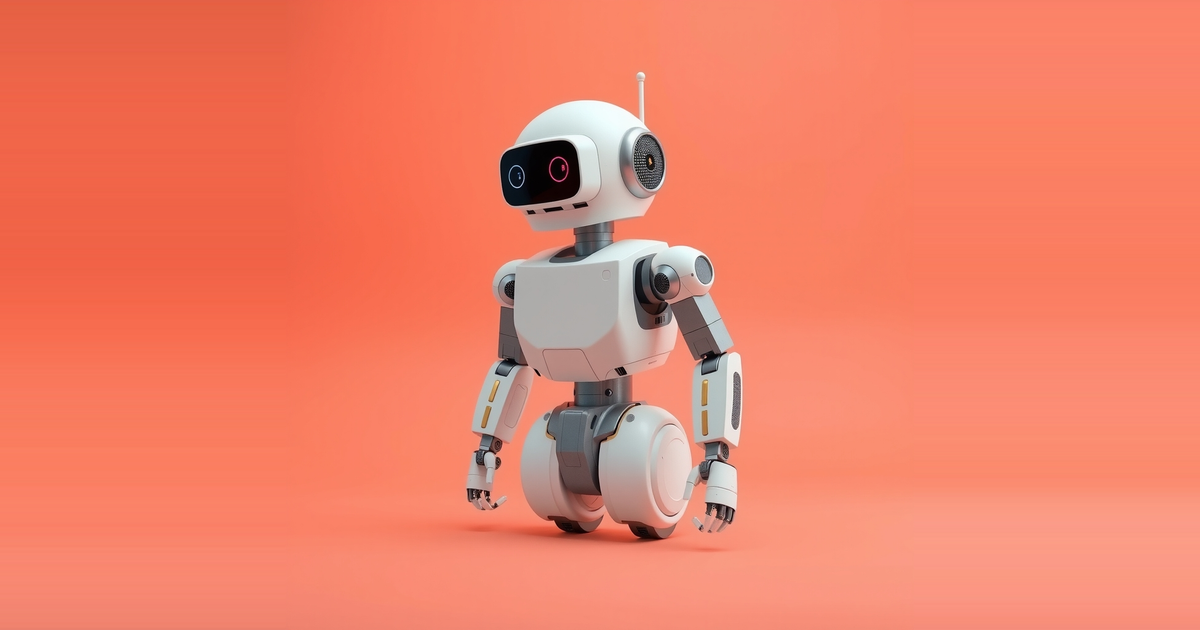
Devanthro is selling plastic balls for $1,000 each, with delivery promised in time for Christmas. The offer accompanies an AI-generated image of a robot in a ball pit, which the company uses to pose a question about robot decommissioning: does retirement become fun for the machine, or only for the people watching?
The joke is the most visible item in a week of robotics video releases. The rest of the batch is more technical, covering humanoid manipulation, a new navigation system, a soft swimming robot and a robotic car wash. Together they show where lab work and commercial pilots stand in October 2026.
A ball pit for retired robots
Devanthro's pitch is a gag, but it has a price and a delivery date attached. Each plastic ball costs $1,000. The company says orders will arrive before Christmas. The image of the robot in the pit was generated with AI, and the company says so.
No details are given about what the balls are made of, how many are available, or whether any robot has actually been retired this way. The release should be read as marketing wrapped around a real question: what happens to a robot at the end of its working life. Nothing in the material answers that question.
Humanoids learn from people, not from robots
The most substantive research item comes from Hybrid Robotics. Its system, called Workhorse, targets a known weakness in humanoid robots. They struggle to plan whole-body manipulation that involves a lot of physical contact when the only inputs are egocentric RGB images and proprioception.
Workhorse learns this kind of manipulation from human demonstrations recorded without a robot in the loop. The team tested it on a real Unitree G1. In the video the robot sorts boxes using its hands and a kick. It catches a thrown box. It also topples a suitcase and climbs it.
DEEP Robotics also published a humanoid video showing a use for the machine. The material does not describe the task in text. Separately, a general robotics lab released a dance clip, and Generalist showed manipulation work with what looks like a simple gripper.

Navigation, motors and soft swimmers
MIT researchers developed SANDO, a navigation system meant to help robots move safely through unfamiliar environments that contain moving obstacles. The system plans and adjusts a collision-free path quickly, using onboard sensors and computing. Its safety is backed by mathematical guarantees.
At EPFL, the LMTS lab showed a threadlike linear motor. The release gives no performance figures for it.
At NC State, researchers drew on feather stars to build a soft underwater swimming robot. It achieves three distinct swimming modes: jellyfishlike vertical swimming, fishlike directional steering, and rotorlike three-dimensional reorientation. It does this with only two pneumatic inputs.
The RAI Institute posted a video of its robot performing a task, with no further description. KUKA showed a car wash that builds a model of the vehicle and then cleans it with robot arms. Recent reviews of the location suggest the robots are not yet performing well enough, though the concept has potential.
Sanctuary AI published a manipulation clip in which the middle segment starts after the hand already has a good grip on a peelable strip. That edit hides the hardest part of the grasp.
Talks from ICRA 2026 on manipulation, humanoids and embodied design are also available as a series of mini-keynotes.
What this batch tells us
The most useful item here is the pairing of Workhorse and SANDO. Both address a gap between a robot that performs a trick and a robot that can be trusted around people and objects. Workhorse reduces the need for robot-collected training data by using human demonstrations. SANDO attaches a mathematical safety guarantee to path planning. These are different problems, but each tackles the question of how a robot behaves when the world does not match its training.
Workhorse has limits worth stating. The demonstrated tasks are impressive, but a video shows selected successes. No success rates, trial counts or failure cases are given. The G1 is also a single platform, so it is unclear how well the approach transfers to other bodies. The same caution applies to SANDO, where the guarantees are described but no test results are reported.
The Sanctuary AI clip is a reminder to check how demonstration videos are cut. A hand that already holds the strip when a clip begins shows a result without showing the grasp. The KUKA car wash makes the opposite point. Customer reviews give an outside view of a deployed system, and they suggest the robots are not yet reliable enough.
The NC State swimmer stands apart. Producing three swimming modes from two pneumatic inputs is a design result about mechanical economy, not about software. Whether it scales or survives outside a lab tank is not addressed.
As for robot decommissioning, the Devanthro stunt is the only item in the batch that touches it, and it offers no practical guidance. Disposal, reuse and data wiping for retired robots are real questions for any fleet operator. They remain unanswered here.
Two events will show whether any of this work holds up under review. CoRL 2026 runs 9 to 12 November in Austin. Humanoids 2026 runs 6 to 9 December in Santa Clara, California.