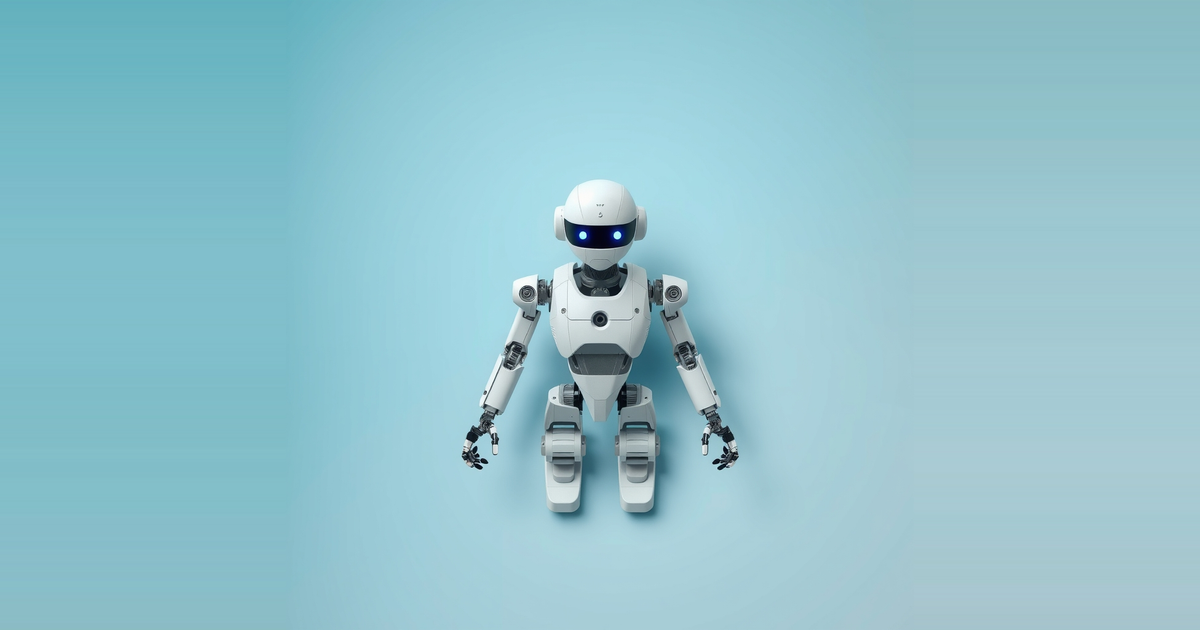
A team of 15 engineering students, faculty advisors and volunteers in Guadalajara, Mexico, has built two units of RoboMeshA, a portable robotics education platform that a school can use without a computer lab or installed software. Students power on the robot, connect to its network and open a web browser. The team built it for high schools that have motivated teachers and capable students but no access to robotics laboratories.
Who built it and why
The work comes from ITESO, Universidad Jesuita de Guadalajara, under the EPICS in IEEE initiative. The group combines engineering students, faculty advisors and volunteers from the IEEE Guadalajara Section. EPICS is administered by IEEE Educational Activities and funded by the IEEE Robotics and Automation Society.
The team's starting point was a gap it saw in local schools. Many high schools in Guadalajara have students interested in science, technology, engineering and mathematics, but they lack advanced tools. That limits hands-on learning on current applications. The team also says young students want to work with systems that combine mechanics, electronics, software and control, and rarely get the chance.
Many of the participants came from ITESO's applied professional projects program. The project gave them practical experience in project management, system integration and user-centered design. The team presented a research paper and a project poster in May at the Engineering Congress of the Jesuit University System.
How the platform works
RoboMeshA is described as an all-in-one mobile learning network. A school does not need to build a dedicated computer lab or install complex software. Students connect to the platform directly from a web browser.
Once connected, they can drive the robot manually. They can also use its control modes to watch it move and to detect and avoid obstacles. The system draws on mechanical design, embedded systems, control engineering, computer vision and AI. Faculty advisor Jorge A. Lizarraga describes it as a single robotic system that works as a mobile learning laboratory.
Team member José S. González, a mechatronics engineering student, said the aim was to make the first interaction simple. Students should be able to power the robot, connect to its network and start using it, without installation, extensive configuration or troubleshooting. He also said the design had to work for students with different levels of experience.
The team has built two units. It is now developing a modular coupling framework intended to expand what the system can do in research and classroom demonstrations. According to the team, the design connects independent software components while keeping internal dependencies to a minimum. That approach is meant to allow four RoboMeshA robots to operate together.
Design problems the team had to solve
Team member Fernando Vidal Luna, a mechatronics engineering major and IEEE student member, said the structure was one of the hardest parts. The chassis had to hold all the components and offer enough stability, rigidity and weight distribution. It also had to protect the electronics while leaving them reachable for maintenance, testing and modification.
That requirement follows from the classroom setting. A robot used by students will be handled, transported and modified, so the housing has to serve both protection and access.
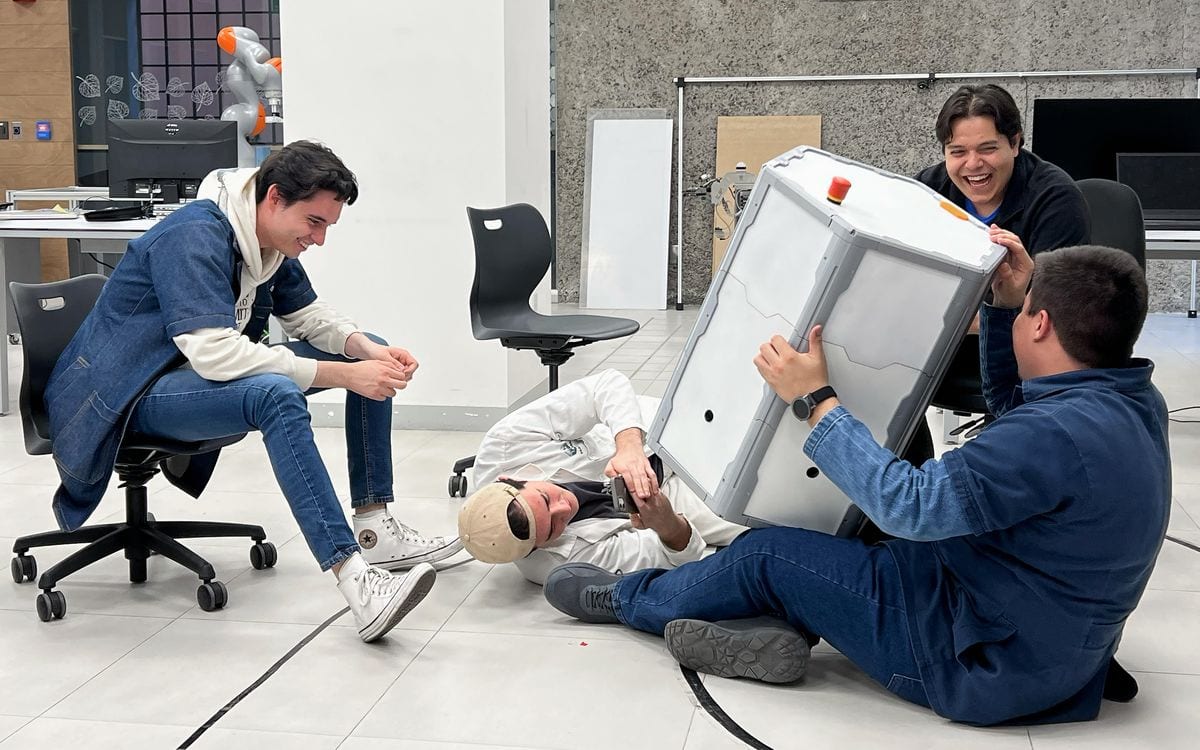
To check the platform outside the lab, the team partnered with two high schools, CETI Colomos and Prepa ITESO, and validated it in classroom settings. Photos from the project show participants running development and handling tests on RoboMeshA before deployment.
Project lead Luis Fernando Luque-Vega, an IEEE member, said he hopes schools, universities and IEEE student branches across Mexico and internationally will adopt RoboMeshA as a model for combining technical innovation with community engagement. He said that when students see their technology inspire others and improve lives, engineering becomes more meaningful.
What this means, and what is still unproven
The most notable choice is the delivery model. Many educational robotics efforts depend on a prepared environment, such as installed software, configured computers and technical staff. RoboMeshA moves that burden into the robot. The robot carries its own network, and the browser is the only thing the student needs. For schools without laboratories, that removes a barrier that often matters as much as the hardware's price.
The multi-robot goal is the second point worth watching. If four units can run together through loosely coupled software, the platform could support group demonstrations as well as individual exercises. The team presents this as work in progress, not a finished capability.
Several things remain unproven. The team has built only two units. It has not published the cost per robot, the specifications of the hardware, or how many students have used the platform. It also has not reported learning outcomes from the classroom validation at CETI Colomos and Prepa ITESO. Without those, it is not possible to say whether the platform teaches more effectively than existing kits, or whether a school with limited funds could afford to adopt it.
The platform's reach also depends on support beyond the original team. A design that students can modify and maintain is an advantage, but wider adoption would need documentation, spare parts and teachers who are comfortable with the system. The team has stated the ambition to spread RoboMeshA through schools and IEEE student branches. It has not described a plan or timeline for doing so.
For now, RoboMeshA is a credible prototype of a portable robotics education platform, built with input from the schools it is meant to serve. Its value will become clear once the team reports costs, usage numbers and results from students who have worked with it.