
Dream Labs has raised $90 million in seed funding and opened public access to Dream API, an interface that turns a robot's camera feed and a plain-English instruction into motor commands. The San Francisco startup says the API works on robots it has never seen before. B Capital and Kindred Ventures led the round.
Other participants include A.Capital, Unusual Ventures, SV Angel, Wing VC, Scribble VC and Adrian Aoun. The company plans to spend the money mainly on compute, as it widens the range of tasks and robots its models can handle and adds capacity for more users.
The problem Dream Labs is targeting
Dream Labs points to a gap between robot hardware and robot software. Factories worldwide now run a record 5 million industrial robots, but nearly every one is programmed for a single task. Most cannot pass what they have learned to other machines.
Cheaper robots have widened the gap. Low-cost units now sell for a few thousand dollars but ship with no built-in intelligence. According to the company, teaching one robot one task can take specialists months, and a new task or new hardware often means starting over.
Joel Jang, co-founder and CEO of Dream Labs, framed the issue as a missing layer. "The hardware is ready. What's been missing is a brain any robot can use," he said. He compared the approach to getting into a rental car: a driver does not relearn how to drive, but finds the controls and relies on past experience.
How Dream-1 works
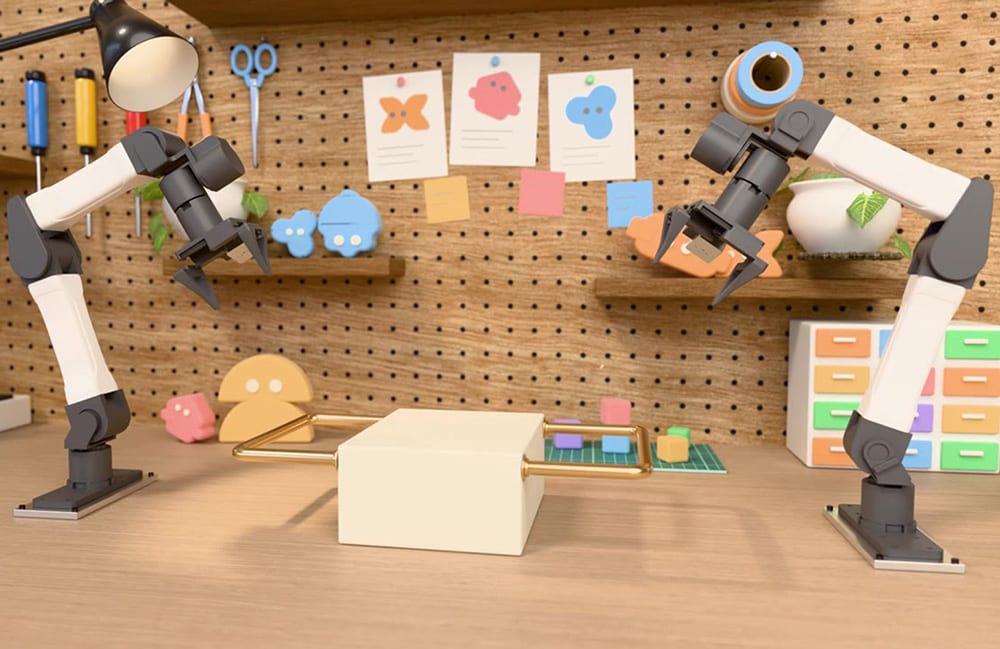
Dream-1 is the company's flagship model. It is trained on video of people performing everyday tasks, and it predicts what will happen next in a scene and works out the action the robot should take as a result. Dream Labs says that because the model learns from video rather than from one specific machine, its abilities carry across hardware from different manufacturers.
The company says Dream-1 can control any robot with grippers "out of the box," using zero-shot learning, which means no task-specific data from the new machine. It needs no extra data to control a two-armed robot with parallel grippers. Jang said a new robot can do useful work in minutes rather than months.
The model currently handles tabletop tasks such as picking and placing objects and folding laundry. Support for wheeled mobile robots and dexterous hands is planned but not yet available.
What developers can use today
Dream API is available now. Developers sign up, connect a robot with grippers, and the robot carries out the instructed task. Dream Labs runs its models in data centers around the world so that robots respond quickly wherever they are.
The company also sells fine-tuning as a service. Developers and robot makers working with unsupported hardware, or needing new capabilities, can submit a small batch of demonstration data and receive a tailored model within hours.
A browser-based robot playground rounds out the offering. Anyone can type commands to a robot in Dream Labs' San Francisco office and watch it respond live and unedited, with no robot purchase needed. Jang said the aim is to give people a working model they can test themselves, mistakes included, rather than edited demonstrations.
Hardware partners and early users
Dream Labs supports robots that cost roughly $2,000 to $10,000. It works with more than 20 hardware partners, and for those partners it goes beyond the baseline by refining the model for each robot so it performs at its best.
Ryan Chan, co-founder and CEO of MakerMods, which sells $2,000 bimanual robot arms, said his company's robot was up and running in a few minutes with Dream-1. It attempted tasks his team never programmed, he said. Chan added that his company can now focus on better hardware while customers receive intelligence that keeps improving.
Daisy Cai, general partner at B Capital, said a capable robot arm has gone from the price of a luxury car to the price of a high-end laptop, and that what it needs now is intelligence. She said the Dream Labs team did some of the defining work in robot learning at NVIDIA.
What this means, and what is still unproven
The significant part of this announcement is the delivery model, not the funding size. Dream API treats robot control as a hosted service that a developer calls with an image and a sentence. That is a different arrangement from the current norm described in the announcement, where each robot is programmed by specialists for one job. If the service works as described, a small hardware maker could ship a robot with usable behavior without building its own software team. MakerMods' account points in that direction, though it is a single customer account.
The claims are also narrow in places. The zero-shot promise applies to robots with grippers, and the only configuration named as needing no extra data is a two-armed robot with parallel grippers. Dream Labs also refines the model for its 20-plus hardware partners and offers fine-tuning for unsupported hardware. Together these suggest that performance on a new machine may depend on added work, even if the baseline runs without it. The company has not said how much better a refined model performs than the out-of-the-box one.
Several measures are missing. No success rates, task-completion times or failure data accompany the claims. Nor is there a comparison against robots programmed the conventional way. The public playground is a useful step, since outsiders can see live, unedited behavior. But it shows one robot in one office, not the spread of hardware the model is meant to serve.
The scope also matters for industry. Dream-1 handles tabletop work today. The 5 million industrial robots the company cites are mostly fixed to single tasks in factories, and the company has not said when it will serve them. Mobile bases and dexterous hands, both listed as future support, would extend the model's reach considerably. Until they arrive, the realistic market is low-cost arms and the developers who buy them.
The company's bet is that learning from human video generalizes across bodies. Dream API gives developers a way to test that bet themselves, and their results over the coming months will show whether it holds beyond the demonstrated tasks.