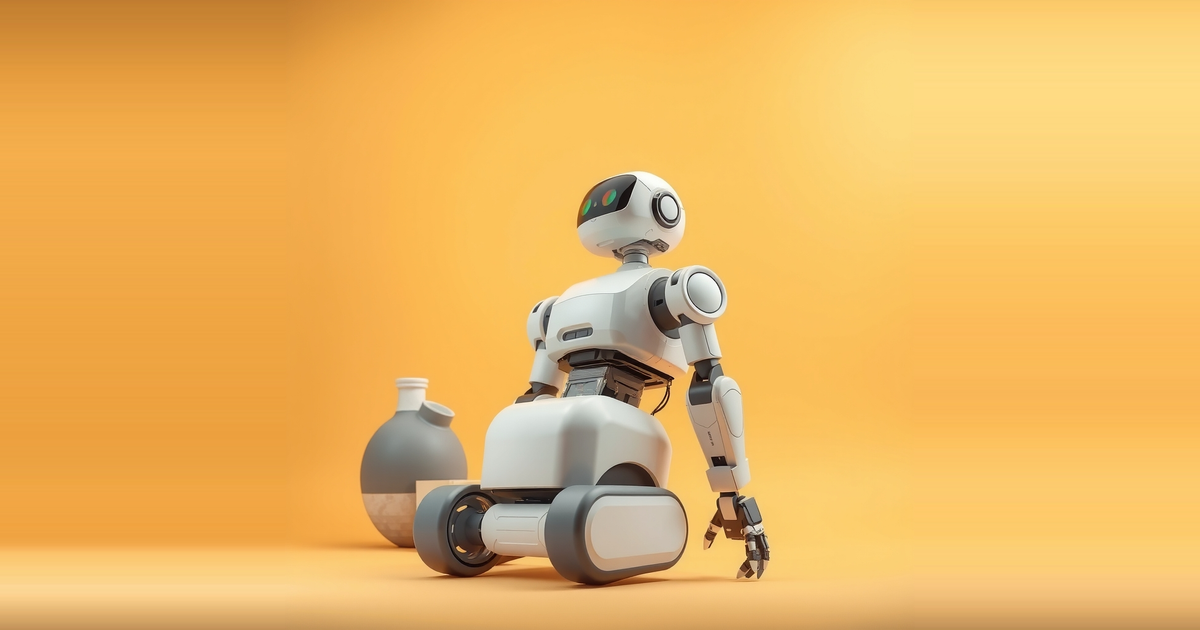
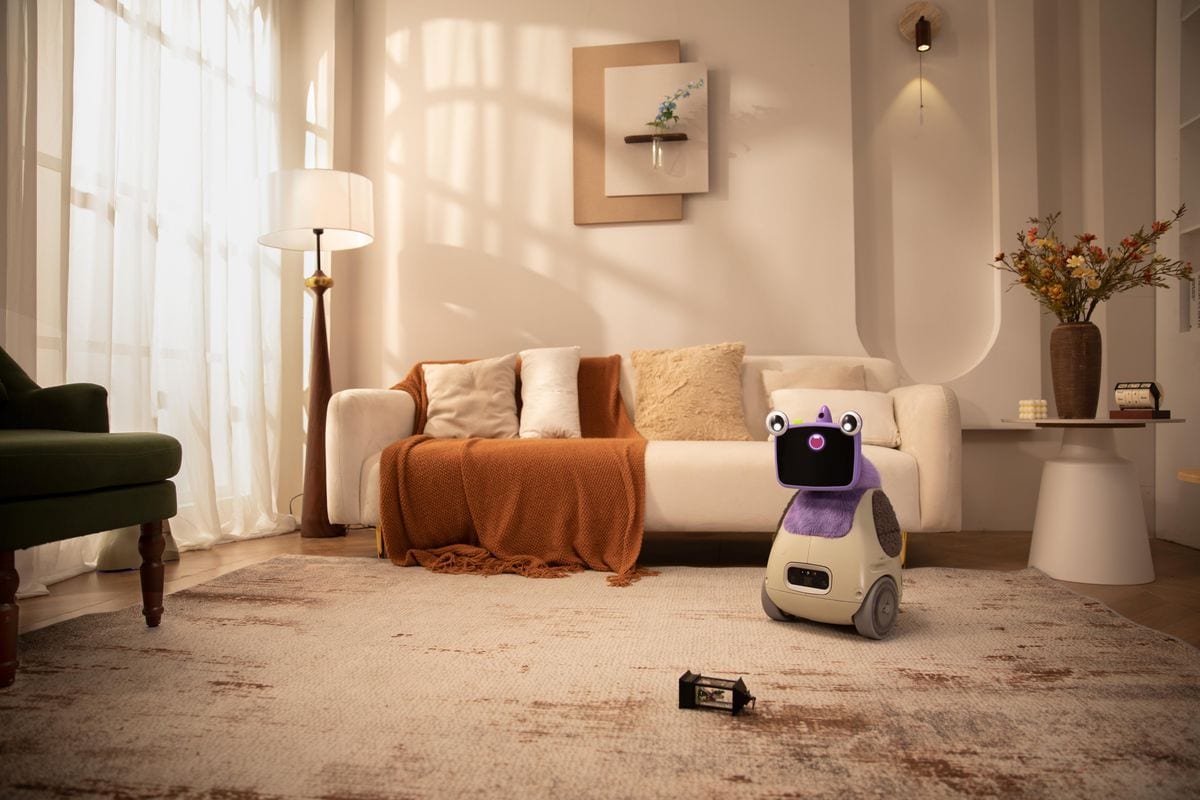
Ollobot's OlloNi SS1 pairs a 4K vision module, a six-microphone array and 16 GB of onboard memory in a mobile AI companion robot meant to live with a household rather than sit on a shelf. The company says the robot follows people from room to room, recognises family members and pets, and starts conversations on its own when it notices a change in behaviour.
The design is aimed at three groups: older adults living alone, children whose parents work far from home, and single professionals in cities. Ollobot has not published a price, dimensions or weight for the unit in the material available, and it has not given a release date.
What the SS1 does in a home
The robot is built to move. Ollobot says it handles wooden floors, ceramic tile and low-pile carpet, and can climb slopes of up to 3.5 degrees. The aim is for it to stay near household members as they move through the day, rather than wait at a fixed spot.
Its behaviours are triggered by observation rather than commands. The company describes it greeting people when they arrive, following an older adult from the living room to the kitchen while a conversation continues, reminding a child to take a study break after a long stretch of inactivity, and checking in on someone who appears unusually quiet. Fall detection is included for safety monitoring, though Ollobot gives no accuracy figure.
The robot builds a baseline of household routines and individuals. Prolonged quietness, unusual inactivity and emotional cues then act as triggers for interaction. Ollobot says each unit develops its own behavioural profile, so two robots in different homes diverge over a year.
Ollobot also describes an automated life-recording system. It uses facial recognition and event detection to capture moments such as laughter or physical closeness, and an AI vlog engine assembles them into short videos with automated sequencing and a generated soundtrack. Remote family members can connect through the robot, which Ollobot frames as access to an ongoing domestic context rather than a scheduled video call.
Hardware and on-device processing
The perception stack combines a multi-chip AI 4K vision module for facial recognition and motion tracking with a six-microphone array. The array gives omnidirectional voice pickup at up to 5 meters, which supports wake-word detection and far-field interaction.
Much of the AI processing runs on the device through what Ollobot calls its heart module, backed by 16 GB of memory and 64 GB of local storage. The company says this lets the robot retain household memories, recognise familiar faces and respond with lower latency. The software runs on Android OS and receives over-the-air updates for new features and AI improvements.
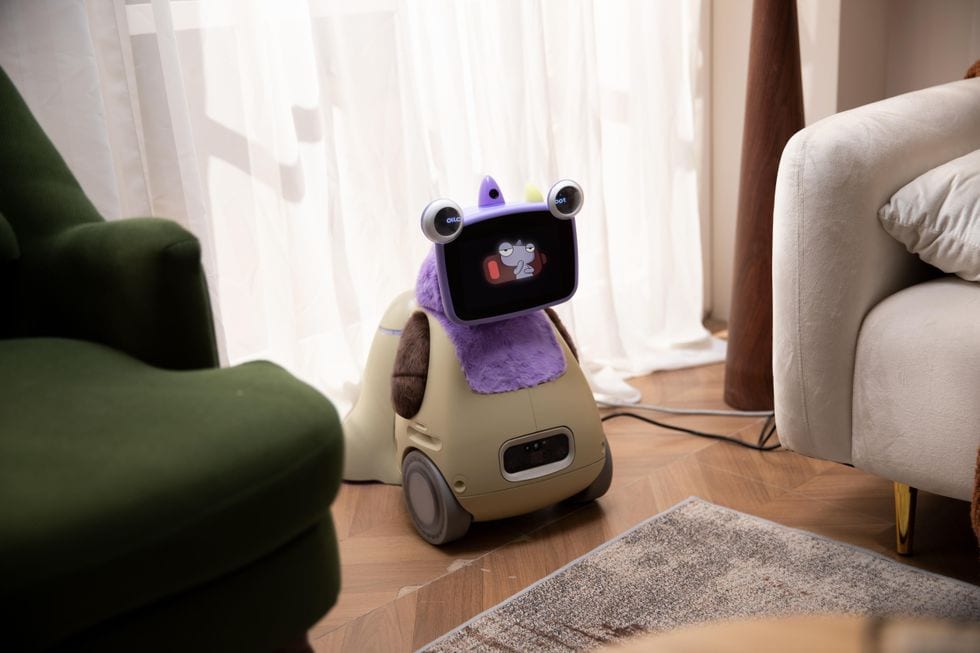
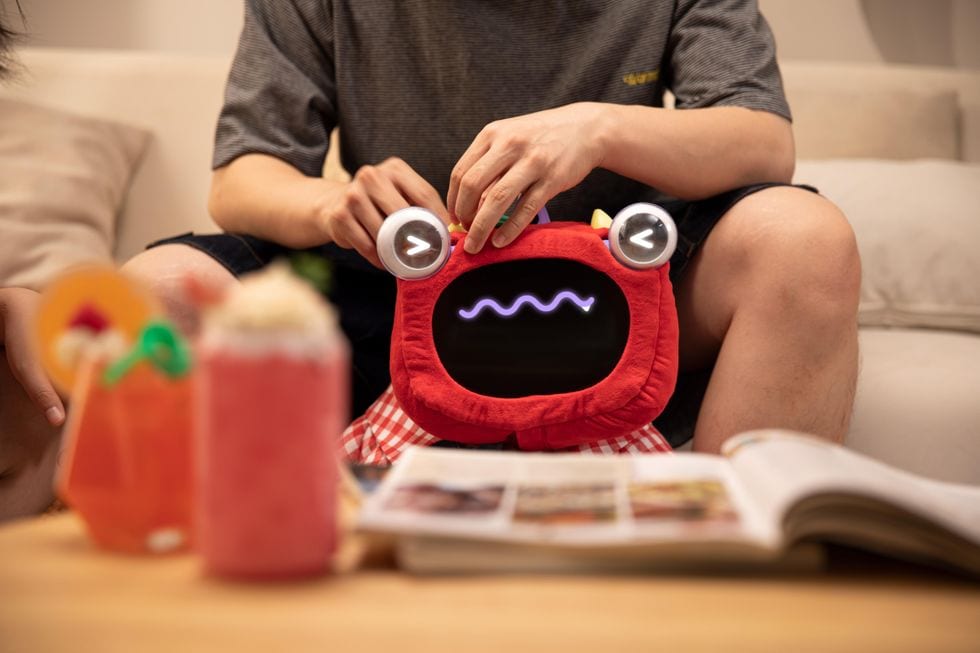
Expression is split across a "2+1" display layout. Two circular side screens work as emotional eyes, and a separate main display handles information and structured interaction. Ollobot says this lets emotional signalling and functional communication run independently.
Battery life is rated at up to 12 hours of standby and about 5 hours of active interaction per charge. On privacy, Ollobot says visual data is processed mainly on the device and stored locally within its own ecosystem, not shared with third-party smart home platforms. Access to recordings and live feeds is limited to authorised users through the companion app, remote communication is encrypted, and a physical cover can shut off the camera. More detail is on the Ollobot site.
The problem it is aimed at
Ollobot points to loneliness as the motivating problem. It cites a study finding that nearly one in three older adults lives alone without a daily companion. It also cites research that children left with relatives while their parents migrate for work are 2.5 times more likely to experience loneliness than children who stay with their parents.
The company contrasts its approach with the first wave of companion robots, which reached owners from about 2017. Those devices had personality, moved and joked, but relied on simple voice commands and narrow functions. Many went unused once the novelty faded. When some makers went out of business and shut down their servers, owners compared the loss to losing a pet.
Ollobot cites market figures for the wider category. The global AI companion market was valued at US $36.8 billion in 2025, with a projection of $48 billion in 2026 and $318 billion by 2033, a compound annual growth rate of 31 percent from 2026 to 2033. These are forecasts, and the source does not say how much of the market is physical robots.
Analysis: what is established and what is not
The SS1 is a useful marker of where home robots are heading. The design shifts from answering requests to initiating contact, and from a single gadget to a persistent presence with memory. That is a real engineering change. It puts the hard problems in perception, behavioural modelling and judgment about when to speak, not in voice recognition alone.
The on-device architecture also responds directly to the failure the company itself describes. Early robots became useless when servers went dark. A robot that keeps its memory and recognition models locally is less exposed to that, at least for core functions. The material does not say, however, which features, such as remote access and the app, still depend on Ollobot's services, or what happens to a unit if the company stops operating. For a product sold on long-term attachment, that question matters.
Most of what is known about this AI companion robot comes from the manufacturer. No independent testing is cited. The claims that it detects emotional cues, notices when someone is unusually quiet and improves its behavioural model over time have no published accuracy figures or trial results behind them. The same goes for fall detection, described only as having optimized accuracy. Whether proactive check-ins reduce loneliness, rather than simply adding a device that talks, is not shown by any evidence in the material.
There are practical limits too. A rating of about 5 hours of active use means daily charging cycles. A 3.5-degree slope limit is modest, and the material does not address stairs or door thresholds. A camera-equipped, microphone-equipped robot that records household moments and shares live feeds with remote relatives also raises consent questions, particularly for children and for older adults who may not have chosen the arrangement. A hardware privacy cover and local storage are sensible safeguards, but they do not settle who decides when the robot records.
The comparison with existing products is clear on paper. Video calls, smart speakers and messaging apps support relationships that already exist. The SS1 is positioned to supply presence itself. Whether households will pay for that, and keep using it after the novelty fades, is the question the first wave failed to answer and this one has yet to test.