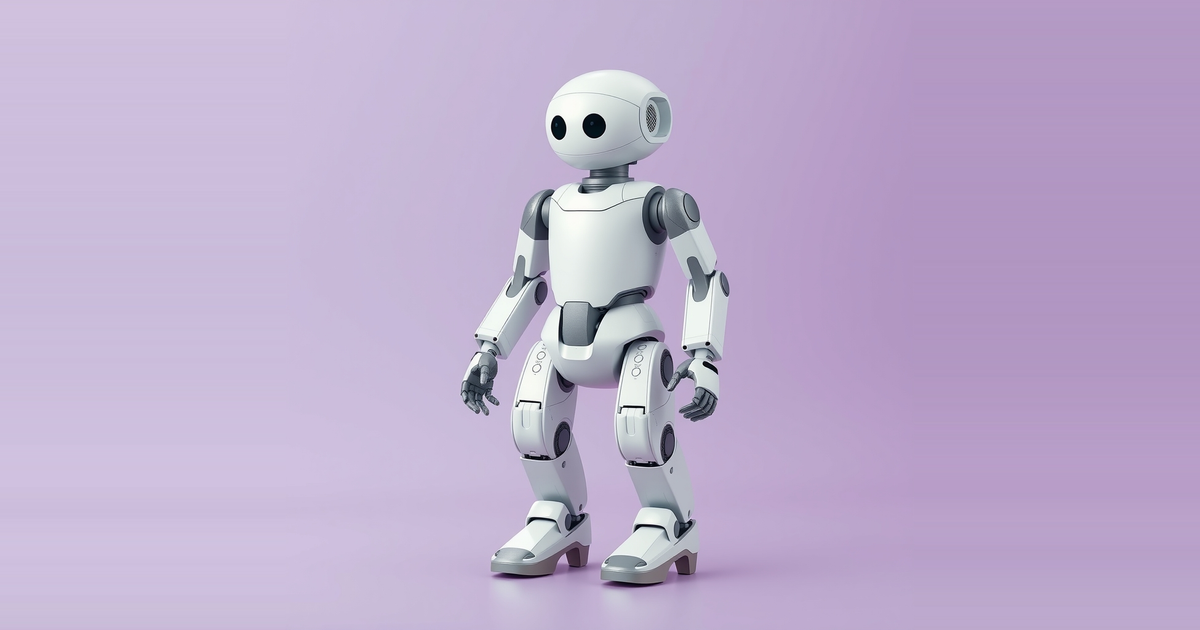
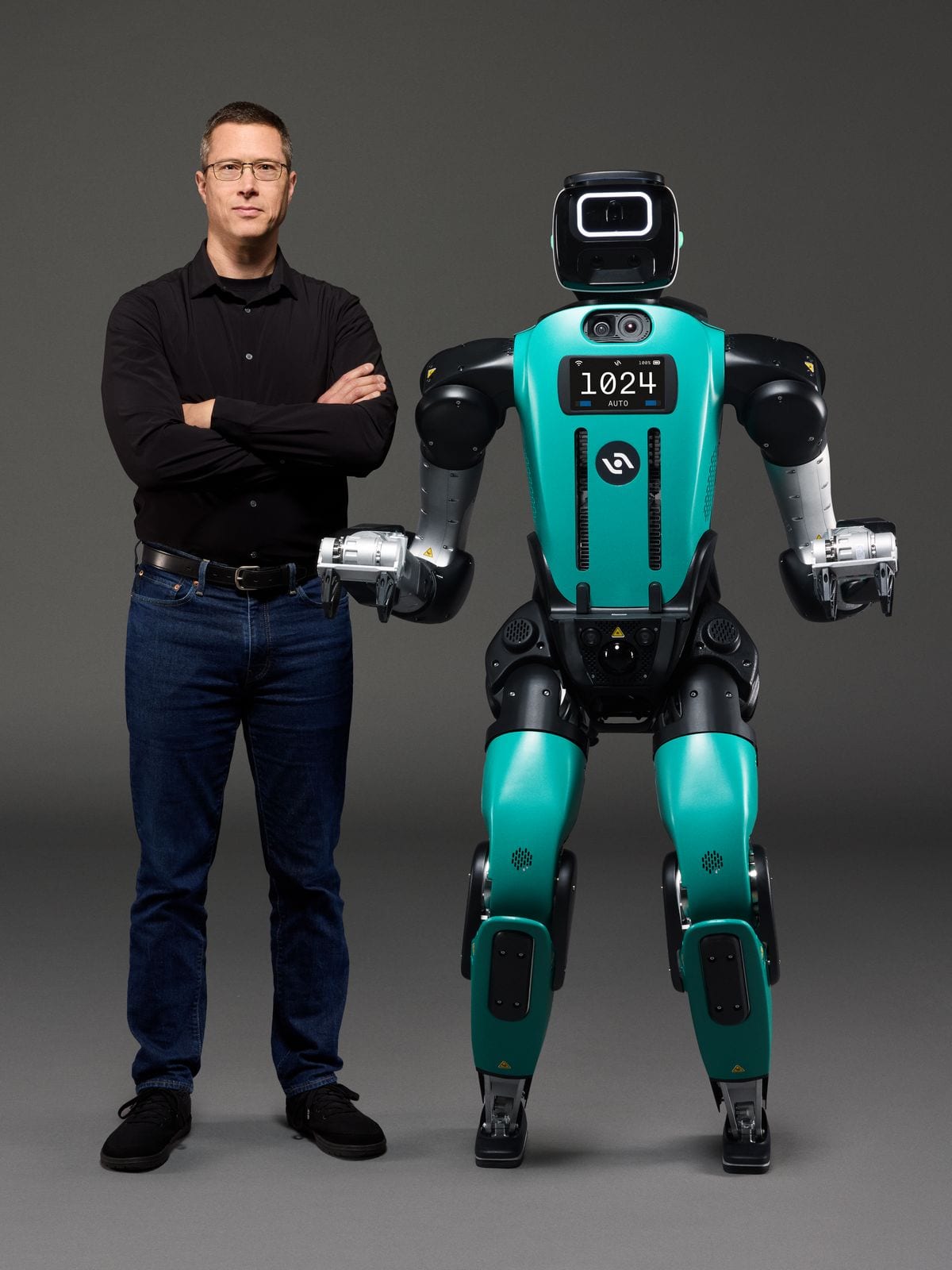
Digit 5, the fifth-generation humanoid from Agility Robotics, weighs more than 120 kilograms and is built to lift 23-kilogram bins onto shelves 1.75 meters high. Its battery runs for 90 minutes and recharges fully in a 9-minute break. When a person approaches, the robot sets down its payload, sits on the floor and cuts power to its motors before anyone can touch it. The design is the clearest picture yet of what a commercial humanoid worker costs in size and weight.
A robot built around safety
Agility co-founder Jonathan Hurst described the design in a first-person account. Safety was the main design goal, and the team spent two years on it. In Digit 4 deployments, robots had to work behind physical barriers, separated from people at all times, to satisfy insurance and regulatory demands. Those cages limited how useful the machines were.
Digit 5 is meant to work next to human coworkers instead. It uses an array of sensors to locate nearby people in a certifiably safe way, then acts on that information. Hurst calls the stop, set down, sit and power-off sequence a conservative approach that reduces risk in a verifiable way. He says Agility believes it is the only near-term approach that makes sense as a first step toward working alongside humans.
The safety goal shaped the legs, the body, safety-rated sensors in protective housings and isolated computers dedicated to safety. Each addition increased complexity, power consumption, mass and physical size. The design also had to meet European CE compliance, North American UL electrical-safety certifications and Federal Communications Commission limits on electromagnetic radiation.
Power, payload and a new leg design
The payload targets follow the lifting limits recommended by the U.S. National Institute for Occupational Safety and Health for human workers. These include repeatedly lifting 23-kilogram bins and reaching shelves 1.75 meters high. Agility designed Digit to do this for 20 hours a day.
That requires strong, precise motors and a large battery. The charging dock delivers 240 amperes at 48 volts. Fans push air through cooling channels in the torso, and the battery and cooling system take up about 75 percent of the torso volume.
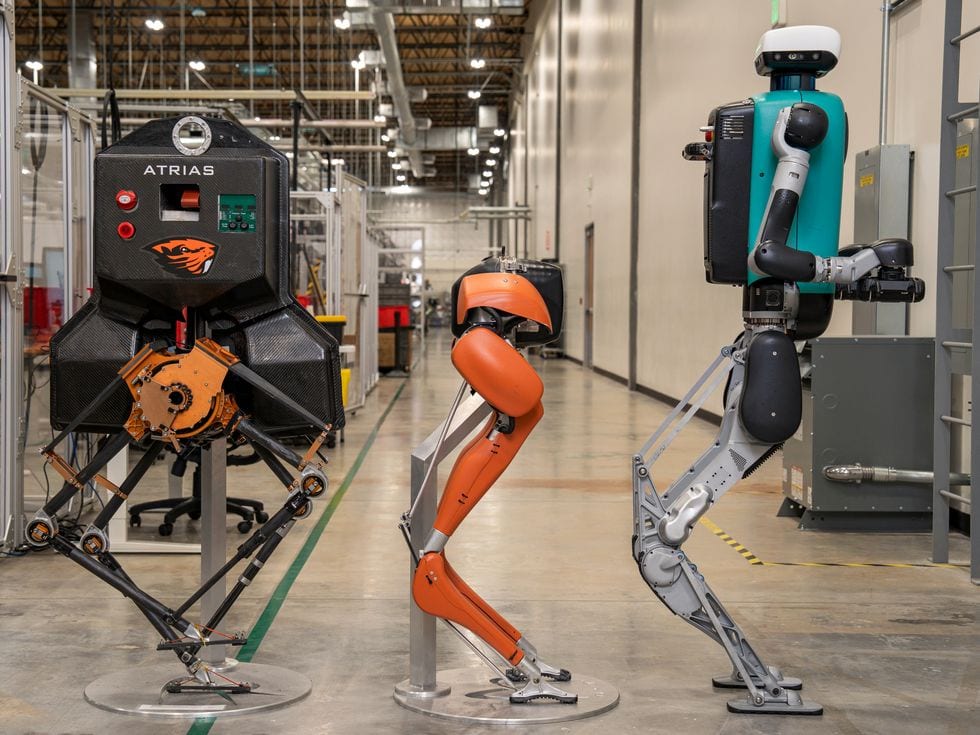
The most visible change is the legs. Earlier Digits and the Cassie research robot used a backward, ostrichlike leg configuration tuned for walking and running. Hurst says that layout caused problems with squatting because the ankle strikes the ground. Digit 5 will spend much of its time lifting heavy objects from near the floor, so it uses humanlike legs in which knee and hip motors both contribute torque to stand back up. The extra mass also means Digit 5 can no longer run or jump as earlier generations could.
From ATRIAS to a warehouse product
Hurst traces the line from ATRIAS, a research biped built at Oregon State University, to Cassie, which Agility sold to research institutions. Agility sold 10 Cassie robots at $250,000 each before saturating that market. Digit 1 added a torso and arms. Bin handling became the first commercial job because it needs two arms to lift large bins and legs to move in narrow spaces.
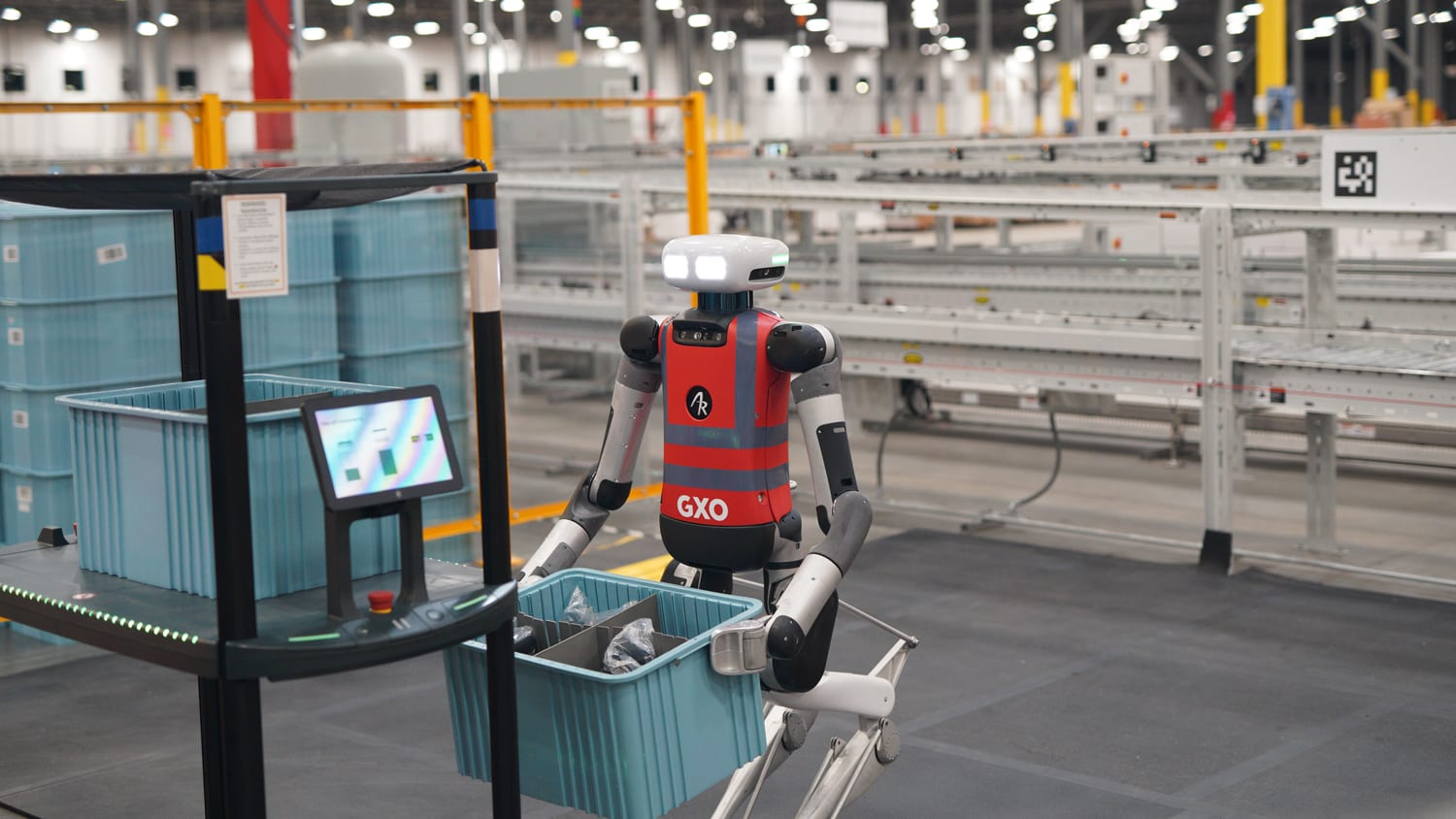
Amazon tested Digit 4 on moving and stacking bins, and it became the first commercially deployed humanoid at the logistics provider GXO. Agility mapped the first 10 use cases and then designed Digit 5 from scratch. Its RoboFab facility in Salem, Oregon, covers 70,000 square feet and can produce more than 10,000 Digit 5 robots per year.
The roadmap goes beyond bins to picking individual items, tending machines, preparing parts for assembly and shipping, and eventually assembly work. Interchangeable tool interfaces and a modular design are meant to allow gradual subsystem upgrades.
What Digit 5 means for the field
The notable point is the trade-off Hurst states openly. A humanoid that lifts real warehouse loads for a full shift and is safe to stand near ends up large, heavy and slow-moving. He argues that a humanoid in a factory that looks light and agile either cannot lift the required weight or cannot last a shift, and that without extensive sensing it is probably not safe nearby. That is a claim about the field, and Agility has not tested it against competitors in public.
The safety approach also differs from the cage model. Moving robots out of enclosures is what changes the economics, because a fenced robot occupies floor space and cannot share aisles. The sit-down response is simple and verifiable, but it has a cost. A robot that stops and powers down whenever a person approaches will lose time in busy aisles. The source gives no figures on how often that would happen or how it affects throughput.
Much remains unproven. The source states design targets, not measured results from Digit 5 in customer sites. The 20-hour working day, the 90-minute battery with 9-minute recharge and the certification status all describe intended performance. No price is given. The factory capacity of more than 10,000 units a year is a capability, not a shipment figure. Digit 4 has shown commercial deployment, but Digit 5 has yet to show it can work uncaged at scale.
The sharper test is whether insurers and regulators accept the safety case for people working alongside a 120-kilogram robot. Until that happens in real facilities, Digit 5 is a well-reasoned design, not a demonstrated product.