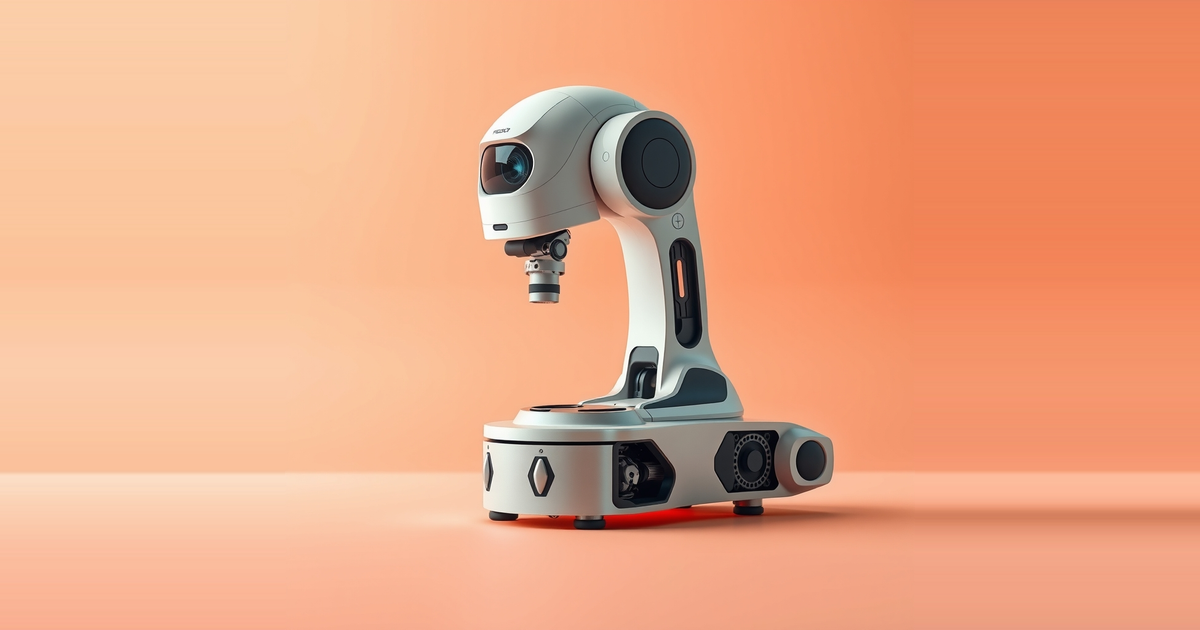
A washing machine cleans clothes by physical means and is highly automated, yet most people would say it is not a robot. Claudio Pacchierotti uses that example with elementary school children, and he raised it at a recent IEEE RAS Communications Board meeting. The discussion centred on a pairing the society carries in its own name: robotics and automation. Six members of the community asked what the two terms mean and whether the distinction matters.
Two terms, overlapping histories
Mariateresa Pedone described automation as largely invisible in everyday life. Its job, she said, is to make processes repeatable, efficient, scalable and predictable. In her view, robotics becomes relevant when automation needs a physical presence.
David Garzon Ramos gave a account based on how the fields developed. Automation has mostly supported other activities, he said. A process is automated because someone wants it to be more efficient or effective. Robotics has also grown on its own terms. Researchers build robots partly to understand principles of intelligence, control and embodiment.
That history makes it hard to call one field a subset of the other. Garzon Ramos said he does not think anyone necessarily wants to claim that one is broader than the other. He compared the question to the current debate over whether physical AI is broader than robotics, and answered it with: maybe, maybe not. Labels, he said, help people identify with a community and help set expectations about the work being done.

Automation without robots, robots without automation
Pacchierotti pointed to two gaps in the simple picture. Some robots are not automated at all. A robot fully teleoperated by a person involves little or no automation. In the other direction, an automation process does not have to involve a robot, and could be carried out entirely in software. In his words, not all automation involves robots, and not all robots are autonomous.
Ellen Rumley added a case from the factory floor. A large facility may have a computer-controlled conveyor system that senses and acts on the physical world and sorts packages. It is not a single unit that moves around or looks lifelike. Whether the whole system counts as a robot is not obvious.
Pacchierotti's washing machine example sits at the same boundary. Testing a definition against familiar objects, he said, is what makes the edge of the category interesting.
Definitions change the numbers
Rumley said the question has practical consequences. She compares industrial and service robotics between countries, and the categories are not applied consistently. Robot vacuum cleaners, for example, may be counted differently from one country to another. China can appear to produce millions more service robots partly because of what is included in the category. Definitions, she said, shape international comparisons and the story the numbers appear to tell.
Amy Eguchi raised the effect on education. Returning to Japan, she sees more everyday appliances with automated functions. One washing machine can dispense its own detergent and softener, remember preferred settings and finish the cycle after a single button press. She has also seen products advertised as an AI microwave. Children in different countries know different devices, which changes the examples teachers can use and what children intuitively understand as robotics, automation or AI.
Sabine Hauert, who moderated, noted that the words are English ones and other languages may not split the concepts the same way. She also observed that technology tends to dissolve into the appliance once it becomes familiar. A robot vacuum eventually becomes simply a vacuum.
Vocabulary follows funding and audience
Garzon Ramos said that since he began writing proposals he uses terms such as physical AI and embodiment, even though he still tells friends he is a roboticist. The same shift has happened with intelligent systems, AI and machine learning. Concepts become entangled, he said, because language helps attract attention and reach particular audiences.
Hauert described the communications cost. Each new project seems to need every relevant term: robotics, automation and now sometimes physical AI. That raises the question of why the fields cannot sit under one recognizable name.
Garzon Ramos said the answer depends on purpose. With children, the word robot creates interest immediately, while automation process may not, and physical AI may confuse them again. He argued for flexible language, since a definition fixed today may be overtaken by a new model or research trend. Hauert added that conference and community names preserve something of how the fields grew, and that a new word sometimes replaces an old one and sometimes joins it.
What this means for the field
The discussion produced no agreed definition, and the participants did not claim one. The more useful result is a map of where the terms fail. Three separate tests are in play: whether a system acts physically, whether it acts without a person in the loop, and whether it is a discrete machine or part of a larger installation. Teleoperated robots, software-only automation and conveyor systems each satisfy a different combination. A single phrase such as robotics and automation covers all of them without saying which.
That matters most where counting happens. Rumley's point about service robots shows that a category boundary can change a national comparison without any change in the underlying technology. Anyone citing production or deployment figures across countries needs to know whether items like robot vacuums were included. The source discussion gives one example of this effect, not a measurement of how large it is, so the size of the distortion remains unquantified.
The comparison with physical AI is instructive. Garzon Ramos describes a vocabulary shaped partly by proposals and audiences. That suggests new terms spread because they communicate with funders and the public, not because they mark a settled technical boundary. It is reasonable to expect the same pattern to repeat, though the discussion offers no evidence on how long any given term will last.
Several questions stay open. No one in the exchange showed how the terms are handled in languages other than English, only that they may differ. No data was presented on how children's understanding varies by country, only the observation that the devices they meet do. And the question of whether physical AI will sit inside robotics, beside it or above it was left as maybe, maybe not. For editors, educators and statisticians, the practical step is to state which definition is in use, since the community itself has not fixed one.