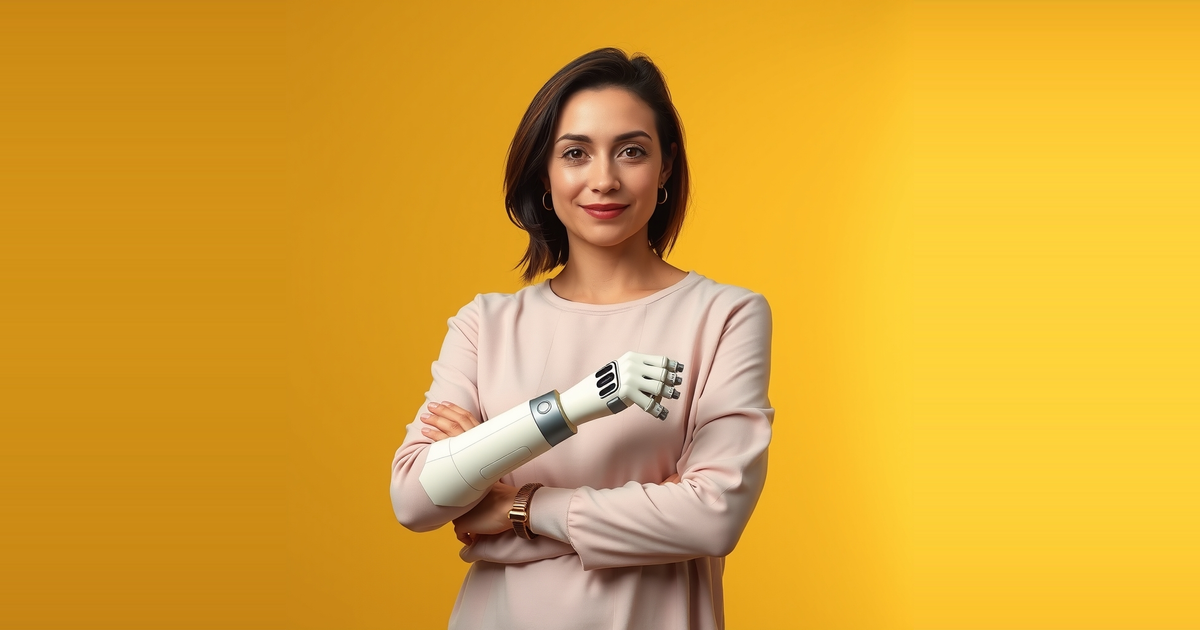
Maria Koskinopoulou, an Assistant Professor in Robotics and Computer Vision at Heriot-Watt University, was the guest on Episode 159 of the Robot Talk podcast, published on 5 June 2026. Host Claire spoke with her about autonomous robotic manipulation for surgery, industry and other uses. The episode puts a spotlight on a field that ties sensing to physical action.
Who Koskinopoulou is
Koskinopoulou holds an Assistant Professor post in Robotics and Computer Vision at Heriot-Watt University. She co-leads the ARM²Lab, short for Autonomous Robotic Manipulation & Multi-Agent Systems Lab. The lab sits at Heriot-Watt and the National Robotarium. Her co-lead is Ignacio Carlucho.
Her listed research interests are robotic manipulation, perception, robot vision, medical robotics, human-robot interaction and machine learning. The list covers both the physical side of handling objects and the software side of seeing and interpreting a scene. Her lab's name adds a further strand, multi-agent systems, which concerns how several autonomous machines operate together.

The projects behind the research
Koskinopoulou is involved in major research projects funded by UKRI and the European Union. Those projects advance work in several areas: robotic manipulation, surgical robotics, underwater robotics, autonomous assembly and waste sorting.
The range is wide. An operating theatre, a factory assembly line, a sorting facility and an underwater site are very different places to work. Each, however, asks a robot to handle physical objects, and each depends on the machine perceiving what is in front of it. That shared requirement links the application areas in her project list to the episode title, which pairs sensing with manipulation.
The available description does not give project names, budgets, partners or results. It does not say which projects the conversation covered in detail. What is established is the set of fields her funded work touches and the institutions where her lab operates.
About the podcast episode
Robot Talk is a weekly podcast that explores robotics, artificial intelligence and autonomous machines. Episode 159 is titled Robot sensing and manipulation. The description frames the discussion around autonomous robotic manipulators in three settings: surgery, industry and what it calls beyond, which is not further specified.
No quotes, findings, product announcements or technical claims from the conversation are given. This report therefore does not attribute any specific statements to Koskinopoulou beyond her role, her research interests and the projects listed above.
Why robotic manipulation research matters
The analysis in this section is our own reasoning from the facts above, not a report of what was said in the episode.
First, the combination of subjects in one research profile is informative. Koskinopoulou's interests pair robot vision and perception with manipulation and machine learning. That pairing reflects a view common in the field: a manipulator is only as capable as its ability to sense its surroundings. A gripper or arm can be mechanically precise, but without reliable perception it cannot adapt to objects that vary in shape, position or condition. Waste sorting is a clear example from her project list, since the items to be handled are mixed and unpredictable.
Second, the spread of applications points to how general the underlying problem is. Surgical robotics, autonomous assembly, underwater robotics and waste sorting have different safety requirements and tolerances. Medical settings demand close attention to human safety and precision. Industrial assembly values repeatability. Underwater work adds a hostile environment. That one group's work, funded through UKRI and EU programmes, spans all of them suggests funders treat manipulation and perception as shared foundations rather than niche topics. That is an inference from the project list, not a stated funder position.
Third, the lab's multi-agent focus hints at a direction beyond a single arm working alone. Nothing in the description covers a multi-agent experiment, so no results can be claimed. It is fair to note that a lab with that scope alongside manipulation research indicates interest in coordination between machines as well as in individual dexterity.
What remains unproven
The episode description makes no performance claims, so nothing about it can be judged proven or unproven. The open questions concern what it leaves out. It gives no success rates for any manipulation task, no clinical trial status for surgical work, and no deployment dates for industrial or waste-sorting systems. It names no robot platform, so comparison with commercial manipulators or other university labs is not possible from this material.
Readers who want evidence of progress should look to the lab's published papers and project reports, which carry the measurable results that a podcast description does not. Until those details are available, the accurate reading is limited: a Heriot-Watt roboticist with a broad, funded research portfolio in perception and manipulation was interviewed, and the conversation covered applications from surgery to industry.