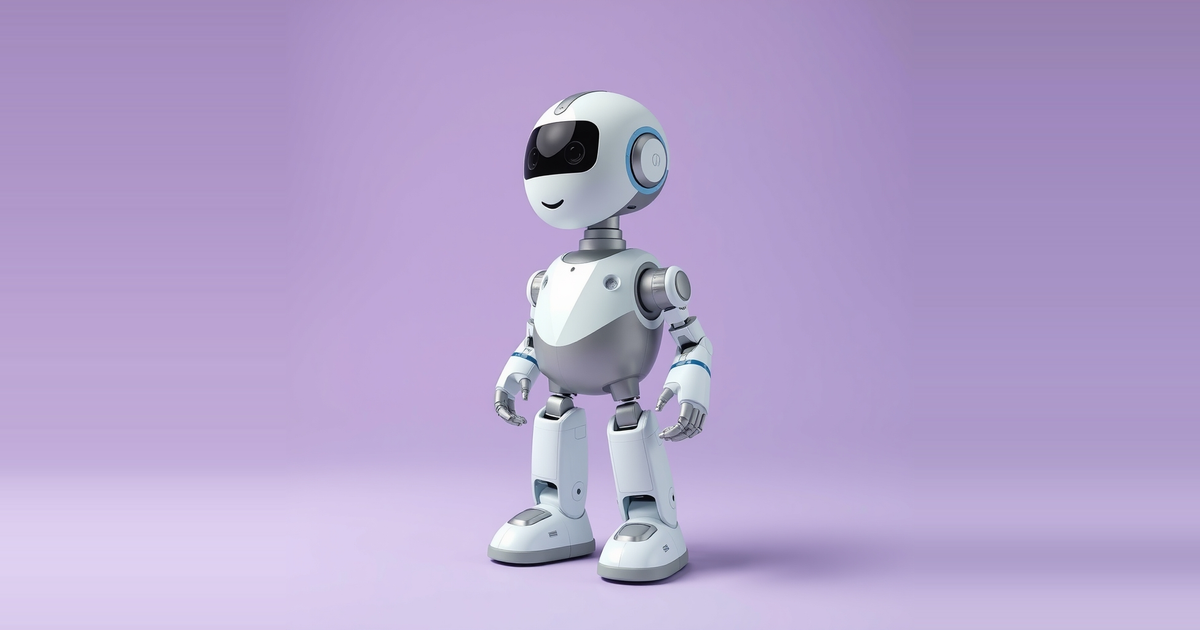
In a study of 50 people holding conversations with the humanoid robot Pepper, participants who watched an animated robot make conversational mistakes showed a rise in oxytocin, and those with the highest levels trusted the robot least. The work, published in Science Robotics, adds a biological measure to the question of humanoid robot trust and suggests the hormone tracked suspicion rather than affection.
What the experiment tested
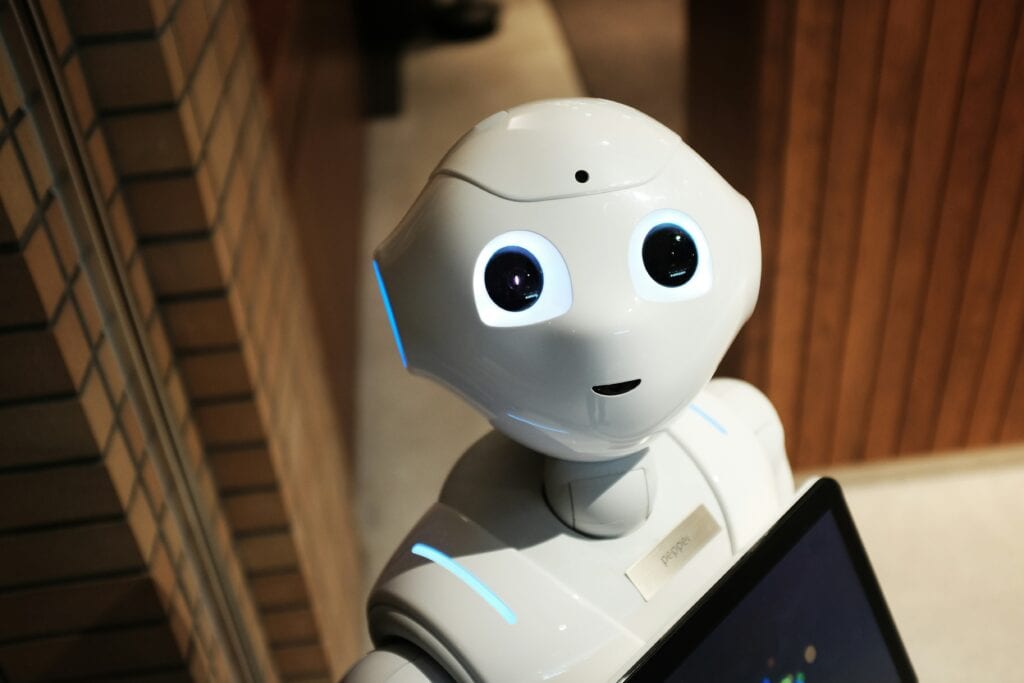
Participants talked with Pepper, a commercial humanoid designed to be expressive and to recognize emotions, and made joint decisions with it. In some sessions the robot gave sound advice. In others it made conversational mistakes, such as interrupting people or pushing illogical suggestions.
The robot's behavior also varied. For some participants Pepper was animated, using gestures, eye contact and nods. For others it stayed motionless.
The team measured four things: brain activity, levels of the hormone oxytocin, self-reported trust, and how much the robot influenced participants' decisions. The authors are Hasan Ayaz of Drexel University, Ewart J. de Visser and Yigit Topoglu of the United States Air Force Academy, and Frank Krueger of George Mason University.
Oxytocin rose with suspicion
Oxytocin is popularly called the love hormone because of its role in social bonding. The straightforward prediction was that it would fall when a partner disappoints. The opposite happened when an expressive robot broke interaction norms: oxytocin levels increased.
The size of the increase mattered. The higher a person's oxytocin during an expressive robot's errors, the less they trusted the robot and the less often they took its advice. The researchers read this as the hormone tracking with suspicion, not affection.
Errors reduced trust and diminished the robot's influence whether or not the robot was expressive. Expressiveness did not change that outcome. It changed what was happening in participants' brains.
Two brain regions working together
Measuring brain activity during a real conversation is difficult, because the conventional method requires lying motionless in an MRI scanner. The team used functional near-infrared spectroscopy, a portable sensor worn on the forehead that tracks oxygen levels in the brain while people move and talk.
They focused on two regions. The dorsolateral prefrontal cortex monitors uncertainty and flags when expectations or norms are broken. The medial prefrontal cortex supports mentalizing, the everyday work of inferring what another party intends.
When an animated robot erred, activity rose in both regions, and the two began working together more closely. That tighter coordination predicted the rise in oxytocin, which in turn predicted falling trust and less influence on participants' behavior. Participants who interacted with the motionless robot did not show this coordinated activity.
The researchers interpret this as people being caught off guard and working harder to make sense of an awkward social situation. Their view is that expressive cues move a mistake out of the category of technical malfunction and into the category of social violation, the kind that happens between people. A motionless robot's error looks mechanical. The same error from an animated robot engages the machinery used to judge people.
Limits the authors name
The participants were all young men, and the study used a single robot design. The authors say a key next step is testing whether the same oxytocin-linked vigilance appears in women, mixed groups, other cultures and other robot designs. The sensor also reached only the front of the brain, leaving deeper regions involved in social processing unmeasured.
They also plan to test whether a robot can repair trust after a mistake by acknowledging the error, apologizing or signaling good intent, as people do after an uncomfortable exchange.
Analysis: what this changes and what it does not
The study challenges a common design assumption, that lifelike, socially expressive robots earn more trust and that this protects their reputation when they err. In this experiment, expressiveness offered no such protection on the behavioral measures. Trust and influence fell after errors in both conditions. For teams building robots for homes, hospitals and workplaces, the practical reading is narrow but useful: expressive behavior should not be treated as a buffer against faults.
The more distinctive finding is the mechanism. The same error produced different neural responses depending on whether the robot was animated. That matters because behavioral trust scores alone would have shown no difference between the two groups. A measure that separates how a person processes a failure, even when the outcome looks the same, gives designers a way to compare robot behaviors that questionnaires miss.
The result also sits awkwardly with how oxytocin is usually discussed. The source notes that most oxytocin research involves humans interacting with humans, and that a growing body of work shows its effects depend on context, uncertainty and perceived threat. This study fits that picture. It does not show that oxytocin causes distrust. It shows that, in this setting, higher levels went with lower trust.
Several things remain unproven. The chain from brain coordination to oxytocin to trust is described as predictive, which is not the same as causal. A sample of 50 young men and one robot cannot say whether the pattern holds for other users or for robots with different appearances and voices. The forehead sensor leaves deeper social-processing regions unmeasured. And the study did not test whether an expressive robot that acknowledges its error recovers trust faster than one that does not, which is the question designers most need answered.
Until that repair work is done, the supported conclusion is limited. For a humanoid robot, expressiveness changes how a mistake is judged by the brain, and it did not make the mistake cheaper in trust. A robot that gestures and makes eye contact raises the social expectations it must then meet.