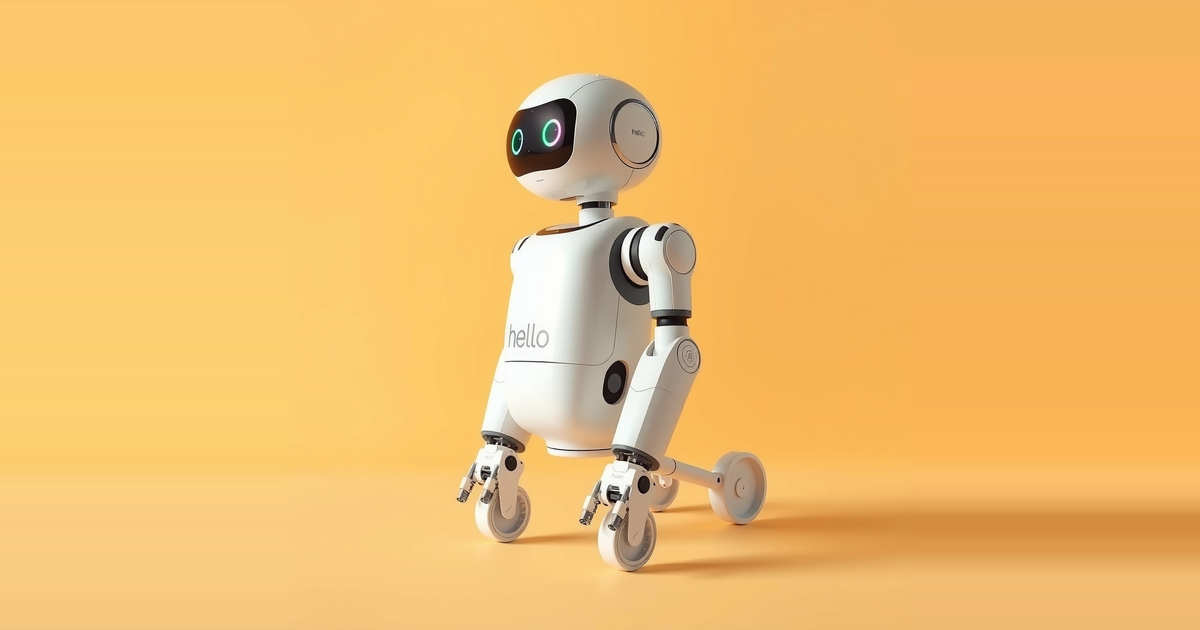
Hello Robot's Stretch robots are built to help people with mobility issues live more independently, according to the company's chief executive, Aaron Edsinger. He discussed the work in an interview published on 25 September 2026, as episode 163 in a weekly series on robotics. The Hello Robot Stretch line is aimed at a practical problem: everyday tasks that become harder when moving around a home is difficult.
Edsinger is CEO and co-founder of Hello Robot. The company describes its mission as developing practical, safe and accessible robots for people. Those three words set the terms for how the company wants its machines judged. A robot that helps with mobility has to work in ordinary settings, has to be safe around the people it assists, and has to be within reach of the people who need it.
What the interview covered
The conversation centred on the Stretch robots and the people they are meant to serve. The stated goal is to help people with mobility issues live more independently. The framing is about the person using the robot, not about the machine's technical specifications. Independence is the outcome the company wants to deliver.
The published summary does not give specifications for Stretch. It states no price, height, weight or payload figure. It does not list the tasks the robots perform or say how many are in use. Those details are not covered here, and none are assumed.

A founder with four companies behind him
Edsinger has founded four companies focused on bringing human collaborative robots to the consumer, manufacturing, healthcare and research markets. The phrase human collaborative robots describes machines designed to work alongside people rather than behind guarding. His career has therefore moved across several markets, each with different customers and different demands on safety and cost.
Before Hello Robot, he served as Robotics Director at Google. In that role he led the business, product and technical development of two of Google's central investments in robotics. He also helped define the company's overall robotics strategy. The account of his time at Google covers business and product work as well as engineering, which suggests experience taking robots from research toward commercial products.
How the work fits the stated mission
Hello Robot's three-part mission can be read against Edsinger's record. Practical points to robots that do useful work. Safe points to machines meant to operate near people. Accessible points to a robot that the intended users can obtain and use. Stretch is presented as the product that carries this mission into assistive use for people with mobility issues.
The same founder has worked on collaborative robots in consumer, manufacturing, healthcare and research settings. Assistive robots for the home sit close to the consumer and healthcare categories in that list. The source does not say whether Stretch is sold to individuals, care providers, researchers or all three, so that question is left open.
Analysis: why this matters and what remains unproven
The story is thin on technical detail, but the framing is informative. Much public attention in robotics goes to humanoids that run or box. Hello Robot's stated target is narrower: helping people with mobility issues do things for themselves. That is a measurable goal. Either a person can do more without help from another person, or they cannot.
The leadership background lends the effort some credibility on the business side. Edsinger has founded four robotics companies and led two major robotics investments at Google. That experience is relevant to a field where many assistive robots have struggled to move from lab demonstrations to products people use. The source does not say how earlier ventures turned out, so his record should not be read as a guarantee of success. It shows experience, not results.
Comparison with other products is limited by what the source provides. It names no competitors and gives no figures for Stretch. It would be unfounded to say Stretch is cheaper, safer or more capable than other assistive robots. What can be said is that the company has put accessibility and safety in its stated mission, alongside practicality. Those are claims to test, not findings.
Several things remain unproven from the information available. There is no stated evidence on how much independence Stretch gives users, no data on how many people use it and no price. There are no outcomes from home deployments. For a product aimed at people with mobility issues, the useful evidence would be user studies, cost relative to alternatives such as human care, and safety records in real homes. None of that appears in the interview summary.
The wider point is that assistive robotics will be judged on daily usefulness. A robot for people with mobility issues succeeds if it fits into an ordinary home and keeps its user safe. Hello Robot Stretch is one attempt at that, led by a founder with a long record in collaborative robots. Whether it delivers the independence it promises will depend on evidence that has not yet been published in this account.