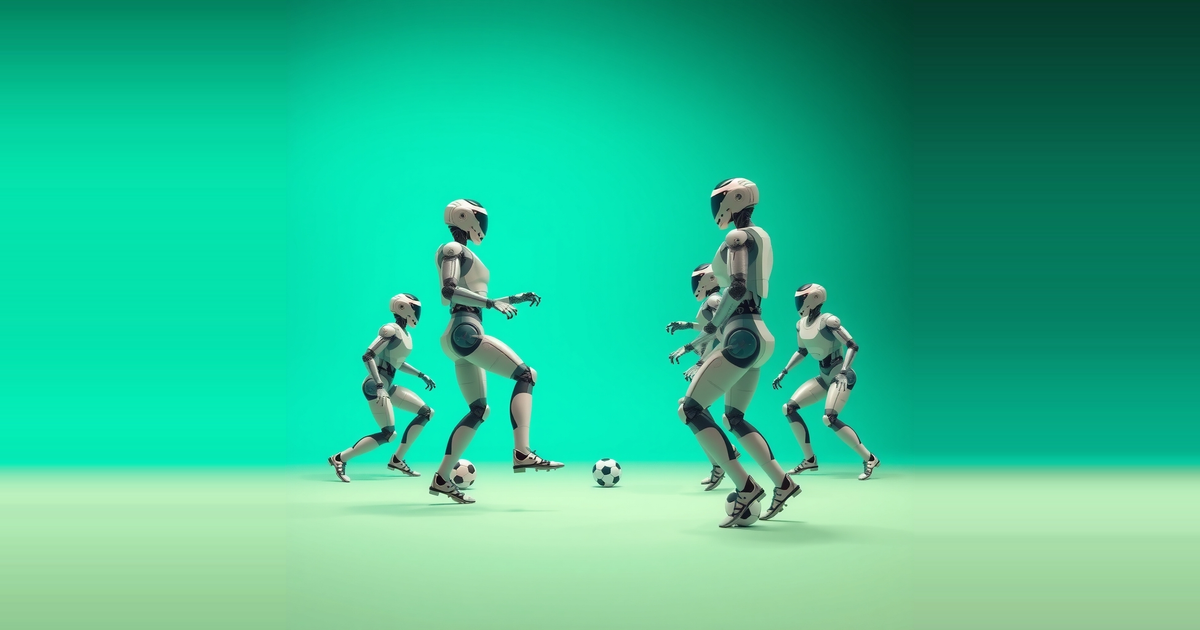
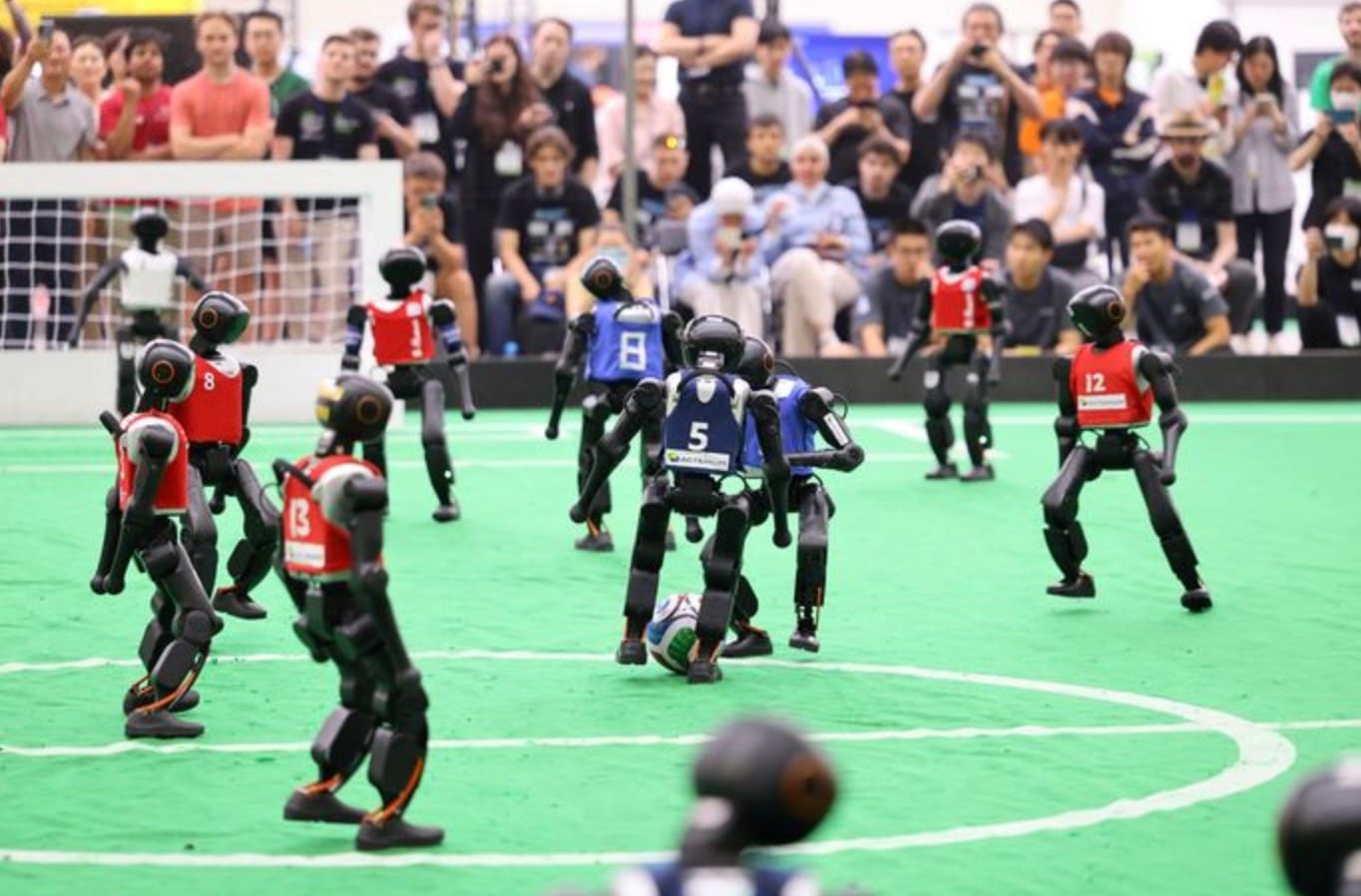
Twenty-two humanoid robots took the field in Incheon at RoboCup 2026, in the first 11 vs 11 humanoid soccer match the competition has staged. B-Human, from Bremen, Germany, played HTWK Robots, from Leipzig, Germany. Both teams used machines designed by Booster Robotics.
What happened on the field
The match put two full teams of 11 humanoid robots against each other. Until now, RoboCup humanoid soccer has not reached a full complement of players on both sides, so this game is a first for the competition.
The two teams are both German university-linked entries with their own channels on YouTube, where they publish material about their robots and play. Highlights of the match have been released, and the RoboCup Federation has published its own account of the game under the title "While the World Watches Soccer, Robots Made History in Incheon."
Both sides played on hardware from the same manufacturer, Booster Robotics. That means the match did not compare different robot designs. Any difference in play between B-Human and HTWK Robots came from how each team programmed and coordinated the same kind of machine.
The 2050 goal behind the match
RoboCup was founded with a stated aim. In 1997, its founders set the goal of developing a team of autonomous robots that could beat the human World Cup champions by 2050. The 11 vs 11 humanoid soccer match is another step along that path, and it matches the size of a real soccer side.
The 2050 target is now 24 years from RoboCup 2026. The competition has run for 29 years since the goal was set. A full-sized team on the field is a measurable change in scale from the smaller formations that came before it.
What the RoboCup Federation says
Ubbo Visser, President of the RoboCup Federation, described the match as evidence of progress. "This match shows how far humanoid robotics has come," he said. "We have seen increased teamwork and advanced skills over the years already, but the new humanoid hardware paired with the new level of intelligence provided by AI puts humanoid robot soccer on another level."
Visser names two drivers: new humanoid hardware and a new level of intelligence from AI. He also points to teamwork, which matters more as the number of players grows. An 11-player side has more passing options, more positions to cover and more chances for robots to interfere with each other than a smaller team does.
Why it matters, and what is unproven
The most useful reading of this match is about scale and standardisation. Putting 11 robots on each side requires 22 working machines in one game. A team that can field a full squad needs hardware it can obtain in quantity and keep running. The fact that both teams used Booster Robotics machines points to a shared hardware base. When teams use the same platform, the contest moves toward software, such as perception, movement, and coordination between players. That is the layer Visser credits to AI.
It also separates this event from much of the humanoid field outside RoboCup. Many humanoid demonstrations show a single robot doing a task. A soccer match with 22 robots shows many machines acting at once in a shared, contested space against opponents. Soccer is a hard test of that kind because the other side is trying to disrupt every plan.
Several points remain unproven. The score, the length of the match and the rules used have not been reported alongside the announcement, so it is not possible to judge how continuous or competitive play was. The description does not say how much of the game each team's robots handled autonomously, which matters because the 1997 goal is framed around autonomous robots. Nor does it say how often robots fell or were removed, or how the play compared with earlier, smaller humanoid matches.
The gap to the 2050 goal is also large. Beating the human World Cup champions would require far more than a full-sized team. This match shows that two teams can field 11 robots each in one game. It does not show how close those robots are to human players in speed, balance or decision-making, and the Federation does not claim that it does.
The next test is whether full-sized matches become routine at future RoboCup events, and whether the quality of play holds up as teams repeat the format. If they do, 11 vs 11 humanoid soccer would move from a first to a standard fixture, and the progress toward 2050 could be tracked match by match.